How To Design A Rectangular Garden: Best Layout Ideas
A rectangular garden is one of the easiest garden shapes to plan because its straight edges make spacing, access, watering, and crop rotation simple. The key is not to fill every inch with plants. A good design leaves room for paths, sunlight, air flow, storage, and future changes.
I have designed rectangular vegetable beds, herb gardens, pollinator borders, and mixed ornamental gardens in clay soil, sandy soil, and raised beds. The same lesson comes up each time: measure first, watch the sun, and make every part of the garden easy to reach. A beautiful plan that you cannot weed or water soon becomes a chore.
This guide explains how to design a rectangular garden from the ground up. It covers layout, plant spacing, paths, soil, irrigation, raised beds, companion planting, seasonal use, costs, and common mistakes. It also includes simple plans for small, medium, and large spaces.

Quick answer: start with the garden’s use, sun, and walking space
The best way to design a rectangular garden is to divide the space into clear zones: growing beds, paths, borders, and a work area. Place tall plants on the north side, keep beds narrow enough to reach, and leave at least 18 to 24 inches for paths. Check sunlight for one full day before choosing plants.
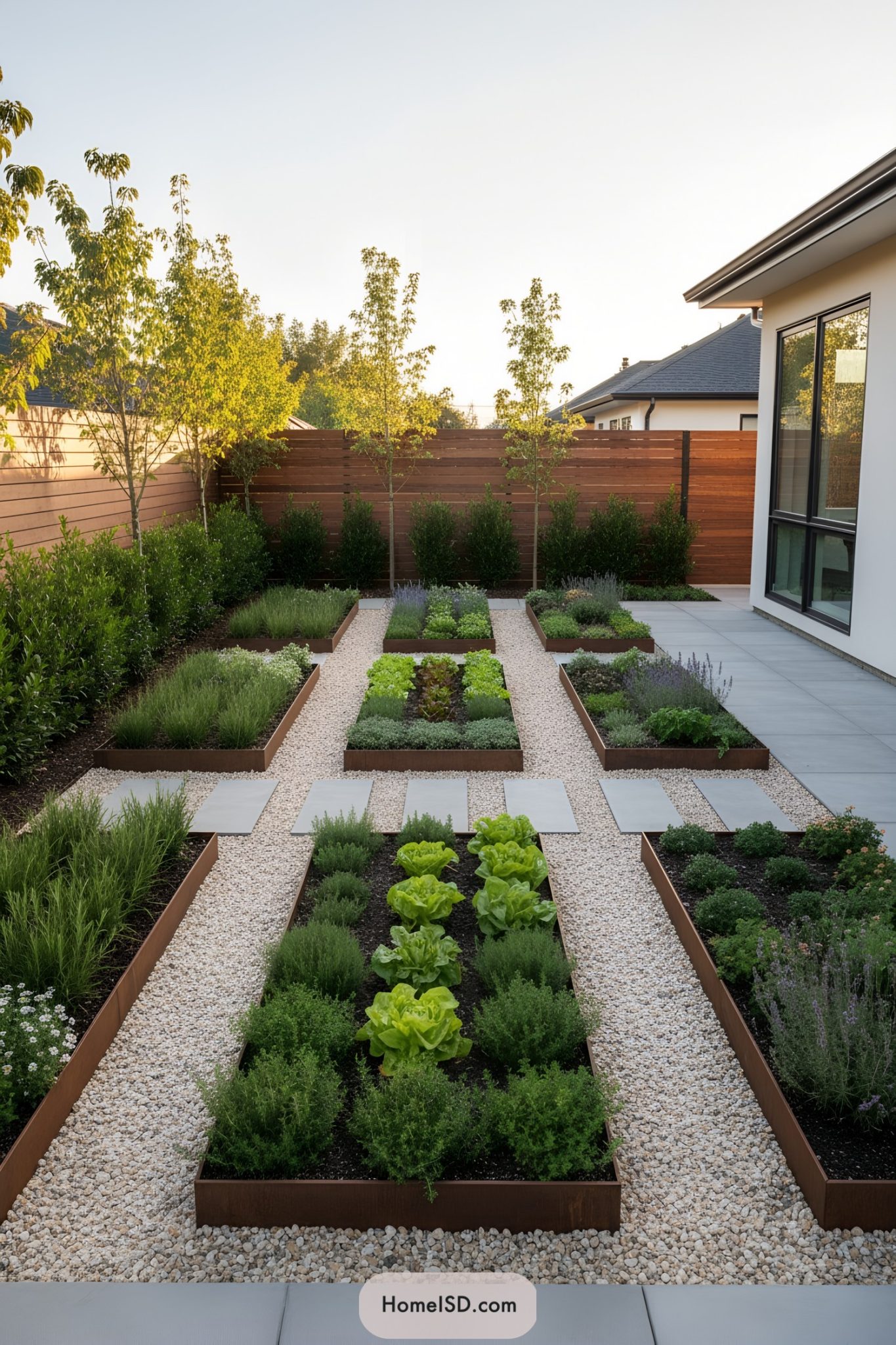
A simple rectangular garden often works well with beds that run along the long side of the space. This layout reduces wasted corners and makes rows easy to mark.
For most home gardens, use these basic rules:
- Keep vegetable beds 3 to 4 feet wide.
- Make main paths 24 to 36 inches wide.
- Keep small side paths at least 18 inches wide.
- Place tall crops on the north or northwest side.
- Leave 12 to 24 inches around fences and walls.
- Put water access close to the garden.
- Use mulch to reduce weeds and soil splash.
- Keep daily-use herbs near the kitchen.
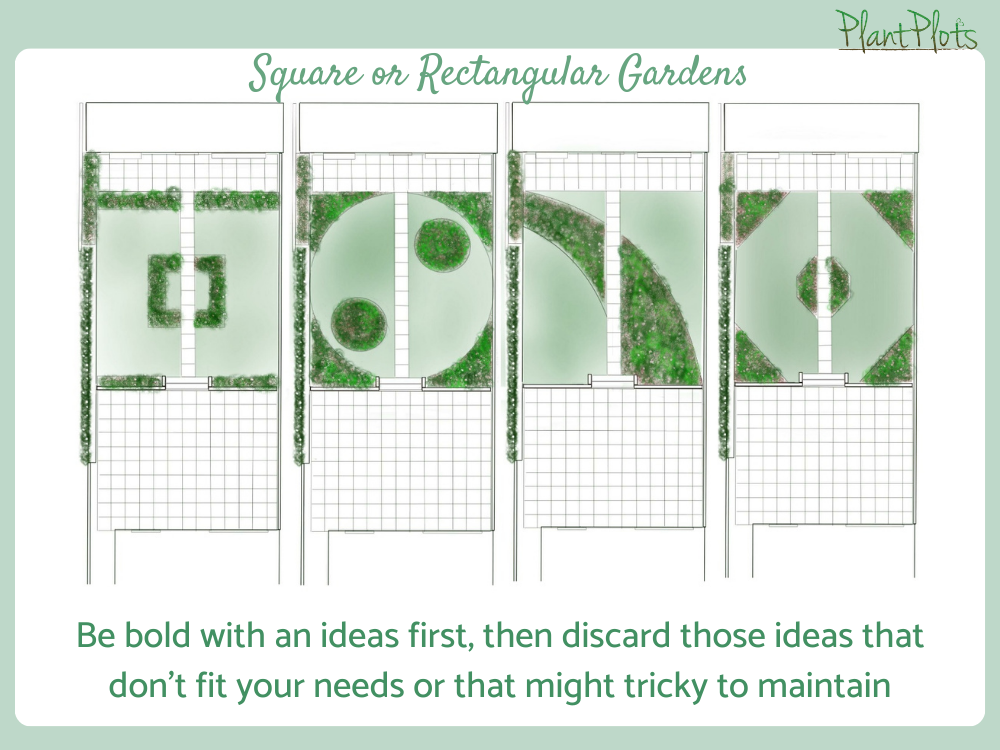
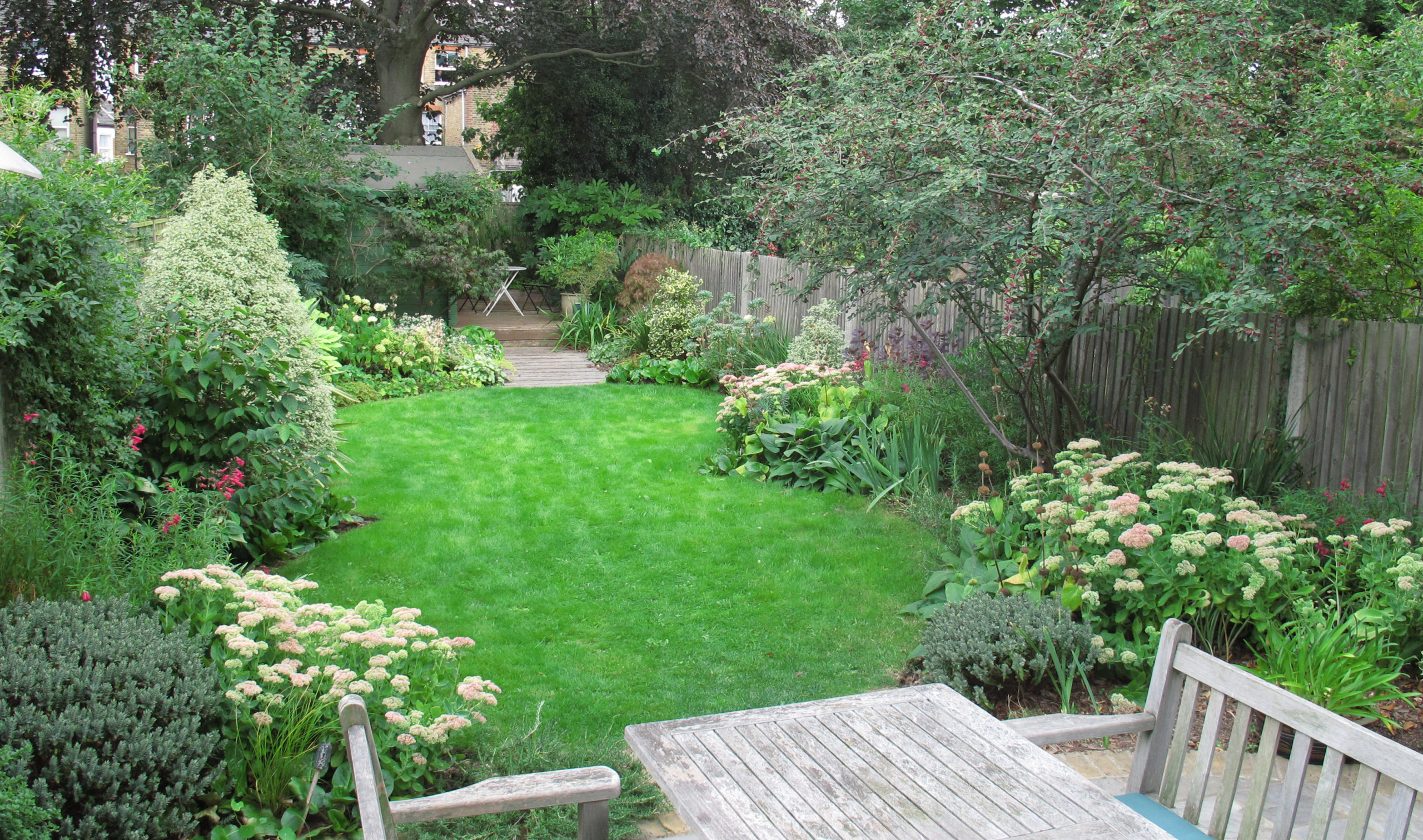
A rectangular garden does not need to look formal. You can soften straight lines with curved planting groups, flowering edges, shrubs, or a small tree. The structure stays simple while the plants add movement.
Measure the space before drawing the plan
Accurate measurements save money and prevent awkward gaps. Before you buy lumber, soil, plants, or irrigation parts, measure the garden’s length and width, note the slope, and mark fixed features such as fences, trees, downspouts, gates, and utility covers.

Record length, width, and usable space
Measure the full rectangle first. Then subtract areas you cannot plant, such as a shed base, patio, gate swing, air-conditioning unit, or large tree root zone.
For example, a space that measures 20 by 30 feet has 600 square feet in total. If a 6-by-8-foot shed occupies one corner, the usable area drops to 552 square feet before paths and borders.
Write down these details:
- Total length and width.
- Direction of north.
- Fence and wall locations.
- Existing trees and their shade.
- Water spigots and hose reach.
- Low spots where water collects.
- Soil changes from one end to the other.
- The best entry point.
Use stakes and string to mark the corners. Check the lines with a tape measure. You can also compare the two diagonal measurements. If both diagonals match, the rectangle is square.

Watch sunlight at different times
Sunlight changes with the season. A spot that gets full sun in June may receive shade from a fence or tree in September. Observe the garden in the morning, at midday, and in late afternoon.
Most vegetables need at least six hours of direct sun. Tomatoes, peppers, cucumbers, squash, beans, corn, and melons often perform better with eight or more hours. Lettuce, spinach, parsley, cilantro, and many woodland perennials can manage with four to six hours.
A simple sunlight record helps:
| Light level | Good plant choices | Layout note |
|---|---|---|
| 8+ hours | Tomatoes, peppers, corn, beans, roses | Put tall plants at the north edge |
| 6–8 hours | Carrots, beets, onions, cucumbers, zinnias | Suitable for most garden beds |
| 4–6 hours | Lettuce, kale, spinach, parsley, hostas | Use the shadier side for cool crops |
| Under 4 hours | Ferns, some sedges, moss, shade perennials | Avoid fruiting vegetables |
The main point is simple: design around real sunlight, not a plant label that says “sun” without explaining how much sun it needs.

Test the slope and drainage
A slight slope can help water leave the garden. A steep slope may cause erosion, dry soil at the top, and standing water at the bottom. If water remains on the surface for more than a few hours after rain, check drainage before planting.
Dig a hole about 12 inches deep and 12 inches wide. Fill it with water, let it drain, then fill it again. If the second filling drains in about 15 minutes to one hour, drainage is usually acceptable. Much slower drainage may point to compacted clay or a high water table.
Do not place a vegetable garden where roof runoff pours onto the beds. Concentrated water can wash away soil and carry roof debris into edible crops.

Choose a layout that fits your habits
The best rectangular garden layout is the one you can maintain without stepping on the soil. A wide bed may look efficient on paper, but it wastes growing space if you cannot reach the middle.

Use simple rows for large crops
Rows work well for corn, potatoes, onions, carrots, beets, beans, and other crops planted in quantity. Leave a clear path between rows so you can hoe, harvest, and pull weeds.
For a 12-by-24-foot garden, you might use four beds that are 3 feet wide and 24 feet long. Add three paths that are 2 feet wide. This creates about 288 square feet of bed space and 144 square feet of paths.
Rows are easy to expand and suit gardeners who use a tiller. However, repeated tilling can damage soil structure and bring weed seeds to the surface. Hand tools and permanent beds often work better for small gardens.

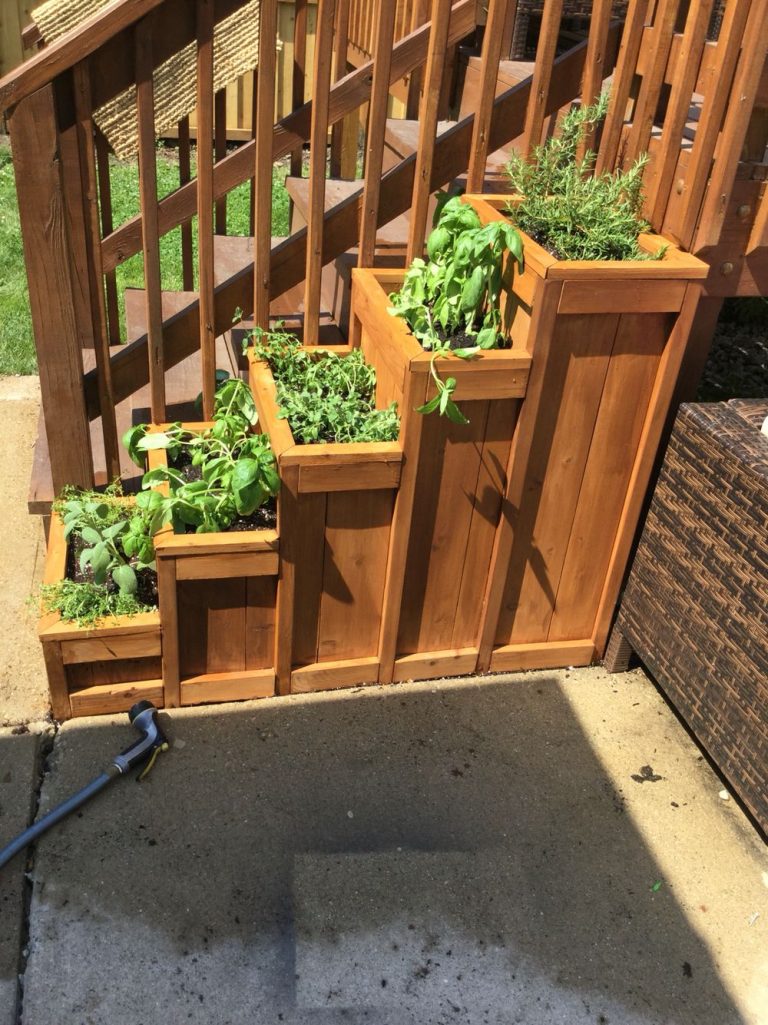
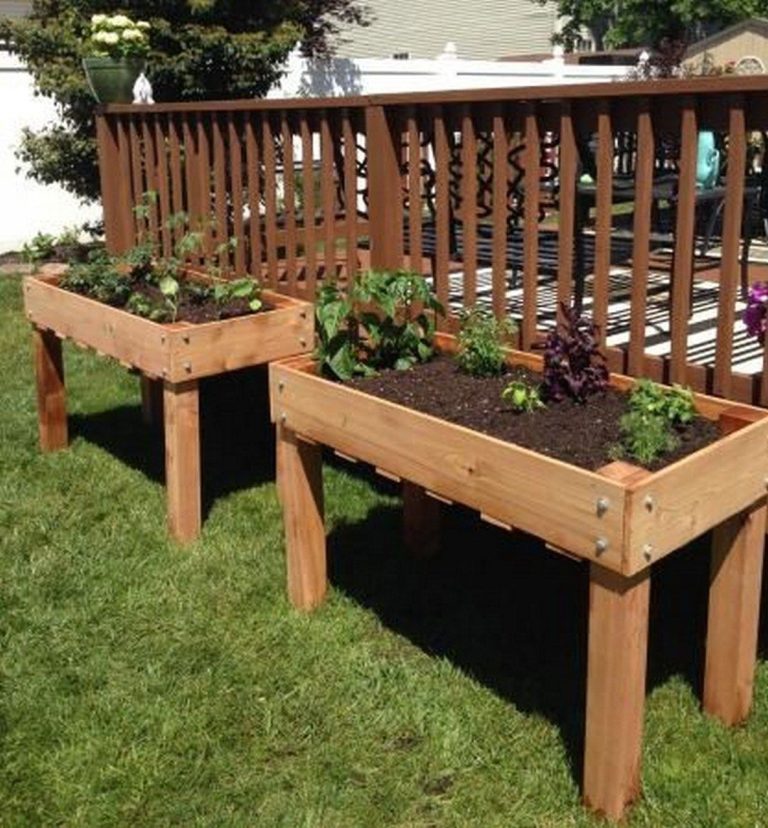
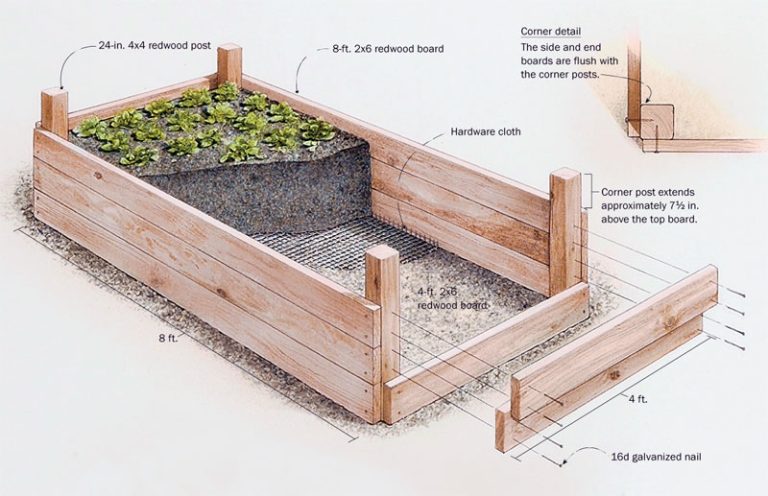
Use raised beds for clean edges and poor soil
Raised beds give a rectangular garden a strong structure. They also help when the native soil contains heavy clay, construction debris, or weed roots.
Common bed widths include:
- 2 feet wide for one-sided access.
- 3 feet wide for easy reach.
- 4 feet wide for access from both sides.
- 6 to 8 feet long for simple crop rotation.
- 8 to 12 inches high for most vegetables.
- 18 to 24 inches high for easier access.
A 4-by-8-foot raised bed provides 32 square feet of planting area. Two people can reach the center from opposite sides without stepping inside.
Use untreated cedar, redwood, stone, brick, or food-safe composite boards. Avoid old railroad ties and wood treated with unknown chemicals. Galvanized steel beds last well but can become hot in exposed sites, especially in USDA Zones 8 through 10.

Try a grid or square-foot layout
A grid layout divides a bed into small planting blocks. A 4-by-8-foot bed can hold thirty-two 1-foot squares. This works well for beginners because each square has a clear purpose.
A grid garden may include one tomato plant in a square, four lettuce plants, nine bush beans, or sixteen small radishes. Spacing still depends on the variety, so check the seed packet.
Grid layouts suit small backyards, patios, and accessible gardens. They are less useful for large crops such as pumpkins, sprawling winter squash, or sweet corn.
Add a border for flowers and pollinators
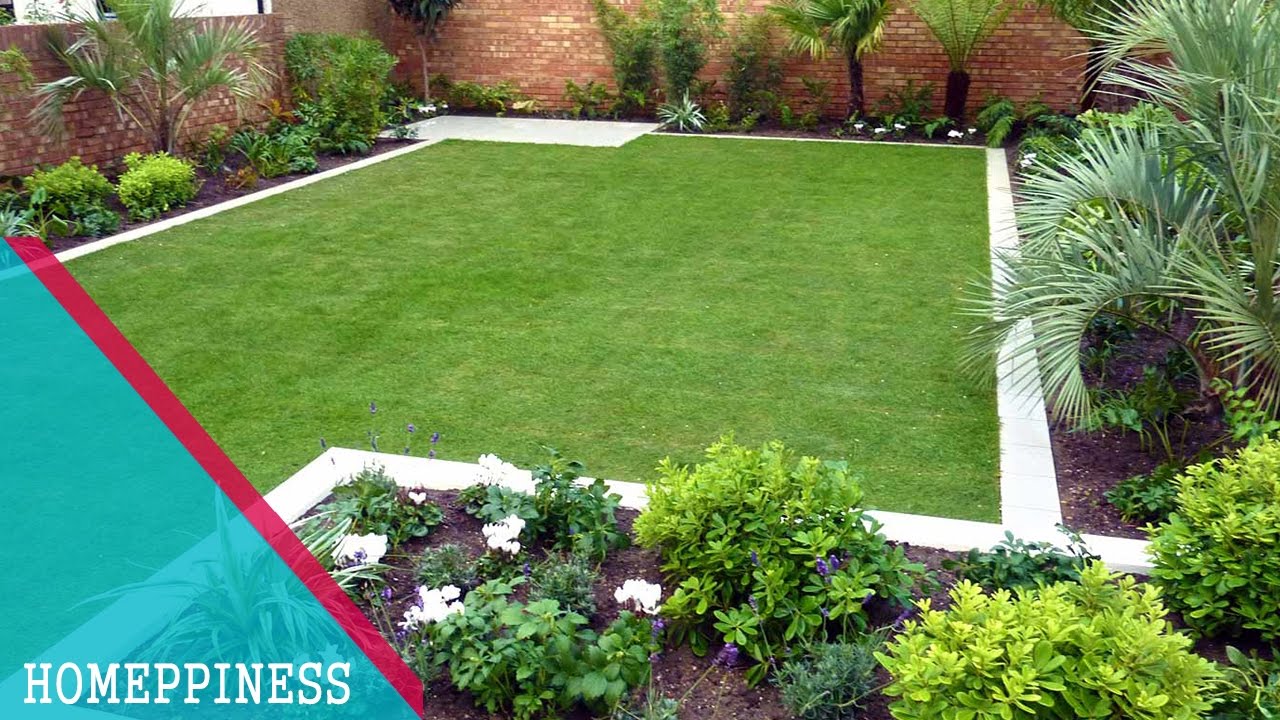
A rectangular garden can look harsh if every edge is bare. Add a 1- to 3-foot border of flowers, herbs, or compact shrubs.
Good choices include:
- Lavender in well-drained soil.
- Calendula for cool-season color.
- Sweet alyssum near vegetables.
- Yarrow for pollinators.
- Bee balm in moist soil.
- Coneflower in USDA Zones 3 through 9.
- Chives for flowers and edible leaves.
- Thyme along dry paths.
Avoid planting aggressive mint directly in the ground. Grow it in containers placed near the garden instead.
Plan paths before planting beds
Paths are working space, not wasted space. They let you carry compost, push a wheelbarrow, repair irrigation, harvest crops, and reach weeds before they spread.

Select practical path widths
A 2-foot path works for walking and hand tools. A 3-foot path is more comfortable and allows a small cart or wheelbarrow. If you use a wheelchair, walker, or wide garden cart, plan paths that are at least 36 inches wide, with turning space at corners.
Use these dimensions as a starting point:
| Garden feature | Suggested width | Why it helps |
|---|---|---|
| Narrow side path | 18–24 inches | Saves space between beds |
| Main walking path | 24–36 inches | Allows tools and easy access |
| Wheelbarrow path | 36–48 inches | Gives room for turns and loads |
| Accessible path | 36–48 inches | Supports mobility aids |
| Bed width | 3–4 feet | Keeps the center reachable |
Install the main path from the entrance to the water source or compost area. Smaller paths can branch from it like a simple backbone.

Pick a surface for your climate
Wood chips are inexpensive and easy to renew. They work well in most yards but may shift during heavy rain. Straw suits vegetable beds, though it can contain weed seeds if the source is poor.
Gravel drains well and gives a neat look. Use compacted fines under the gravel if you want a firm surface. Avoid loose gravel on steep ground or where a mower must cross.
Pavers, brick, and concrete cost more but provide a durable surface. In hot climates, dark paving can increase heat near tender plants. In cold climates, poor drainage under pavers can lead to frost heaving.
Keep soil out of the walkway
A clean edge reduces weeds and stops mulch from washing into the beds. You can use steel edging, brick, stone, recycled plastic edging, or a simple spade-cut trench.
Do not make a path so narrow that plants quickly cover it. Basil, zucchini, nasturtiums, and cucumbers can spread far beyond their original space.
💡 Pro Tip: Place a 12-inch stepping stone inside a wide bed only if you must reach the center. A permanent path is better than repeated footprints that compact soil.

Match plants to each part of the rectangle
Plant placement affects light, airflow, water use, harvest time, and pest pressure. Group plants by height, season, and water need instead of scattering them at random.
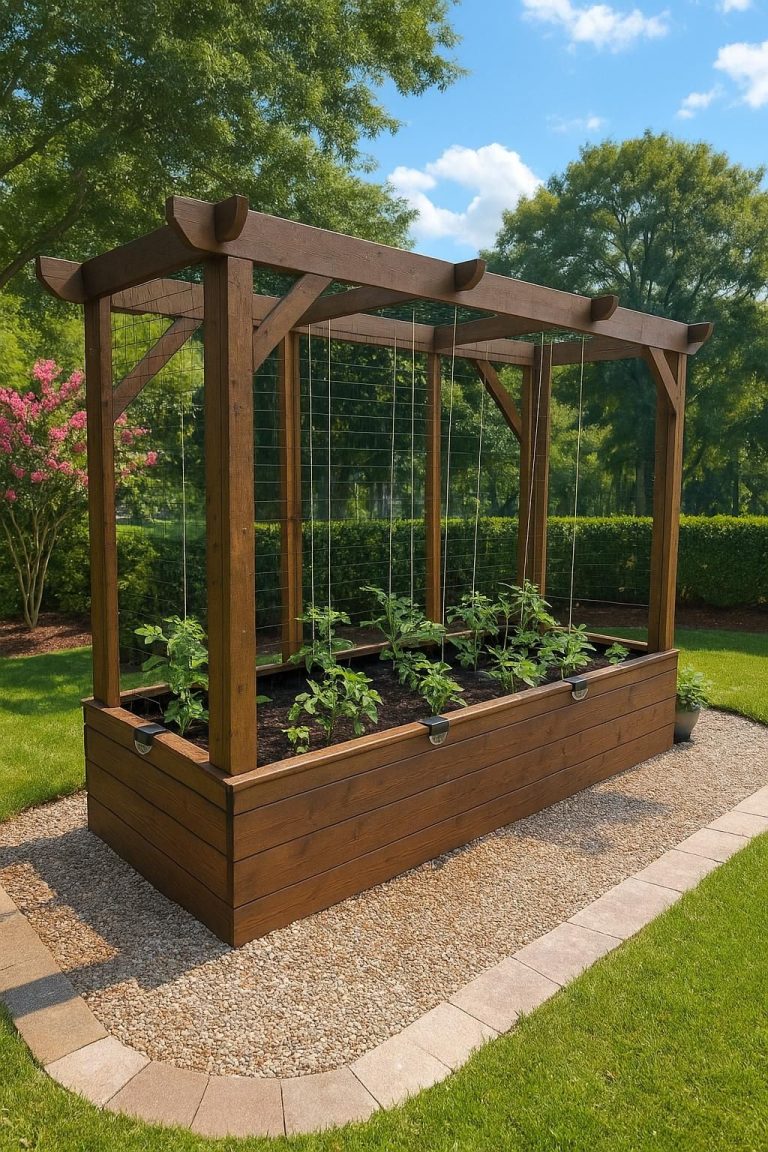
Put tall plants on the north side
The sun travels across the southern part of the sky in the Northern Hemisphere. Put tall crops along the north edge so they do not shade shorter plants.
Good north-edge crops include:
- Indeterminate tomatoes on trellises.
- Pole beans.
- Cucumbers on vertical netting.
- Corn.
- Sunflowers.
- Tall dahlias.
- Okra in warm zones.
- Trellised melons.
In the Southern Hemisphere, reverse the direction and place tall plants on the south side.
The north rule still needs adjustment near a wall or fence. A tall west-facing fence may cast long afternoon shadows, while a south-facing wall can reflect heat onto peppers and tomatoes.
Group plants by water needs
Place thirsty crops together near the easiest water source. Cucumbers, celery, lettuce, and squash need more regular moisture than rosemary, lavender, thyme, and many native prairie plants.
This reduces waste and prevents overwatering. It also makes drip irrigation easier to zone.
| Water group | Examples | Soil and mulch needs |
|---|---|---|
| High moisture | Lettuce, celery, cucumbers, squash | Rich soil, 1–2 inches of mulch |
| Moderate moisture | Tomatoes, peppers, beans, kale | Compost-rich soil, steady watering |
| Low moisture | Thyme, rosemary, lavender, sage | Fast drainage, light mulch |
| Seasonal dry | Native coneflower, yarrow, ornamental grasses | Water while establishing |
These groups are not fixed rules. A tomato in sandy soil may need more water than one in moisture-holding loam. Check the soil below the mulch before watering.
Use succession planting
Succession planting means replacing one crop with another as the season changes. A rectangular garden becomes more productive when the same space grows two or three crops in a year.
For example:
- Plant spinach and radishes in early spring.
- Replace them with bush beans in late spring.
- Follow beans with fall carrots or lettuce.
- Cover empty soil with compost and a winter mulch.
In USDA Zones 3 through 5, the growing season may limit warm crops. In Zones 8 through 10, you may grow cool-season greens in fall and winter, then tomatoes and peppers in spring and summer.
Add companion plants with realistic expectations
Companion planting can support pollinators, improve plant diversity, and make the garden more pleasant. It does not cure every pest problem.
Plant basil near tomatoes because both enjoy warm soil and regular water. Grow dill, fennel, parsley, and yarrow to support beneficial insects, but be aware that fennel can spread and may inhibit nearby plants.
Marigolds add color and attract insects, but they do not form a guaranteed shield against every tomato pest. Crop rotation, healthy soil, row covers, and hand removal often work better than relying on one companion plant.
Improve the soil before you build the final layout
Healthy soil supports roots, microbes, earthworms, and steady water flow. The design should include a plan for feeding the soil, not only feeding the plants.
Test pH and basic nutrients
Most vegetables prefer a soil pH between 6.0 and 7.0. Blueberries need much more acidic soil, often near pH 4.5 to 5.5, so they may need a separate container or bed.
A soil test can show pH, phosphorus, potassium, calcium, and organic matter. Test before adding lime or fertilizer. Adding lime to already alkaline soil can make iron and zinc less available.
For a new garden, test samples from several spots. Mix soil from the top 6 to 8 inches, remove stones and roots, and send a clean sample to a local extension lab.
Add compost in measured amounts
Spread 1 to 2 inches of finished compost over a new bed, then mix it lightly into the top few inches. You can also leave it on the surface and let rain and soil organisms work it in.
Do not fill a bed with pure compost. It can hold too much water, settle unevenly, and contain high salt levels. A common raised-bed mix uses topsoil, compost, and an aeration material such as pine bark in balanced amounts.
Avoid fresh manure in beds for leafy greens or root crops. It can burn roots and may carry pathogens. Use aged or composted manure, and follow local food safety guidance.
Use mulch after planting
Mulch controls weeds, slows evaporation, and reduces soil splash that can spread fungal disease. Apply 2 to 3 inches of shredded leaves, clean straw, pine bark, or untreated wood chips.
Keep mulch a few inches away from tomato stems, tree trunks, and woody herbs. Wet mulch against a stem can encourage rot and shelter slugs or voles.
⚠️ Warning: Do not use dyed landscape mulch or unknown compost around edible crops unless you know its source. Contaminated material can bring herbicide residues, plastic fragments, or persistent weeds into the garden.
Design irrigation into the rectangle
Watering becomes much easier when the garden has a clear irrigation plan. Hand watering works for a few containers, but a larger rectangle benefits from drip lines, soaker hoses, or a well-planned hose route.
Compare common watering systems
Drip irrigation places water near the root zone and loses less water to evaporation. Soaker hoses are simple and useful in straight beds. Sprinklers cover large areas but wet foliage and paths.
| System | Best use | Main limitation |
|---|---|---|
| Hand watering | Containers and small beds | Takes more time |
| Soaker hose | Straight beds and borders | Can water unevenly on slopes |
| Drip tubing | Mixed vegetable beds | Needs filters and seasonal checks |
| Sprinkler | Large open plots and lawns | Wets leaves and wastes path water |
For drip systems, use a filter and pressure regulator. Flush the lines at the start of the season. Watch for clogged emitters, especially if your water contains sediment.
Plan hose access and shutoff points
Put a hose connection near the garden, but do not place it where a leaking fitting can flood a bed. A short hose may not reach the far corner, while a very long hose can crush plants.
I like to install a Y-splitter with independent shutoff valves. One side serves a hose, and the other serves a drip line. A timer can help during hot weather, but it should not replace checking the soil.
Most vegetable gardens need about 1 inch of water per week from rain and irrigation, though sandy soil, high heat, wind, and large plants can raise that need. Water deeply and check moisture 2 to 3 inches below the surface.
Build a planting plan for small, medium, and large gardens
The best layout changes with the garden’s size. A small garden needs high-value crops and vertical growth. A large garden needs efficient paths, crop rotation, and a plan for harvest volume.
Small rectangular garden: 8 by 12 feet
Use two 3-by-8-foot beds with a 2-foot path between them. Add a 1-foot border for herbs or flowers if space allows.
A practical planting mix includes:
- One trellised cucumber.
- Two or three tomato plants.
- Four pepper plants.
- A short row of carrots.
- Lettuce for spring and fall.
- Basil, chives, parsley, and thyme.
- Bush beans along one edge.
Do not plant four sprawling zucchini plants in this space. One plant can take 9 to 16 square feet and may overwhelm the rest of the garden.
Medium rectangular garden: 12 by 24 feet
Use four 3-by-20-foot beds with 2-foot paths. Leave a 4-foot area at one end for compost, tools, and a water connection.
Divide crops into families:
- Nightshades: tomatoes, peppers, eggplant.
- Legumes: beans and peas.
- Brassicas: kale, broccoli, cabbage.
- Roots: carrots, beets, onions.
- Cucurbits: cucumbers and squash.
- Herbs and flowers.
Rotate plant families each year when possible. A three- or four-year rotation is easier in a larger space, but even moving tomatoes to another bed next year helps reduce disease buildup.
Large rectangular garden: 20 by 40 feet or more
Create a main path at least 3 feet wide, with beds branching from it. Place perennial herbs, asparagus, rhubarb, berries, or fruit trees in a separate section so annual crops can rotate around them.
A large garden also needs a harvest route. Put crops that need daily picking, such as beans and cucumbers, close to the entrance. Place pumpkins, potatoes, and storage onions farther away because they need less daily attention.
Install fencing before planting if deer, rabbits, groundhogs, or dogs visit the area. A garden that looks perfect in May can be stripped in one night by hungry wildlife.
Choose materials and tools that will last
You do not need expensive equipment to design a good garden. You do need tools that suit the soil and the size of the rectangle.
Basic materials checklist
| Material | Useful amount for a starter garden | Purpose |
|---|---|---|
| Compost | 1–2 inches over bed area | Adds organic matter |
| Mulch | 2–3 inches deep | Reduces weeds and water loss |
| Stakes and string | One set | Marks straight lines |
| Drip or soaker hose | Bed length plus access | Delivers water |
| Soil test kit | One lab test | Guides lime and fertilizer |
| Trellis material | Based on crop count | Supports vines |
A garden fork helps loosen compact soil without turning every layer upside down. A digging shovel works for edging and large planting holes. A hand trowel, hoe, pruners, rake, and sturdy gloves cover most routine work.
For large rectangles, a battery-powered string trimmer can keep paths neat, but never use it near exposed irrigation lines. A small cultivator may help break new ground, though it cannot fix poor drainage or compacted subsoil.
Use fertilizer based on soil needs
A general granular fertilizer with an NPK ratio such as 5-5-5 may suit some beds, but no single ratio fits every crop or soil. Too much nitrogen can produce large leaves and few tomatoes, peppers, or flowers.
Leafy greens need steady nitrogen. Root crops need balanced fertility and loose soil. Tomatoes and peppers benefit from adequate phosphorus and potassium, but adding extra phosphorus without a soil need can harm waterways.
Apply fertilizer according to the label and soil test. Keep granular products away from stems and water them in. Organic fertilizers act more slowly and depend on soil microbes, temperature, and moisture.
Avoid the most common rectangular garden mistakes
Many garden failures come from layout errors, not poor plant care. Correcting the plan early is much easier than moving mature plants in July.
Mistake 1: making beds too wide
A 6-foot bed may look efficient, but most people cannot reach the center from either side. You may end up stepping into the bed, compacting soil around roots.
Keep beds 3 to 4 feet wide unless one side is against a wall. Against a wall, make the bed no more than 2 feet wide.
Mistake 2: forgetting mature plant size
Seed packets show spacing for small seedlings, yet many plants expand quickly. A single indeterminate tomato may grow 6 to 10 feet tall and 2 to 3 feet wide when supported.
Check the mature size of shrubs, perennial herbs, flowers, and fruiting plants. Leave room for air movement. Crowded foliage dries slowly and can increase powdery mildew, early blight, and leaf spot.
Mistake 3: placing tall plants on the wrong side
Tall plants on the south side can shade peppers, carrots, lettuce, and flowers for much of the day. In hot climates, some afternoon shade helps lettuce, but dense shade can still reduce growth.
Use trellises on the north side when possible. If the garden sits beside a tall wall, draw the shadow pattern before you set beds.
Mistake 4: ignoring access to water
A garden can be well designed and still fail if the hose reaches only half the beds. Carrying watering cans across a large yard becomes tiring, especially during a dry spell.
Plan water lines, hose reels, timers, or rain barrels before planting. A rain barrel can reduce tap water use, but use collected water according to local rules and keep the barrel covered to limit mosquitoes.
Mistake 5: treating crop rotation as optional
Plant diseases can remain in soil and plant debris. Tomato, pepper, eggplant, and potato all belong to the nightshade family and share some disease risks.
Remove diseased plants promptly. Do not compost plants with severe fungal or bacterial disease in a backyard pile that does not reach reliable high temperatures. Rotate families and choose resistant varieties when available.
Use a seasonal maintenance schedule
A rectangular garden stays productive when each season has a short list of tasks. Do not wait until the beds are overgrown before you act.
| Season | Main jobs | Design benefit |
|---|---|---|
| Late winter | Order seeds, repair beds, test soil | Prevents rushed planting |
| Spring | Plant cool crops, add compost, install irrigation | Starts the season cleanly |
| Summer | Mulch, trellis, harvest, check pests | Protects water and airflow |
| Fall | Remove debris, plant cover crops, rotate beds | Reduces disease carryover |
| Winter | Clean tools, plan crops, repair fences | Saves time next spring |
In cold USDA Zones 3 through 6, protect perennial herbs and berry roots with mulch after the ground cools. In Zones 7 through 10, fall may be the main season for lettuce, kale, carrots, peas, and cilantro.
Keep records for the next season
Write down where you planted tomatoes, beans, brassicas, and root crops. Note which beds stayed wet, which varieties resisted disease, and where pests appeared.
After four weeks, you may see that one bed dries faster because it sits near a wall. After two seasons, the records can reveal patterns that are hard to remember.
A small notebook or phone spreadsheet is enough. Include planting dates, harvest dates, fertilizer applications, unusual weather, and varieties such as ‘Sungold’ tomato, ‘Blue Lake’ bean, ‘Lacinato’ kale, or ‘Danvers’ carrot.
Protect the garden during winter
Remove dead annual plants and diseased leaves. Healthy plant residue can be chopped and composted. Cover bare soil with leaves, straw, compost, or a winter cover crop such as cereal rye or crimson clover.
Do not leave irrigation tubing exposed to freezing weather if water can remain inside it. Drain lines, bring timers indoors, and store hoses out of direct sun.
Clean pruners with soap and water, then wipe blades with rubbing alcohol after cutting diseased plants. Dry tools before storing them to prevent rust.
Pros and cons of a rectangular garden
A rectangle is a strong choice for many yards, but it does not solve every site problem. The shape works best when the ground, light, and access also support it.
| Pros | Cons |
|---|---|
| Easy to measure and expand | Can look rigid without soft borders |
| Simple rows and crop rotation | Corners may become hard to reach |
| Efficient use of fencing and irrigation | Long beds may be tiring to walk around |
| Works well for raised beds | Poor orientation can create shade |
| Easy to mulch and cover | Not ideal for irregular or steep sites |
The biggest advantage is control. You can divide the garden into repeatable beds and paths. The biggest limitation is that a perfect rectangle may not match the sun, slope, or shape of your property.
When a different garden shape makes more sense
A rectangular garden is not always the best answer. If your yard slopes sharply, a terraced design may control erosion better. If the only sunny area is narrow, a long border or container garden may work better.
Choose a different approach when:
- A tree creates deep shade across the rectangle.
- Water collects in one corner.
- The site has severe slope or erosion.
- You need a circular space for a central tree.
- You rent and cannot build permanent beds.
- Mobility needs call for higher beds and wider turns.
- You want a small courtyard garden with strong visual focus.
You can also combine shapes. Use a rectangle for vegetables, a narrow border for herbs, and containers near a door. The garden should serve your daily life, not force you to follow a strict shape.
Personal experience: what worked and what failed
In one rectangular vegetable garden I managed in a humid Mid-Atlantic climate, I first made beds 5 feet wide to maximize planting area. The plan looked efficient, but I kept stepping into the middle to harvest cucumbers and pull weeds. By midsummer, the soil was compacted and the center plants grew poorly.
I rebuilt the beds at 3 feet wide and made the main path 30 inches wide. The garden produced slightly less on paper, but I harvested more because every plant was easy to reach. I also added a trellis on the north side for cucumbers and pole beans, which freed several square feet for lettuce and basil.
In a dry Zone 8 garden, I tried a dark stone path beside peppers. The stones looked neat but reflected extra heat during a hot spell. Pepper plants survived, yet lettuce in the nearby bed wilted each afternoon. Replacing part of the stone with wood chips lowered the heat and made watering easier.
I have also seen raised beds fail because they were filled with compost alone. The mix settled after heavy rain, dried into a crust, and held too much water near the surface. A blend of quality topsoil, mature compost, and coarse organic material performed much better over two growing seasons.
Improve the design with a few expert details
Small changes can make a rectangular garden easier to use and more productive. Focus on access, timing, and plant behavior rather than adding complicated features.
Leave room for plant support
Install tomato cages, trellis posts, and bean supports before plants become large. Driving stakes through established roots can cause damage.
Use strong supports for indeterminate tomatoes and cucumbers. Thin decorative trellises may bend under wet vines or wind. Anchor tall structures with posts driven at least 12 inches into firm soil, deeper in loose sand.
Create a compost and tool station
Put compost, hand tools, gloves, and plant ties near the entrance. A small covered bin or storage box saves repeated trips across the yard.
Keep compost bins away from the house but close enough to use. Balance green materials such as grass clippings and vegetable scraps with brown materials such as dry leaves, shredded paper, and small twigs.
Plan for pollinators and beneficial insects
A rectangular garden can support bees, butterflies, hoverflies, lacewings, and predatory wasps. Add flowers that bloom in different seasons, such as calendula, borage, zinnias, coneflower, goldenrod, and asters.
Avoid spraying broad-spectrum insecticides when flowers are open. Inspect leaves first and identify the pest. Aphids, flea beetles, cabbage worms, and squash bugs need different responses.
🌱 Beginner Note: A few chewed leaves do not mean the garden is failing. Healthy plants can tolerate some insect damage. Act when pests are increasing, new growth is distorted, or harvest quality drops.
Make maintenance visible
Place plants that need frequent checking near the path. Put tomatoes, cucumbers, beans, herbs, and zucchini where you will see them often. Place potatoes, garlic, and storage onions farther away.
This simple choice improves harvest timing. Beans become tough when ignored, cucumbers turn large overnight, and zucchini can hide under leaves. A garden that invites a daily walk usually performs better than one that requires a special trip.
Frequently asked questions
Q: How wide should a rectangular garden bed be?
A: Make most beds 3 to 4 feet wide when you can reach both sides. Use beds no wider than 2 feet if they touch a wall or fence. The goal is to reach the center without stepping on the soil.
Q: What is the best direction for rectangular garden beds?
A: Run beds north to south when possible so plants receive more even light during the day. However, the position of fences, trees, buildings, and slopes matters more than a strict compass rule.
Q: How much space should be between raised garden beds?
A: Leave 18 to 24 inches for walking and hand tools. Use 30 to 36 inches for a main path, wheelbarrow access, or easier mobility. Wider paths also make it easier to move compost and harvest baskets.
Q: Can I design a rectangular garden in shade?
A: Yes, but choose plants that match the light. Leafy greens, parsley, cilantro, hostas, ferns, and some flowers tolerate partial shade. Tomatoes, peppers, corn, melons, and most fruiting crops need at least six hours of direct sun.
Q: Should I put compost under or on top of garden soil?
A: Use finished compost on top or mix a modest layer into the upper soil. A 1- to 2-inch layer is enough for many new beds. Avoid using pure compost as the entire growing medium.
Q: How do I design a rectangular garden on a slope?
A: Run beds across the slope rather than straight up and down. Use level terraces, stone edging, or raised beds to slow water. For steep slopes or erosion risk, consult a landscape professional before digging.
Q: How many plants fit in a 4-by-8-foot raised bed?
A: It depends on spacing and plant size. You might grow 32 small lettuce plants, 16 bush beans, 9 onions per square foot pattern, or 8 to 12 larger crops such as peppers. Follow the mature spacing for each variety.
Q: Is a raised-bed garden worth the cost?
A: Raised beds are worth the cost when native soil drains poorly, contains debris, or is hard to reach. They may not be worth it when your soil is already fertile and well drained. In that case, permanent in-ground beds with mulch can cost less.
Q: What should I plant on the north side of a rectangular garden?
A: Put tall plants such as pole beans, indeterminate tomatoes, cucumbers on trellises, corn, sunflowers, and tall flowers on the north side. In the Southern Hemisphere, use the south side to avoid shading shorter plants.
Q: How often should I change a rectangular garden layout?
A: Keep permanent paths and change crop locations each season. Move plant families when possible, especially tomatoes, peppers, potatoes, eggplant, and brassicas. Review the full design after two or three seasons.
Q: Why is my rectangular garden drying out at one end?
A: The end may sit near a wall, receive stronger wind, contain sandy soil, or lie higher on a slope. Check soil moisture below the mulch, inspect irrigation emitters, and add compost gradually. Split irrigation into zones if the bed has different water needs.
Q: Can I use landscape fabric in a vegetable garden?
A: You can use it under paths, but it often causes problems in planting beds. Soil and roots can become tangled in the fabric, and weeds grow through cuts. Organic mulch is usually easier to renew and remove.
Q: How long does a raised garden bed last?
A: Untreated cedar may last about 8 to 15 years, depending on moisture and climate. Pine often lasts less. Stone, brick, galvanized steel, and quality composite beds can last much longer, but each has different heat, cost, and installation concerns.
Q: What is the cheapest way to design a rectangular garden?
A: Mark beds with string, use existing soil, add homemade finished compost, and cover paths with leaves or free wood chips. Start with a small 8-by-12-foot layout instead of building the full garden at once.
Final thoughts
A successful rectangular garden starts with a clear purpose. Decide whether you want vegetables, flowers, herbs, fruit, wildlife habitat, or a mix. Then measure the space, study the sun, leave practical paths, and place plants where their mature size and water needs make sense.
Start with a layout you can maintain by hand. A few narrow beds with good access will usually outperform a packed rectangle that looks productive only on paper. Improve the soil, protect the paths, plan for irrigation, and record what happens through the first season.
After one year, you will know where the garden stays wet, where the afternoon sun burns plants, and which crops deserve more space. Use those lessons to adjust the plan rather than starting over. Good garden design is not a fixed drawing; it is a useful framework that gets better each season.
Meta description: Learn how to design a rectangular garden with practical bed sizes, paths, plant placement, soil tips, irrigation plans, raised beds, crop rotation, and seasonal care.