How To Plan A Raised Bed Garden: Easy Step-By-Step Guide
A raised bed garden turns a small patch of ground into a neat, productive growing space. You control the soil, water, plant spacing, and drainage instead of fighting hard clay, poor fill, tree roots, or compacted lawn. With a good plan, even a 4-by-8-foot bed can produce salad greens, herbs, tomatoes, peppers, carrots, and flowers from spring through fall.
The best raised bed plans start before you buy lumber. You need to choose a sunny site, pick the right bed size, test the soil, plan irrigation, and match plants to your USDA hardiness zone. A rushed bed often costs more, dries out fast, or becomes hard to reach. A measured plan saves money and makes daily care much easier.
I have built and planted raised beds in cool Zone 5 gardens, humid Zone 8 yards, and hot areas where summer soil can dry within hours. The same lesson comes up each time: bed design matters as much as plant choice. This guide explains how to plan a raised bed garden from the ground up, including materials, soil mix, layout, crops, watering, seasonal care, and common mistakes.

Start with the right raised bed goal
A raised bed works best when it solves a clear problem. You may want better soil, easier access, more food in a small yard, fewer weeds, or a safer space for children and pets. Your goal affects the bed height, size, location, and plant list.
A bed for carrots needs loose, deep soil. A bed for herbs may need only 8 to 10 inches of soil. A wheelchair-accessible bed needs a higher frame and wide paths. A vegetable bed for tomatoes and squash needs more room than a pollinator bed filled with coneflower and milkweed.

Decide what you want to grow
Begin with a short crop list. Do not plan around every seed packet you own. Choose plants that fit your sunlight, climate, time, and cooking habits.
Good beginner crops include:
- Lettuce and spinach
- Bush beans
- Radishes
- Basil and parsley
- Kale and Swiss chard
- Strawberries
- Cherry tomatoes
- Peppers
- Green onions
- Marigolds and nasturtiums
Tall crops need special planning. Tomatoes, cucumbers, pole beans, and peas may need a trellis. Put the trellis on the north side of the bed so it does not shade shorter plants.
Match the bed to your yard
Watch the proposed site for one full day if possible. Most vegetables need at least 6 to 8 hours of direct sun. Leafy greens can handle some afternoon shade, but tomatoes, peppers, cucumbers, squash, and melons need strong light.
Avoid low spots where rain collects. Raised beds drain better than flat soil, but a bed placed in a wet hollow can still stay soggy. Stay away from large trees when you can. Tree roots compete for water, and walnut trees may release juglone, a natural chemical that harms some plants.
Consider access and safety
Leave at least 24 inches between small beds. I prefer 30 to 36 inches because a wheelbarrow fits more easily. If you plan to use a garden cart, make paths closer to 48 inches wide.
Use untreated, rot-resistant wood. Cedar, redwood, and black locust last well, but they cost more. Avoid old railroad ties, painted boards, and wood treated with unknown chemicals. Modern treated lumber is regulated, but some gardeners still choose cedar for peace of mind, especially when growing root crops.
🌱 Beginner Note: You do not need a tall bed to start gardening. A simple 8- to 12-inch frame placed on level ground gives most vegetables enough root space.
Choose the best bed size, height, and shape
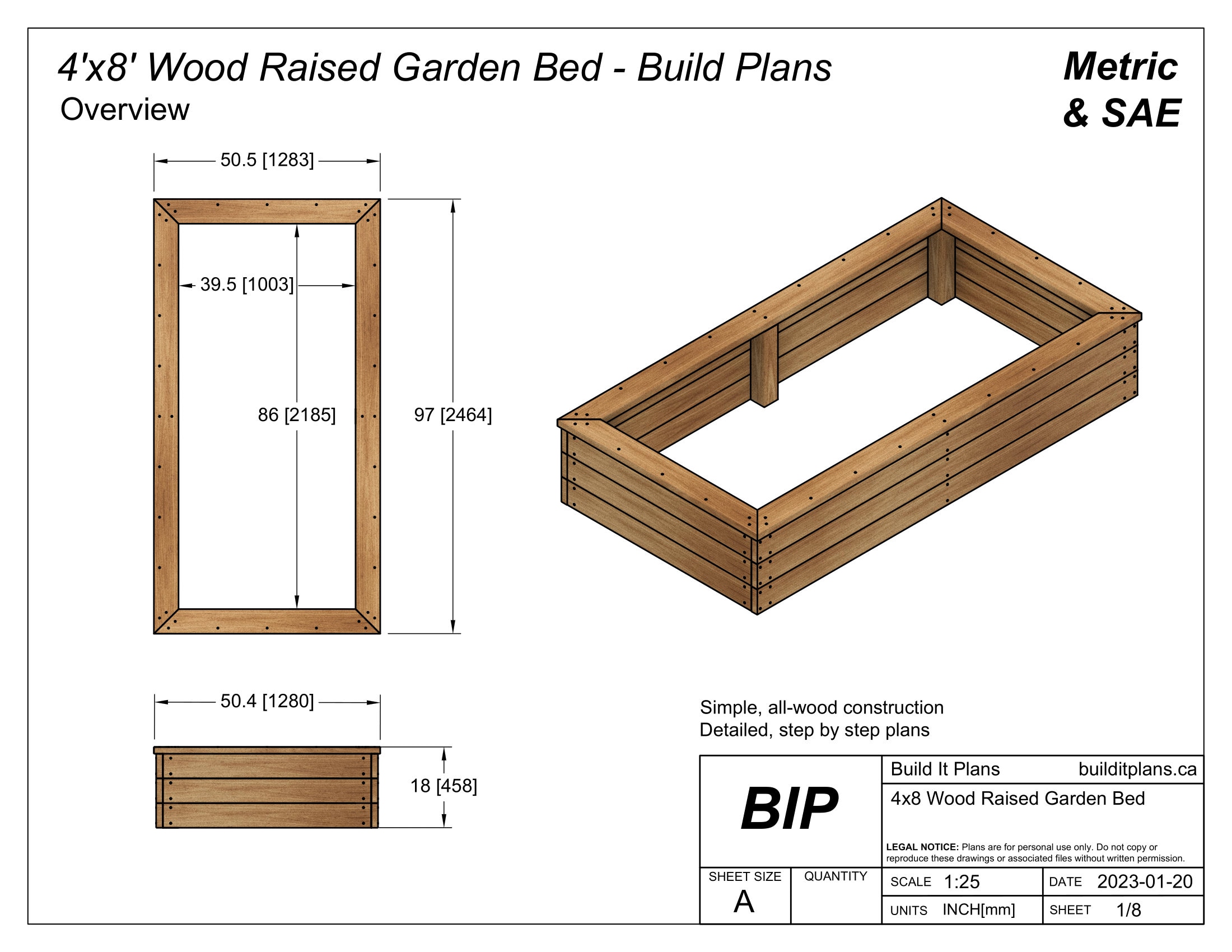
The best raised bed size lets you reach the center without stepping into the soil. For most adults, a bed no wider than 4 feet works well when you can reach from both sides. A bed against a wall should be 2 feet wide or less.
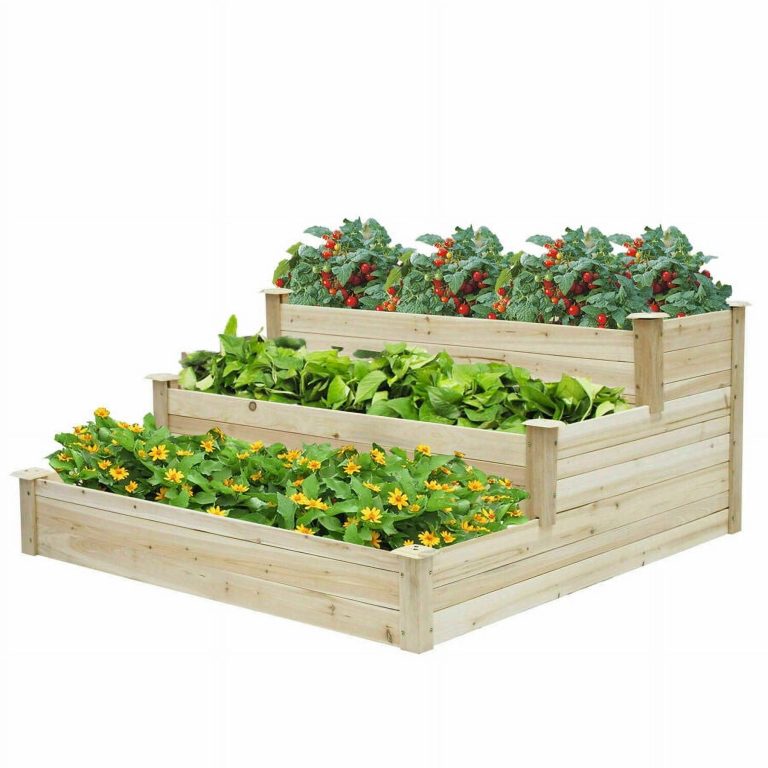
Bed height affects cost, drainage, comfort, and root depth. A low bed uses less soil and lumber. A tall bed feels easier on the back but needs more material and stronger construction.
Common raised bed dimensions
The following sizes work well for most home gardens. Adjust them to your body, site, and crop list.
| Bed feature | Practical starting point | Best use |
|---|---|---|
| Width | 3 to 4 feet | Easy reach from both sides |
| Length | 6 to 8 feet | Good harvest with simple access |
| Height | 8 to 12 inches | Most vegetables and herbs |
| Deep bed height | 18 to 24 inches | Root crops or easier access |
| Path width | 30 to 36 inches | Hand tools and wheelbarrows |
A 4-by-8-foot bed covers 32 square feet. At 12 inches deep, it holds about 1 cubic yard of soil, though you should subtract space taken by the frame. That volume surprises many first-time gardeners, so measure before ordering soil.
Pick a shape that fits the space
Rectangular beds offer the most growing space for the least material. Square beds work well in small yards. L-shaped beds can wrap around a patio, but they create corners that may be hard to reach.
Avoid narrow points and tight curves unless you have a specific design goal. A beautiful bed still needs room for weeding, harvesting, and watering. Straight edges also make row covers and drip lines easier to install.
Select a useful height
An 8-inch bed works for lettuce, beans, herbs, and many annual flowers. A 12-inch bed gives more room for tomatoes, peppers, kale, and most crops. Carrots grow best in at least 12 inches of loose soil, while long varieties such as ‘Danvers’ may need 18 inches.
For a seated gardener, a 24- to 30-inch bed can reduce bending. Use sturdy corner posts and cross supports at that height. Wet soil is heavy, and weak boards can bow or split after one winter.
Plan the site, light, and layout
Good placement can make a bigger difference than expensive soil. Set the bed near the house if you want to harvest herbs every day. A garden that sits far from the kitchen often becomes a garden you visit only when weeds are already large.
Mark the bed with stakes and string before digging. Walk around it with a watering can, hose, and wheelbarrow. This simple test often reveals a path that is too narrow or a corner blocked by a fence.

Measure sunlight through the seasons
Sun angles change from spring to fall. A site that receives full sun in April may sit under tree shade in August. Check nearby fences, sheds, hedges, and buildings.
In hot USDA Zones 8 through 10, a little afternoon shade can protect lettuce and cilantro from bolting. In Zones 3 through 6, full afternoon sun helps warm the soil and extend the season. Climate changes the ideal location, even for the same crop.
Use a simple grid layout
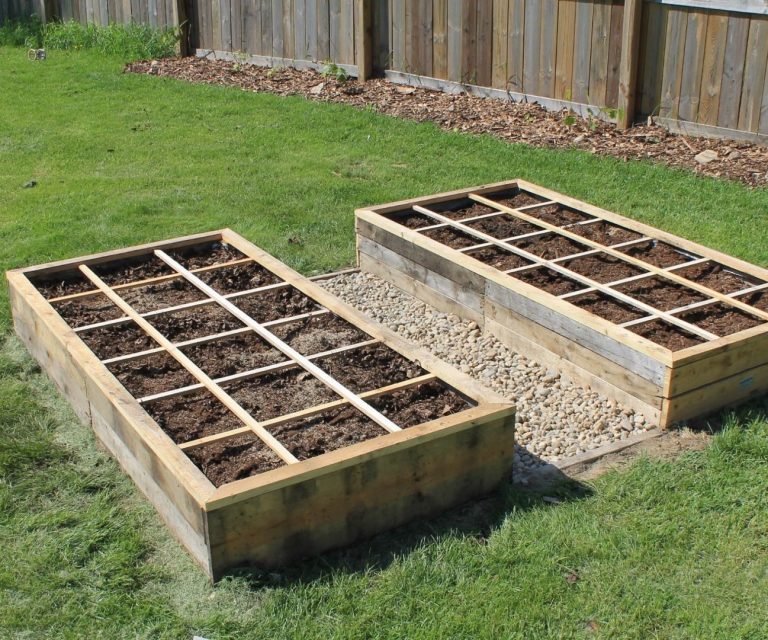
A grid helps you space plants without packing them into long rows. Divide the bed into 1-foot squares with string, thin boards, or a planting diagram. This method works well for lettuce, carrots, beets, onions, and herbs.
Examples for a 4-by-8-foot bed include:
- One tomato per 2-by-2-foot square
- Nine onions per square foot
- Sixteen radishes per square foot
- Four bush beans per square foot
- One pepper per 1-by-1-foot square
- Four lettuce heads per square foot
Follow the spacing on the seed packet when it differs. Air flow matters. Crowded tomatoes and cucumbers stay wet longer and face more disease.
Put tall plants on the north side
Plant tall crops on the north or northwest edge. This limits shade on shorter plants. Place trellises where you can tie vines and pick fruit without standing on the soil.
Keep sprawling plants such as pumpkins, large zucchini, and melons outside the bed unless you have plenty of room. Even compact ‘Bush Sugar Baby’ watermelon can spread several feet.
Build the frame and prepare the ground
A raised bed does not always need a bottom. Most vegetable beds work best when they sit directly on the ground. This lets roots move into native soil and allows earthworms to enter.
A bottom makes sense on concrete, contaminated soil, or a balcony. It also helps hold soil in a very tall bed. However, a sealed bottom can trap water and greatly increase weight.
Tools and materials checklist
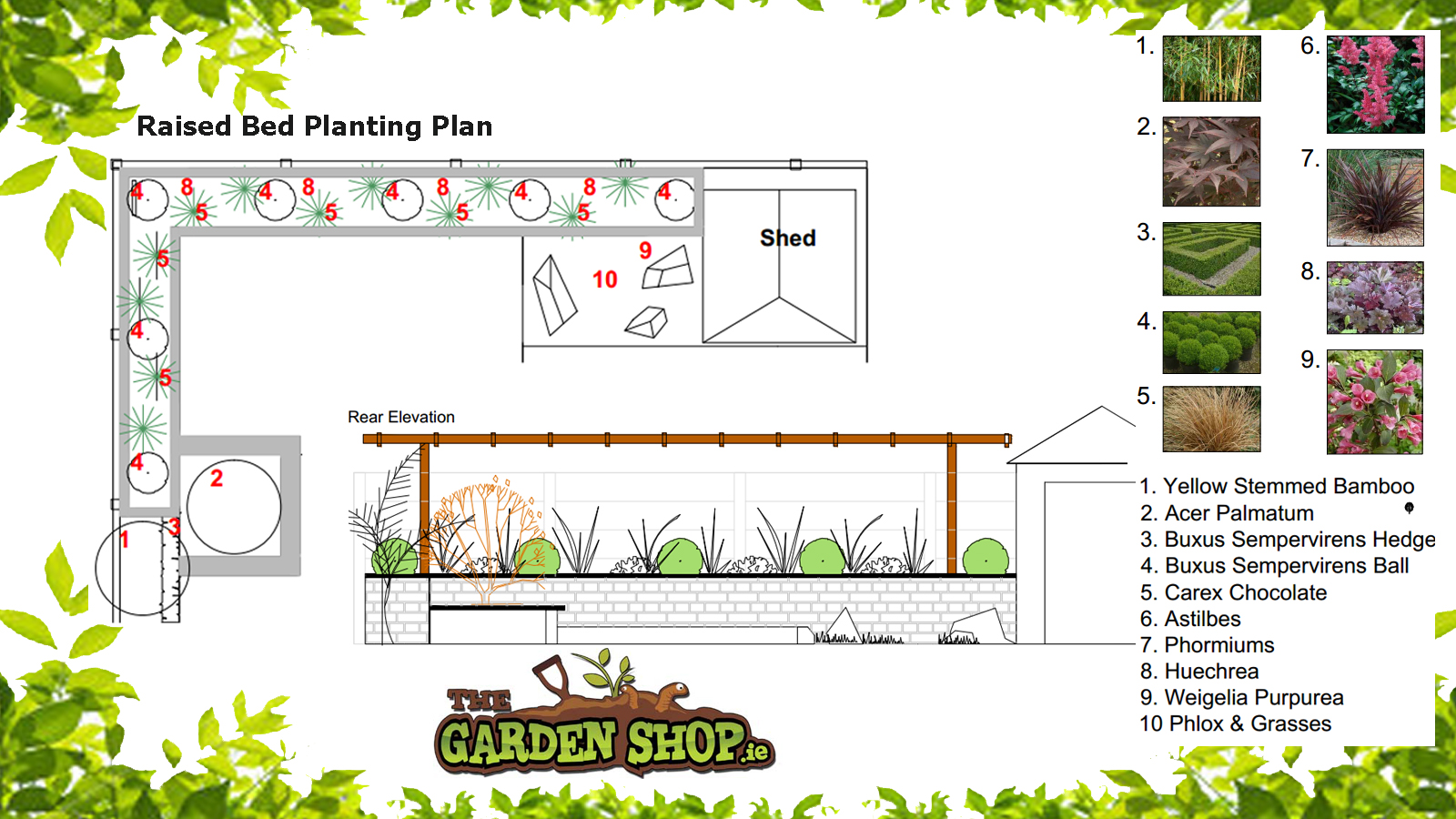
Gather all materials before you start construction. A cordless drill with a 20V battery, a level, tape measure, square, shovel, rake, and hand saw cover most basic builds. A circular saw speeds up repeated cuts but is not required.
| Material or tool | Suggested choice | Why it matters |
|---|---|---|
| Frame boards | Untreated cedar or safe lumber | Resists rot and avoids unknown chemicals |
| Fasteners | Exterior-rated screws | Hold better in wet conditions |
| Corner support | 2-by-2 or 4-by-4 posts | Prevents weak joints |
| Weed barrier | Cardboard or landscape fabric | Suppresses grass during setup |
| Level | 24-inch or longer level | Keeps water and soil evenly placed |
| Safety gear | Gloves, eye protection, closed shoes | Protects hands, eyes, and feet |
A power tool is helpful, but do not buy one just for a single bed. A hand saw and drill can build a small frame. If you use a circular saw, wear eye protection and keep hands away from the blade path.
Clear or cover the site
Cut grass short and remove large weeds. You can dig out the sod, but I often use overlapping cardboard under low beds. Remove tape and plastic from the cardboard, wet it well, and cover it with soil.
Cardboard breaks down over time. It can smother grass during the first season, but perennial weeds such as bindweed or quackgrass may return through gaps. For aggressive weeds, remove the top layer of sod and install a thick mulch path around the bed.
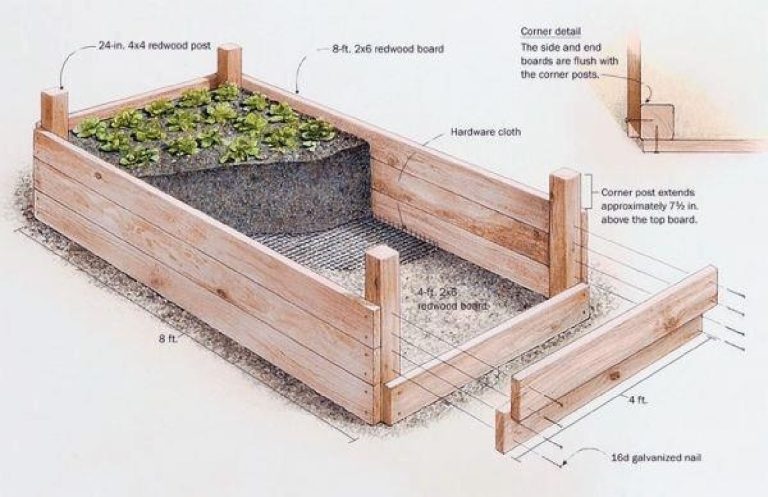
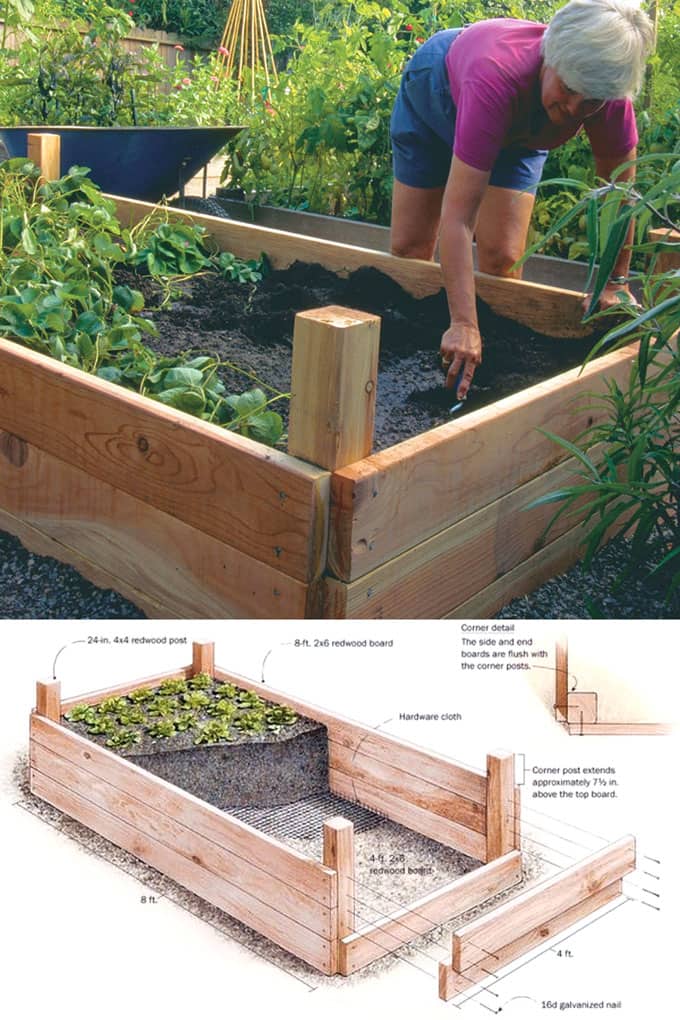
Assemble a strong frame
Build the frame on a level surface. Predrill near board ends to reduce splitting. Use at least two screws at each corner.
Beds longer than 6 feet benefit from a center brace or cross support. Soil pressure pushes outward, and thin boards can bow after heavy rain. On beds 18 inches or taller, add internal stakes every 3 to 4 feet.
Check the frame with a level before filling it. A slight slope is not a disaster, but a severe slope causes soil and water to collect at one end.
Fill the bed with healthy soil
The soil mix controls drainage, root growth, nutrient supply, and water use. Do not fill a raised bed with plain topsoil or pure compost. Topsoil alone can compact, while pure compost can shrink, hold too much water, or release excess nutrients.
A balanced mix usually contains about 60 percent quality topsoil, 30 percent compost, and 10 percent aeration material such as aged bark fines or coarse vermiculite. In wet climates, increase drainage material. In dry climates, keep enough organic matter to hold moisture.

Soil ingredients and their jobs
Each ingredient has a different role. Topsoil provides mineral particles. Compost adds organic matter and slow nutrient release. A coarse material creates air spaces.
| Ingredient | Typical share | Main function |
|---|---|---|
| Screened topsoil | 50–60% | Body and mineral structure |
| Finished compost | 25–35% | Organic matter and nutrients |
| Aged bark or coarse material | 10–20% | Air flow and drainage |
Use finished compost that smells earthy and looks dark. Avoid compost with a strong ammonia or sour odor. Fresh manure can burn roots and may contain weed seeds or pathogens. If you use manure, choose well-aged material from a trusted source and mix it into the bed before planting.
Test the soil before adding fertilizer
A soil test gives useful information about pH, phosphorus, potassium, and organic matter. Most vegetables prefer a pH between 6.0 and 7.0. Blueberries need a much more acidic range, about pH 4.5 to 5.5, so they usually belong in a separate container or bed.
Do not add lime, sulfur, or high-phosphorus fertilizer by guesswork. Many compost-rich beds already contain enough phosphorus. Excess phosphorus can move into waterways and reduce the availability of some micronutrients.
Fill in layers without overworking
Add the soil mix in 3- to 4-inch layers. Water each layer lightly to settle air pockets. Do not walk inside the bed unless you use wide boards to spread your weight.
The soil level may drop 1 to 3 inches during the first season. Keep extra compost or soil nearby for top-ups. Leave about 1 inch below the frame edge so water does not wash soil over the sides.
⚠️ Warning: Avoid “fill dirt” from an unknown source. It may contain construction debris, weed roots, salts, or heavy metals. Buy screened soil from a supplier who can explain its source and test results.
Choose plants and create a seasonal plan
A productive raised bed changes through the year. Cool-season crops can grow in early spring and fall. Warm-season crops fill the bed after the last frost. Succession planting keeps the soil working instead of leaving empty squares.
Your last frost date is only a guide. Soil temperature matters too. Beans and cucumbers dislike cold soil, while peas, spinach, and kale tolerate early spring conditions.

Match crops to the season
Use local frost dates from a trusted extension service. Gardeners in Zone 5 may start lettuce and peas outdoors in March or April, then plant tomatoes after the last frost in May. Gardeners in Zone 8 may grow greens through winter and shift to tomatoes in early spring.
| Season | Crops to consider | Main task |
|---|---|---|
| Early spring | Peas, spinach, radish, lettuce | Protect from frost and slugs |
| Late spring | Beans, tomatoes, peppers, basil | Wait for warm soil |
| Summer | Cucumbers, chard, carrots, herbs | Water deeply and mulch |
| Fall | Kale, broccoli, garlic, cover crops | Remove tired plants and replenish soil |
Exact timing varies by elevation, frost date, and heat. A warm Zone 8 winter can support cilantro and arugula, while a cold Zone 5 spring may delay planting by several weeks.
Use companion planting with realistic goals
Companion planting can help you use space and attract beneficial insects, but it does not replace pest control. Plant basil near tomatoes because both enjoy warm conditions, not because basil guarantees pest-free fruit. Add alyssum, calendula, dill, or yarrow to attract hoverflies, lacewings, bees, and other pollinators.
Avoid aggressive mint in the bed. Grow mint in a container. Horseradish and lemon balm can also spread quickly.
Plan succession planting
When radishes finish, replace them with bush beans. When spring lettuce bolts, plant basil or a fall crop. After pulling early peas, sow carrots or beets if the season allows.
Leave a small section for quick crops. Radishes mature in about 25 days, baby greens in 25 to 35 days, and bush beans in 50 to 60 days. These short crops help fill gaps while tomatoes and peppers grow.
Install watering and mulch before planting
Raised beds often dry faster than ground-level soil, especially when the frame sits above hot pavement or stands 24 inches tall. A reliable watering plan prevents stressed plants and saves time.
Water the soil, not the leaves. Wet foliage late in the day can encourage fungal diseases such as powdery mildew and leaf spot. Morning watering gives leaves time to dry.

Compare the main watering methods
Choose a system you can maintain. The most advanced setup is useless if clogged emitters go unnoticed.
| Method | Strength | Limitation |
|---|---|---|
| Hand watering | Low cost and flexible | Takes time and may wet leaves |
| Soaker hose | Simple, gentle soil watering | Can water unevenly when kinked |
| Drip irrigation | Efficient and precise | Needs filters and seasonal checks |
For one small bed, a watering can or hose wand works fine. For several beds, drip tubing with a filter and pressure regulator saves water. I prefer ½-inch mainline tubing with adjustable emitters for mixed crops.
Water by soil condition
Check soil moisture with your finger. If the top 1 to 2 inches feel dry, water slowly at the base of the plants. Newly planted seeds need more frequent, lighter moisture near the surface.
Established vegetables usually benefit from deep watering one to three times per week, depending on heat, rain, soil, and plant size. In a hot Zone 9 summer, a raised bed may need water every day. In a cool, rainy Zone 6 week, it may need none.
Apply the right mulch
Add 1 to 2 inches of straw, shredded leaves, pine needles, or untreated grass clippings around plants. Keep mulch a few inches away from tomato stems and plant crowns. Thick, wet mulch against stems can invite rot and pests.
Mulch reduces evaporation, softens soil temperature swings, and limits weeds. It also breaks down and adds organic matter. Watch for slugs under thick mulch in wet climates.
💡 Pro Tip: Put drip lines in place before you add a dense crop canopy. It is much easier to adjust tubing while the bed is still open.
Plant the bed in a simple, repeatable way
Planting becomes easier when you follow a set order. Start with permanent supports, then add tall crops, medium crops, and low crops. This avoids crushing young plants while you reach into the bed.
Follow these planting steps
- Check the soil level. Add soil if it has settled below the frame.
- Install trellises and stakes. Anchor them before roots fill the bed.
- Mark spacing. Use a ruler or 1-foot grid.
- Plant seeds at the correct depth. Most seeds need a depth about two to three times their width.
- Set transplants at soil level. Tomatoes can be planted deeper, with lower leaves removed.
- Water slowly. Soak the root zone without washing out seeds.
- Label each crop. Include the variety and planting date.
- Add mulch after seedlings emerge. Leave room around stems.
Do not press wet soil around roots with force. Firm it gently so roots touch the soil. Watering settles the remaining gaps.
Space plants for air flow
Crowding feels productive at planting time, but it creates problems later. A tomato that needs 24 inches will not become smaller because you plant it in 12 inches. Dense plants shade the soil and trap humidity.
Use compact varieties when space is tight. ‘Patio Choice Yellow’ tomato, ‘Lunchbox’ peppers, bush cucumbers, dwarf kale, and compact zucchini can fit better than full-size types. Check mature size, not just the seedling size.
Add protection from the start
Keep lightweight row cover, insect netting, and frost cloth nearby. A simple hoop over the bed can protect lettuce from cold and cabbage family crops from cabbage moths. Secure covers at the soil line so pests cannot crawl underneath.
Do not use insect netting when pollination is needed unless you hand-pollinate squash or remove the cover during bloom. Tomatoes usually self-pollinate, but bees still improve fruit set.
Maintain the raised bed through the year
Raised bed maintenance is simple, but it must be regular. Spend 10 to 15 minutes several times a week checking moisture, pests, weeds, and plant support. Small problems are easier to fix than a neglected bed after a month.
The frame itself may last 5 to 15 years, depending on wood type, moisture, soil contact, and climate. Cedar often lasts longer than inexpensive pine. The soil mix needs seasonal additions, not a full replacement every year.
Use this maintenance rhythm
| Timing | Maintenance task | What to check |
|---|---|---|
| Weekly | Water, weed, inspect leaves | Wilting, holes, yellow leaves |
| Monthly | Tie plants and check frame | Loose screws, leaning boards |
| Seasonal | Add compost and rotate crops | Soil level and disease history |
| Late fall | Remove debris and drain lines | Pests, rot, frozen water |
Remove diseased leaves and plants from the bed. Do not compost tomato or squash plants with serious fungal disease unless your compost pile reaches reliable heat. Healthy roots and leaves can return to the compost pile after chopping.
Refresh soil without replacing it
Each spring, add 1 to 2 inches of finished compost and mix it gently into the top few inches. Avoid deep tilling, which breaks soil structure and disturbs worms and helpful fungi.
If the soil sinks badly, find the cause. Poor compost, settling, erosion, or decaying roots may explain the loss. Add soil in small amounts rather than filling the bed with a thick layer that buries plant crowns.
Rotate plant families
Crop rotation reduces the build-up of pests and diseases. Do not plant tomatoes, peppers, eggplants, and potatoes in the same spot every year. They all belong to the nightshade family and share several problems.
Rotate by family when possible:
- Nightshades: tomatoes, peppers, eggplants
- Brassicas: kale, cabbage, broccoli
- Legumes: peas and beans
- Cucurbits: cucumbers, squash, melons
- Alliums: onions, garlic, chives
In a small bed, full rotation can be hard. At minimum, remove plant debris, use healthy transplants, and avoid planting a crop in the same diseased soil two years in a row.
Fix common raised bed problems
Most raised bed problems come from poor drainage, shallow soil, weak frames, uneven watering, or planting too close. The symptom often points to the cause.
Diagnose the issue before adding a product
| Symptom | Likely cause | First fix |
|---|---|---|
| Plants wilt in wet soil | Poor drainage or root damage | Check outlets and reduce watering |
| Soil dries within a day | Small bed, heat, or low organic matter | Add mulch and improve irrigation |
| Leaves turn pale | Nutrient issue, roots, or overwatering | Test soil and inspect roots |
| Frame bows outward | Long unsupported wall | Add braces and exterior screws |
| Seeds vanish | Birds, slugs, or poor depth | Use row cover and check at night |
Yellow leaves do not always mean “add fertilizer.” Overwatering can reduce oxygen around roots and cause the same symptom. Dig beside the plant and inspect the soil before you feed it.
Control pests without harming pollinators
Check leaf undersides for aphids, whiteflies, cabbage worms, and spider mites. Hand-pick large pests early. Use insect netting for cabbage moths and flea beetles. Spray water on aphids, or use insecticidal soap according to the label when needed.
Avoid broad-spectrum insecticides while flowers are open. They can harm bees and other beneficial insects. Neem products also require careful label use and should not be sprayed on blooming plants visited by pollinators.
Manage fungal disease
Powdery mildew looks like white dust on leaves. It often appears when plants have poor air flow and dry roots but humid air. Space plants better, water the soil, remove badly affected leaves, and choose resistant varieties next season.
Early blight causes dark spots and yellowing on tomato leaves. Mulch the soil to reduce splash, prune only when plants are dry, and rotate tomatoes away from the same bed when possible. Clean tomato supports at the end of the season.
🔧 Quick Fix: If water runs off the soil surface, stop watering for a moment. Scratch the top inch with a hand fork, then water slowly in two or three passes. Dry soil can become water-repellent when it loses organic matter.
Understand the cost and decide if a raised bed is worth it
A raised bed is worth the money when you need soil control, better access, improved drainage, or a clear garden layout. It may not be the best choice if your native soil is already loose, fertile, and easy to work.
Current pricing ranges from about $50 for a basic small DIY bed to several hundred dollars for tall cedar beds with soil, irrigation, trellises, and protective covers. Soil often costs more than the frame. Delivery fees can also change the budget.

Estimate the first-season budget
| Project level | Typical cost range | What it may include |
|---|---|---|
| Small DIY bed | $50–$150 | Lumber, screws, compost, seeds |
| Two medium beds | $200–$500 | Frames, soil, plants, irrigation |
| Tall accessible setup | $500–$1,500+ | Deep frames, large soil volume, paths |
A low bed is cheaper but requires more bending. A tall bed improves access but costs more and needs stronger supports. Container gardening may cost less for a few herbs, while in-ground gardening costs the least when native soil is suitable.
Compare raised beds with other methods
Raised beds are not automatically better than every alternative. In-ground beds preserve more moisture and use less soil. Containers offer strong control but dry out faster and limit root space.
Choose a raised bed when:
- Your soil is compacted or contaminated
- You want clean paths and organized spacing
- You need better access
- You want to extend the season with covers
- You garden on a gentle slope
Choose in-ground planting when your soil drains well and you have enough space. Choose containers for balconies, rentals, patios, and small herb gardens.
Plan for winter and the next growing season
A raised bed can remain productive after summer crops finish. In mild climates, plant garlic, spinach, mâche, or a cover crop. In cold climates, use row cover, low tunnels, and mulch to protect soil and extend harvests.
Do not leave diseased plants in place. Remove supports, drain irrigation lines before freezing weather, and store loose tools in a dry shed or garage. Frozen water inside drip tubing can split fittings.

Protect the frame and soil
Inspect boards for soft spots, cracks, and loose screws. Replace damaged pieces before the next season. Keep soil from pressing against rotten wood by repairing leaks and controlling excess irrigation.
Cover bare soil with compost, leaves, straw, or a winter cover crop such as crimson clover, oats, or winter rye. Cover crops protect soil from erosion and add organic matter, but they must be cut down before they set seed.
Keep a garden record
Write down planting dates, varieties, pest problems, and harvest results. A simple phone note can show that ‘Cherokee Purple’ struggled in your humid summer while ‘Mountain Merit’ stayed healthier.
Record which bed held tomatoes, beans, or brassicas. Even a small garden improves when you learn from one season to the next. Your own notes are often more useful than a generic planting chart.
Avoid the most common planning mistakes
The most expensive raised bed mistakes happen before planting. People build beds that are too wide, buy poor soil, ignore water access, or choose crops that do not fit the climate.

Mistake 1: Making the bed too wide
A 6-foot-wide bed may look efficient, but you cannot reach the center without stepping on the soil. Compacted soil limits roots and damages its structure. Keep most beds to 4 feet wide.
Mistake 2: Underestimating soil volume
A 4-by-8-foot bed at 12 inches deep needs close to 1 cubic yard of mix. Two beds need nearly 2 cubic yards. Order enough soil, but confirm the supplier sells a real volume rather than a vague “load.”
Mistake 3: Using too much compost
Compost is useful, but pure compost can hold excess salts and nutrients. It can also shrink as it breaks down. Blend compost with mineral soil and coarse organic matter.
Mistake 4: Ignoring the water source
Carrying watering cans across a large yard gets old quickly. Place beds near a hose bib or install a long-lasting irrigation line before plants fill the space.
Mistake 5: Planting too much at once
A full bed looks exciting, but 20 tomato plants can overwhelm a beginner. Start with one or two beds. Learn how much food your household uses and how much time you can give the garden.
Mistake 6: Forgetting the mature plant size
Seedlings are small. Mature squash, tomatoes, and cucumbers are not. Read the plant tag, provide support, and leave room for air flow.
Follow a practical first-year plan
A simple first-year plan reduces cost and builds skill. Start with one 4-by-8-foot bed or two 3-by-6-foot beds. Use crops with different harvest times so you can learn as the season moves.

Month-by-month planning outline
- Winter: Pick the site, draw the layout, order materials, and check frost dates.
- Early spring: Build the frame, fill it, install irrigation, and plant cool-season crops.
- Late spring: Add tomatoes, peppers, beans, basil, and cucumbers after frost danger passes.
- Summer: Mulch, water deeply, tie plants, and replant empty spaces.
- Early fall: Sow kale, lettuce, radishes, carrots, and spinach.
- Late fall: Remove diseased plants, add compost, protect soil, and clean tools.
This schedule shifts by USDA zone. Gardeners in Zones 9 and 10 may plant cool crops in fall and winter, while gardeners in Zones 3 and 4 may need low tunnels or an earlier indoor seed-starting plan.
A reliable beginner bed layout
For one 4-by-8-foot bed, place one trellised cucumber or tomato on the north edge. Add peppers, basil, lettuce, bush beans, radishes, and carrots in the remaining squares. Keep at least one section open for succession crops.
This mix gives fast harvests, summer crops, herbs, and plants that teach different skills. You will learn spacing from lettuce, support from tomatoes, pollination from cucumbers, and watering from shallow-rooted greens.
Frequently asked questions
Q: How deep should a raised garden bed be?
A: Use 8 to 12 inches for most herbs, greens, beans, and flowers. Use 12 to 18 inches for carrots, tomatoes, and crops with larger root systems. A 24-inch bed works well for seated access, but it needs strong supports and much more soil.
Q: Should I put cardboard under a raised bed?
A: Yes, cardboard can suppress grass under a low bed placed on soil. Overlap pieces, remove tape, wet the cardboard, and cover it with soil. Do not use cardboard over poorly draining concrete or where water needs to escape.
Q: Do raised beds need a bottom?
A: Most beds placed on the ground do not need a bottom. A bottom can help on concrete or contaminated soil, but it may restrict roots and drainage. Use a bottom only when the site requires it.
Q: What is the best soil mix for raised beds?
A: Start with about 50 to 60 percent screened topsoil, 25 to 35 percent finished compost, and 10 to 20 percent aged bark or another coarse material. Adjust the mix after a soil test and based on drainage in your climate.
Q: How often should I water a raised bed?
A: Check the top 1 to 2 inches of soil. Water when that layer feels dry, then soak the root zone slowly. In mild weather, this may mean one to three deep waterings per week. Hot, windy weather can require daily checks.
Q: Can I grow tomatoes and peppers in the same raised bed?
A: Yes. Tomatoes and peppers have similar warm-season needs and prefer full sun, fertile soil, and even moisture. Give tomatoes more space and support, and rotate nightshade crops away from the bed when possible.
Q: Why is my raised bed soil sinking?
A: Soil sinks as compost, roots, and organic material break down. Poor-quality compost can shrink fast. Add 1 to 2 inches of finished compost each season, and add fresh soil only when the bed level drops more than a few inches.
Q: How long does a raised bed last?
A: Untreated pine may last about 3 to 7 years, while cedar can last 7 to 15 years or longer in many climates. Wet soil, poor drainage, termites, and freeze-thaw cycles shorten the life. Inspect the frame each spring.
Q: Can I grow vegetables in a raised bed over concrete?
A: Yes, but use a bottom with drainage holes, choose a safe location, and confirm the surface can support the weight. A filled 4-by-8-foot bed can weigh several thousand pounds. Containers or smaller beds may be safer on balconies and rooftops.
Q: What should I plant in a raised bed for pollinators?
A: Add alyssum, calendula, dill, borage, coneflower, bee balm, yarrow, and native milkweed suited to your region. Include flowers from spring through fall. Avoid spraying insecticides when pollinators are active.
Q: Can raised beds reduce weeds?
A: They reduce weeds but do not remove them. Clean soil, cardboard, mulch, and regular hand weeding work together. Perennial weeds can still enter from paths, wind, compost, or nearby lawns.
Q: Is a raised bed better than an in-ground garden?
A: A raised bed is better when you need controlled soil, easier access, or improved drainage. An in-ground garden costs less and often holds moisture better. The right choice depends on native soil, space, budget, and physical comfort.
Make the plan simple enough to maintain
A raised bed garden succeeds when it fits your daily life. Build near water, keep the width reachable, use tested soil, and grow crops your household will eat. Start small, then add beds after you understand your light, climate, pests, and watering needs.
The first season may reveal surprises. A bed can drain too quickly, a tomato can outgrow its support, or squirrels can discover fresh soil overnight. Those problems are normal. Adjust the design, keep notes, and let each season make the next one easier.
A well-planned raised bed is more than a wooden box filled with soil. It is a small growing system with good access, healthy roots, steady moisture, useful crop timing, and room for learning. Plan those pieces first, and your garden will reward you for many seasons.
Meta description: Learn how to plan a raised bed garden with expert tips on size, site, soil mix, plants, watering, costs, crop spacing, maintenance, and common mistakes.