
General Hydroponics Eco Grower Drip Hydroponic System: Best
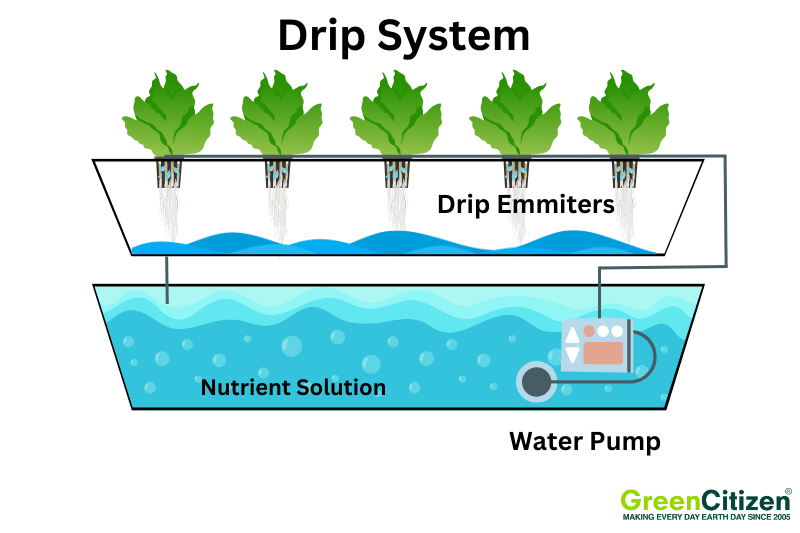
The General Hydroponics Eco Grower is a small recirculating drip hydroponic system for growing several plants indoors or in a protected space in the United States. It uses a reservoir, water pump, drip lines, and net pots to send nutrient solution to the plant roots. The solution then drains back into the reservoir for reuse.
The system can work well for herbs, leafy greens, tomatoes, peppers, and other compact crops. Its success depends less on the kit alone and more on correct water level, light, nutrient strength, pH, airflow, and routine cleaning.
This guide explains how the Eco Grower works, how to set it up, how to mix nutrients, and how to fix common problems.

Key Takeaways
- The Eco Grower is a recirculating top-feed drip system.
- It normally supports six growing sites, but the exact parts can vary by package or revision.
- Use a suitable hydroponic nutrient, not garden soil fertilizer.
- Keep the root zone moist but well aerated.
- Check pH and nutrient strength often during the first few weeks.
- Clean the reservoir, pump, tubing, and air equipment between crops.
- Protect all plugs and power connections from leaks and splashes.
What Is the General Hydroponics Eco Grower?
The General Hydroponics Eco Grower is a compact hydroponic system that feeds plants from above while storing nutrient solution in a shared reservoir. A water pump moves the solution through tubing and drip lines. Gravity returns unused solution to the reservoir.
This design is often called a recirculating drip system or top-feed hydroponic system. It differs from a simple deep-water culture bucket because the plants are not meant to sit with their roots fully submerged.
The system usually includes:
- A reservoir
- Multiple plant sites
- Net pots
- Growing media
- A water pump
- Drip tubing or drip fittings
- An air pump and air stone in many package versions
- A water-level indicator or related reservoir parts
Parts may differ by seller, production date, or regional package. Check the manual and the parts included in your box before assembly.
How the Eco Grower feeds plants
The pump pushes nutrient solution from the reservoir to the upper growing sites. The solution wets the growing media and plant roots. Excess liquid drains downward and returns to the reservoir.
The air pump adds oxygen to the water through an air stone. This helps support healthy roots, especially when the reservoir is warm or the system runs continuously.
The main benefit is steady water and nutrient delivery. The main risk is that one blocked tube, failed pump, or empty reservoir can affect several plants at once.
What Can You Grow in an Eco Grower?
The Eco Grower can grow many small and medium plants, but plant size matters. Six large plants may quickly crowd the system and block light from one another.
Good choices include:
- Basil
- Mint
- Lettuce
- Kale
- Swiss chard
- Cilantro
- Parsley
- Strawberries
- Small pepper varieties
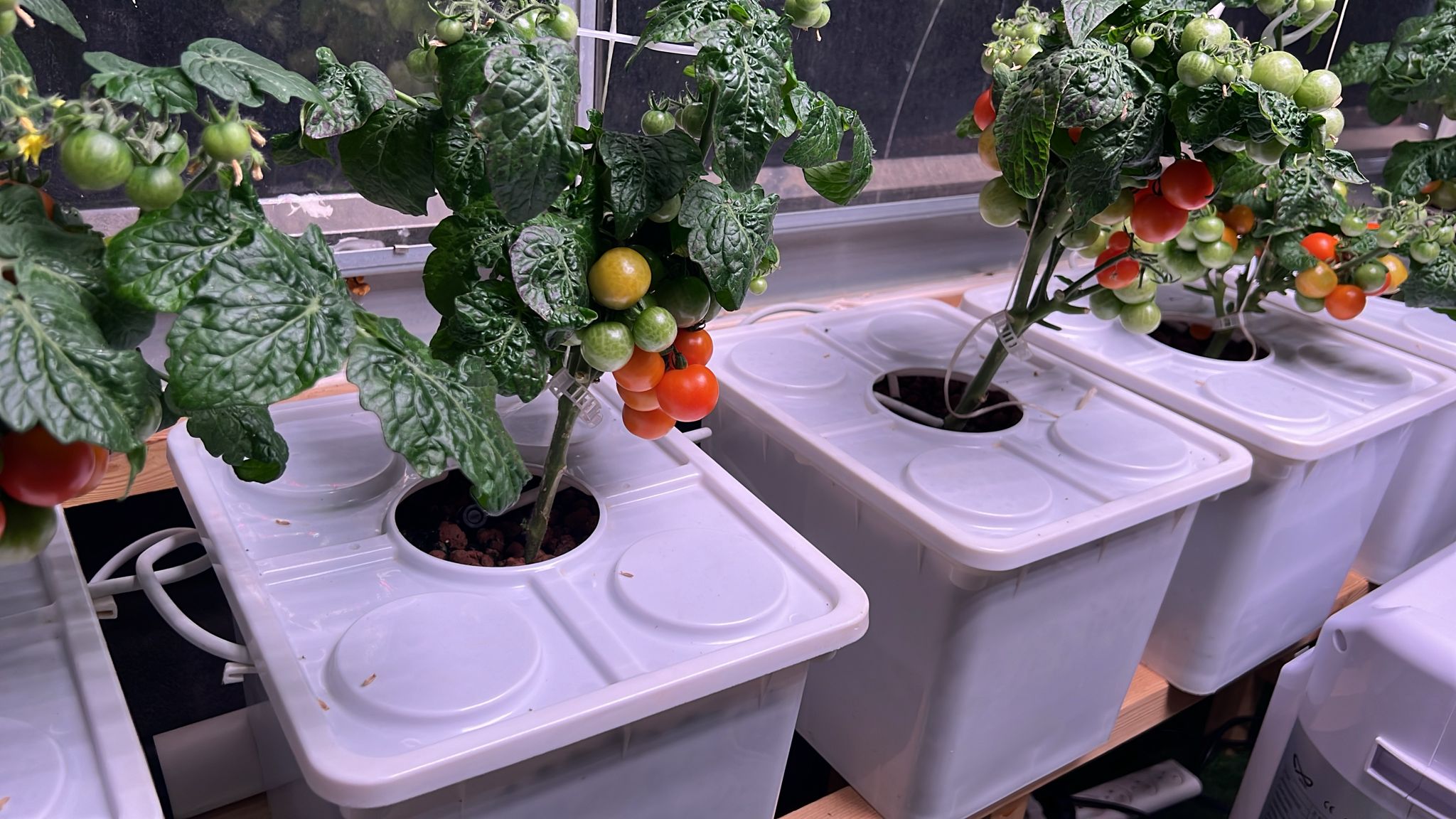
- Compact tomato varieties
Large tomatoes, full-size cucumbers, and heavy squash can outgrow the system. You can still grow them when the structure, light, and support are strong enough, but they need more pruning and root space.
For a first crop, leafy greens and herbs are easier than fruiting plants. They grow faster, need less support, and place less demand on light and nutrients.
Plant spacing matters
The number of sites does not always equal the number of plants you should grow. A mature basil plant can spread across several sites. Lettuce usually needs less vertical space but still needs room for airflow.
Use fewer sites when:
- The plants have a wide canopy.
- The light is small.
- The growing area has limited airflow.
- You want to grow tomatoes or peppers.
- The plant roots are filling the reservoir area.

General Hydroponics Eco Grower Setup
Set up the Eco Grower on a level, stable surface that can support the filled system. Water is heavy. One U.S. gallon weighs about 8.34 pounds, before adding the weight of the reservoir, plants, and equipment.
Do not place the system on a weak shelf or a surface that can warp when wet.
Supplies you may need
Prepare these items before assembly:
- General Hydroponics Eco Grower system
- Clean water
- Hydroponic nutrient
- pH test drops or a digital pH meter
- pH adjustment solution
- Growing media
- Seeds or healthy seedlings
- Measuring cup or syringe
- Light timer
- Grow light suitable for the crop
- Small fan
- Clean bucket for mixing
- Spare air stone or tubing, if possible
Use a separate clean bucket for nutrient mixing. Do not mix concentrated nutrient products together before adding them to water.
Step-by-step assembly
-
Choose the location.
Select a place with access to a grounded outlet, fresh air, and enough height for the light and mature plants. -
Clean the parts.
Rinse the reservoir, net pots, tubing, and growing media. Do not use harsh cleaners that may leave residue. Follow the product manual if it gives a cleaning method. -
Place the reservoir.
Set the reservoir on a level surface. Make sure you can remove the lid and reach the pump. -
Install the pump.
Place the water pump inside the reservoir. Attach the feed tubing as shown in the manual. -
Install the drip lines.
Connect the tubing to the growing sites. Make sure each site receives water when the pump runs. -
Install the air equipment.
If included, place the air stone in the reservoir and connect it to the air pump. Keep the air pump above the water line, or use a check valve to help prevent backflow. -
Test the system with plain water.
Turn on the pump. Watch every drip point and drain path. Look for leaks, loose fittings, blocked lines, and uneven flow. -
Add growing media and plants.
Put the plants in the net pots. Keep the crown of each plant above the wet media. The crown is the point where the stem meets the roots. -
Add nutrient solution.
Mix the nutrient according to its label. Test pH after mixing. -
Set the light and fan.
Keep the light at the distance recommended by its manufacturer. Use gentle airflow to reduce stagnant, humid air.
Signs of a correct setup
A working system should show:
- Water reaching each plant site
- A clear return path to the reservoir
- No leaks around fittings
- Active bubbles from the air stone, when included
- Roots that remain moist but are not packed in stagnant water
- A water level that stays within the marked operating range
Do not run the pump dry. A dry pump can overheat or fail.

How to Mix Nutrients for the Eco Grower
Use nutrients made for hydroponic growing. Soil fertilizers may not provide the right balance of mineral nutrients for a water-based system.
General Hydroponics offers several nutrient lines, including Flora Series products. Each line has its own mixing chart. Follow the label for the exact product and crop stage rather than copying a recipe from a different nutrient line.
Safe mixing order
Use this general process unless the nutrient label says otherwise:
- Fill the reservoir with water.
- Add the first nutrient part.
- Stir or circulate the water.
- Add the next nutrient part.
- Mix well again.
- Measure nutrient strength.
- Adjust pH last.
Never pour concentrated nutrient parts together. Some ingredients can react when they meet at full strength.
pH range
Many common hydroponic crops perform well when the solution is mildly acidic, often around pH 5.5 to 6.5. The ideal range can vary by crop and nutrient program.
A practical target for mixed crops is often near pH 5.8 to 6.2, but the nutrient label and crop needs should guide the final value.
Check pH:
- After making a fresh batch
- After adding pH adjustment solution
- When plants show unusual growth
- When the reservoir has been topped up
- When the nutrient strength changes sharply
Nutrient strength and EC
Electrical conductivity, or EC, estimates the amount of dissolved material in the water. Total dissolved solids, or TDS, is another meter reading based on a conversion scale.
EC and TDS are not the same measurement. Two TDS meters can show different numbers from the same water because they may use different conversion factors.
Use the nutrient maker’s target range when available. Start at the lower end for seedlings and new transplants. Increase strength only when plants are growing well and the crop can handle more nutrients.
A high reading can point to:
- Too much nutrient
- Too much water loss through evaporation
- A buildup of salts
- Hard source water
- A meter or calibration problem
A low reading can point to:
- Too little nutrient
- Excessive dilution
- Heavy plant uptake
- A measurement error
Example calculation
If a label calls for 10 milliliters of nutrient per gallon and the reservoir holds 10 gallons of water:
10 milliliters × 10 gallons = 100 milliliters
This is only a hypothetical example. Use the actual label rate for the nutrient product and growth stage.
Water, Light, and Climate Requirements
Nutrients cannot solve weak light, poor airflow, or extreme heat. The Eco Grower gives roots access to water and minerals, but the plant still needs enough light and a stable environment.
Water quality
Tap water in the United States varies by city and region. Some supplies contain high mineral levels, while others are relatively soft.
If your starting water has a high EC, adding more nutrient may push the final solution too strong. Test the source water before mixing nutrients. A water report from your local utility may also help explain mineral content.
Use clean water free from visible sediment or strong chemical odor. If you use filtered or reverse-osmosis water, the nutrient plan may need adjustment because the starting mineral content is lower.
Light
Leafy greens usually need less light than tomatoes or peppers. Fruiting plants need strong light for flowering and fruit production.
Keep the light:
- Close enough to provide useful intensity
- Far enough away to avoid leaf bleaching or heat stress
- On a timer for a stable daily schedule
- Above the whole canopy when possible
Drooping, pale leaves can result from weak light, root problems, nutrient issues, heat, or several causes at once. Do not change five things at the same time. Check the roots, water, pH, nutrient strength, and light one by one.
Temperature and airflow
Warm water holds less dissolved oxygen than cool water. High room temperature can therefore increase root stress.
A small fan can improve airflow around the leaves. Do not aim a powerful fan directly at young plants. Strong, dry airflow can cause wilting and leaf edge damage.
Keep the reservoir away from direct sunlight. Light entering the reservoir can encourage algae growth.
Eco Grower Maintenance Schedule
Regular checks prevent small problems from becoming crop failures.
Daily or near-daily checks
Look for:
- Pump operation
- Air bubbles, if an air stone is installed
- Water level
- Leaks
- Wilting or sudden leaf changes
- Blocked drip lines
- Unusual reservoir smell
Top up with water when needed. After topping up, recheck pH and nutrient strength.
Weekly checks
Inspect:
- Tubing connections
- Drip outlets
- Pump intake screen
- Air tubing
- Root growth
- Salt deposits around fittings
- Light position
- Plant spacing
If one plant site is dry while the others are wet, inspect that site first. A blocked line is more likely than a whole-system nutrient problem.
Reservoir changes
The correct change interval depends on plant size, water use, temperature, and nutrient buildup. Many growers replace the reservoir solution on a regular schedule rather than topping it up indefinitely.
A fresh solution is especially useful when:
- EC keeps rising
- pH becomes difficult to control
- The water smells bad
- Roots look unhealthy
- Algae or heavy residue is present
Drain the old solution safely. Do not pour concentrated nutrient waste onto sensitive plants, into storm drains, or into waterways.
Cleaning between crops
At the end of a crop:
- Unplug the equipment safely.
- Drain the reservoir.
- Remove roots and plant waste.
- Take apart the pump and tubing where practical.
- Rinse away deposits.
- Clean according to the system and nutrient manufacturer’s instructions.
- Rinse all parts well.
- Allow removable parts to dry before storage.
Never work on submerged electrical equipment while it is plugged in.

Common Eco Grower Problems and Fixes
Troubleshoot the safest and simplest causes first. Change one variable at a time when possible.
| Symptom | Likely causes | First checks |
|---|---|---|
| One site stays dry | Blocked tube, loose fitting, failed outlet | Inspect that line and fitting |
| All sites stop receiving water | Pump failure, low water, blocked intake, power issue | Check water level, plug, pump, and intake |
| Roots turn brown and smell bad | Low oxygen, heat, root disease, dirty reservoir | Check water temperature, aeration, and cleanliness |
| Leaves wilt while the reservoir is full | Root damage, high heat, weak pump, light stress | Inspect roots and flow |
| Leaf tips turn brown | High nutrient strength, dry air, salt buildup | Check EC, humidity, and reservoir condition |
| Leaves become pale | Low light, nutrient shortage, root trouble | Check light, pH, EC, and roots |
| Green slime appears | Light entering the reservoir, warm water, poor cleaning | Block light and clean the system |
| pH rises quickly | Active plant uptake, weak buffering, source-water issue | Record pH daily and test source water |
| pH falls quickly | Nutrient imbalance, root stress, contamination | Replace solution and inspect roots |
| Pump is noisy | Low water, debris, worn impeller, air entering the pump | Add water and clean the intake |
Brown roots
Healthy hydroponic roots are often white, cream, or light tan, although nutrient color can affect appearance. Brown, soft, slimy roots with a foul smell indicate a serious root-zone problem.
Remove dead roots with clean tools only when necessary. Improve aeration, reduce heat, clean the reservoir, and replace the solution. If the plant has severe root damage, recovery may not be possible.
Algae
Algae need light, water, and nutrients. Cover gaps in the reservoir and net-pot area. Opaque covers and clean fittings help limit growth.
Do not rely on random household chemicals in a system that feeds edible plants. Use only products labeled for the intended hydroponic use, and follow the label.
Uneven plant growth
Uneven growth may result from:
- Different plant varieties
- Uneven light
- Different root sizes
- A blocked drip line
- Crowding
- Different planting dates
Compare the root health and water flow of the weak plant with a healthy plant. This often reveals whether the issue is local or system-wide.

Is the Eco Grower Better Than Other Hydroponic Systems?
The Eco Grower is useful when you want several plants connected to one reservoir. It is less convenient when you want every plant to have separate water and nutrient control.
| System type | Main strength | Main limitation |
|---|---|---|
| Recirculating drip system | Feeds several plants from one reservoir | One pump or reservoir problem can affect all plants |
| Deep-water culture | Simple root access to oxygenated water | Roots remain highly dependent on aeration |
| Kratky method | No pump required for some crops | Less flexible for long crops and changing water demand |
| Nutrient film technique | Efficient water use for suitable crops | Sensitive to pump and flow failures |
| Coco or soil containers | Each pot can be managed separately | More runoff, hand watering, or irrigation work |
Choose the Eco Grower when you value a shared system and want to grow multiple plants in one space. Choose separate containers when crops have very different nutrient needs or harvest times.
The system is not automatically better than other methods. Its best feature is its balance of automation, capacity, and relatively simple plumbing.
Safety and Food-Growing Boundaries
Water and electricity create a real shock hazard. Use a properly grounded outlet and protect connections from water. Keep plugs, power strips, and controllers above the reservoir and away from drip paths.
Before cleaning or moving the system:
- Turn off the equipment.
- Unplug it from the outlet.
- Keep wet hands away from electrical connections.
- Confirm that water cannot run toward the plug.
Use nutrients and additives according to their labels. Store concentrates away from children, pets, and food. Wear suitable protection if a product label calls for it.
Do not assume that a nutrient additive is safe for edible crops simply because it is sold for gardening. Check the product label and follow local disposal rules.
For persistent electrical faults, damaged cords, overheating equipment, or a circuit that trips repeatedly, stop using the system and contact a qualified electrician or replace the damaged equipment.
Frequently Asked Questions
How often should I change the water in the Eco Grower?
There is no single schedule for every crop. Replace the solution when nutrient strength or pH becomes difficult to control, the reservoir smells bad, roots look unhealthy, or heavy residue builds up. Regular top-ups should not continue forever without occasional draining and cleaning.
Can I use tap water in the General Hydroponics Eco Grower?
Yes, many growers use tap water. Test its starting EC or TDS when possible. Hard water may already contain substantial minerals, so you may need a different nutrient amount or a filtered water source.
Does the Eco Grower need to run all the time?
The pump schedule depends on the crop, growing media, and system setup. Some plants and media can tolerate timed feeding, while others need more frequent flow. Follow the manual for the system and watch for dry media, wilt, or poor root oxygenation.
The air pump, when included, is commonly run continuously unless the manufacturer gives different instructions.
Why are my plants wilting when there is water in the reservoir?
A full reservoir does not prove that the roots are receiving usable water and oxygen. Check for a blocked drip line, failed pump, damaged roots, excessive heat, high nutrient strength, and light stress.
Can I grow tomatoes in the Eco Grower?
Yes, compact tomato varieties can grow in a suitable setup. Tomatoes need strong light, plant support, pruning, good airflow, and more room than lettuce or herbs. Large plants may crowd the other sites and use water quickly.
How do I stop algae in the reservoir?
Block light from reaching the nutrient solution, clean the system, remove plant debris, and keep the reservoir covered. Also inspect gaps around net pots and tubing. Do not add an unapproved chemical to edible-crop water.
Final Recommendation
The General Hydroponics Eco Grower is a practical choice for a U.S. home grower who wants a shared, recirculating drip system for several plants. It is most forgiving when used with compact crops, strong light, clean water, steady airflow, and regular pH and nutrient checks.
Before planting, test the pump and every drip line with plain water. During the crop, check the reservoir, roots, and flow often. If you keep the water clean and prevent electrical hazards, the system can provide a reliable way to learn hydroponic growing without hand-watering every plant.

2 Comments