Best Hydroponic Air Pump: Find The Right Choice
The best hydroponic air pump for most U.S. home growers is a quiet, adjustable pump that delivers enough air for the size and depth of the reservoir. For a small deep-water culture (DWC) tote, a pump rated around 10–20 liters per minute (LPM) is often a sensible starting point. Larger reservoirs, multiple buckets, and commercial systems need more airflow and separate air lines.
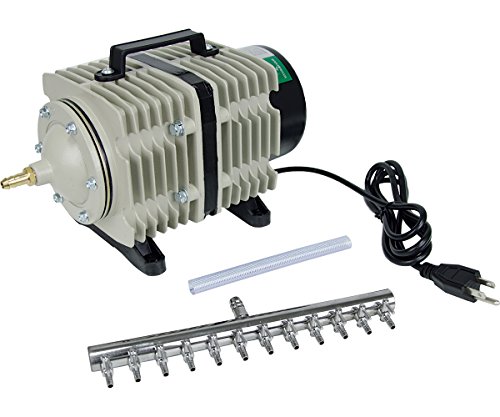
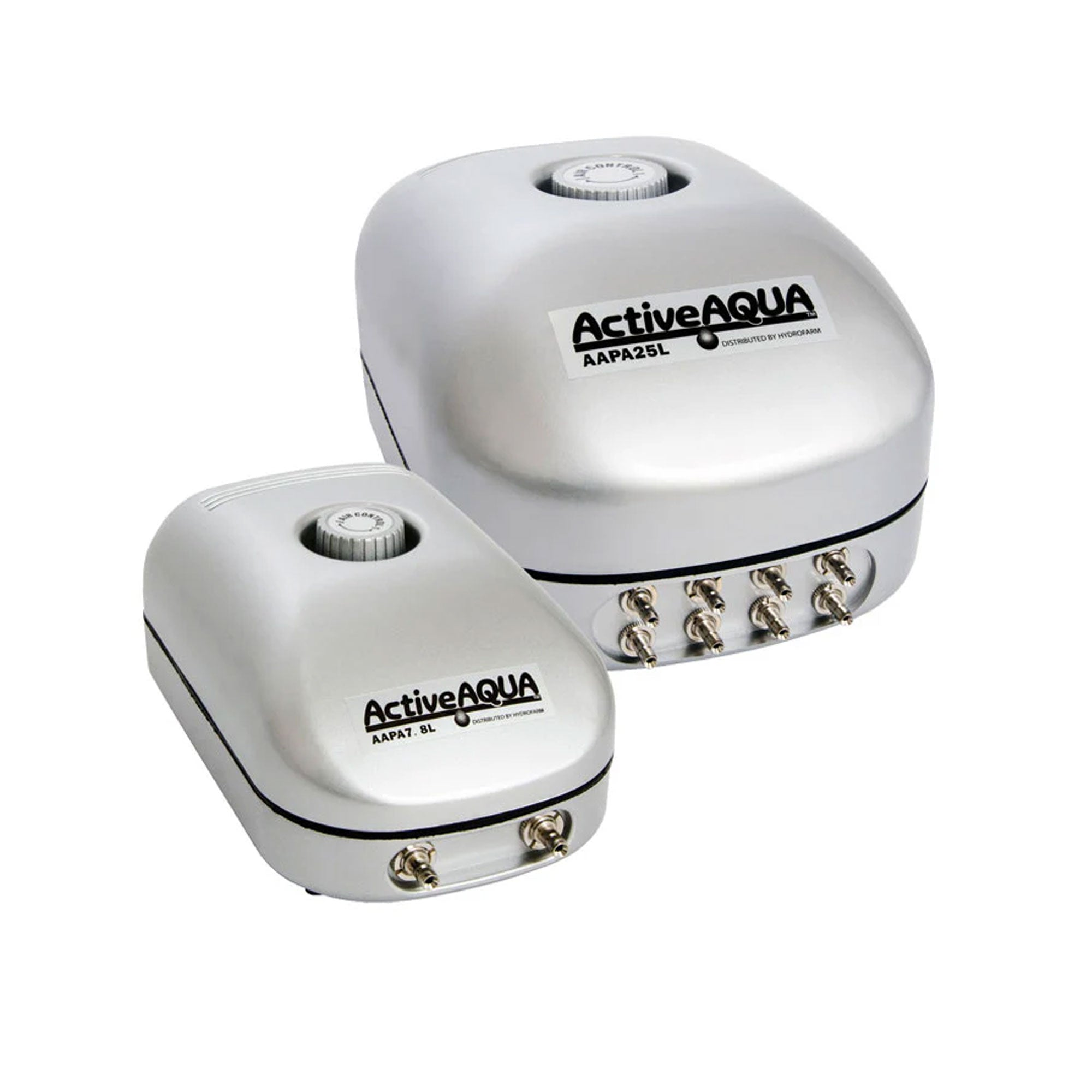
A practical choice for many small and medium gardens is the Active Aqua AAPA15L, while the Active Aqua AAPA25L or a commercial-grade multi-outlet pump makes more sense for larger systems. These are starting points, not universal winners. The correct choice depends on reservoir volume, water depth, diffuser size, noise tolerance, and the number of air stones.
This guide compares the key features, explains how to size an air pump, and covers setup, maintenance, noise, safety, and common buying mistakes.

Key Takeaways
- Choose an air pump by airflow, pressure, outlet count, and noise, not by marketing terms alone.
- For one small DWC bucket, a pump producing about 2–8 LPM may be enough.
- For a larger tote or several buckets, look for about 10–30 LPM, depending on water depth and air-stone demand.
- Use one check valve per air line to help stop water from flowing back into the pump.
- Put the pump above the reservoir when possible. If it must sit below the water line, use check valves on every line.
- A stronger pump is not always better. Excess bubbles can cause splash, foam, noise, and unstable water levels.
- Never place electrical equipment where it can fall into water. Use a properly installed GFCI-protected outlet in wet growing areas.
What Does a Hydroponic Air Pump Do?
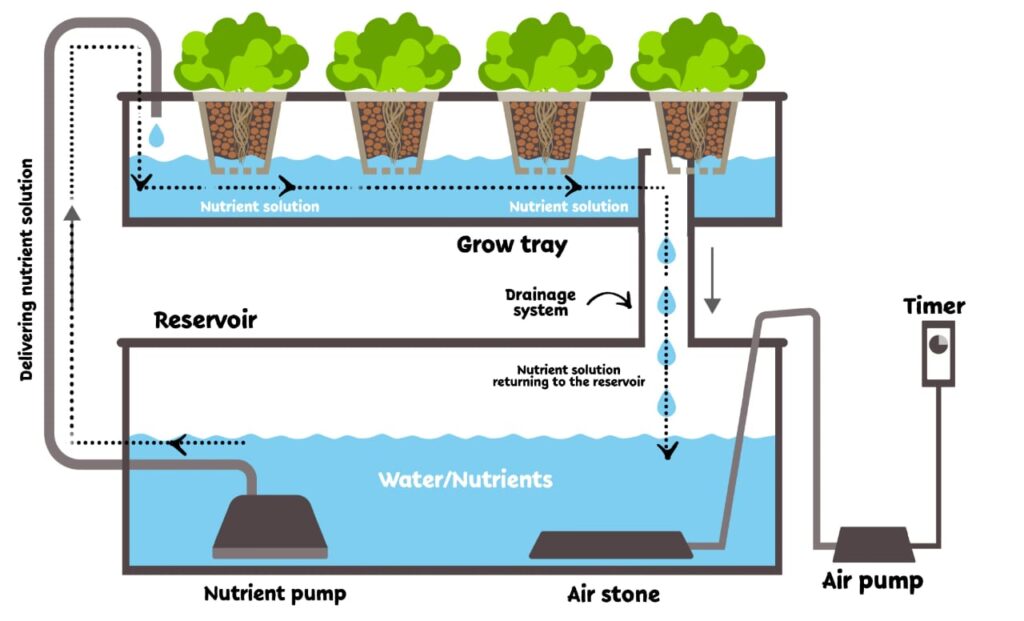
A hydroponic air pump pushes room air through airline tubing and an air stone or diffuser. The diffuser breaks the air into bubbles. As the bubbles rise, they move water and help transfer oxygen into the nutrient solution.
This process supports the roots in systems such as:
- Deep-water culture
- Recirculating deep-water culture
- Bubbleponics
- Aerated nutrient reservoirs
- Some aquaponic systems
- Propagation tanks
The pump does not supply oxygen by itself in a useful way unless the air reaches the water through a diffuser. The pump, tubing, fittings, and air stone work as one system.
Dissolved oxygen matters because plant roots need oxygen for respiration. Poor aeration can lead to slow growth, weak roots, foul odors, and root disease. Aeration is helpful, but it cannot correct warm nutrient solution, poor sanitation, excessive salts, or a failing water pump.
Air pump versus water pump
An air pump moves air. A water pump moves liquid.
An air pump is used to:
- Add bubbles
- Mix a reservoir
- Improve gas exchange
- Keep nutrient solution moving gently
A water pump is used to:
- Move nutrient solution through pipes
- Feed a drip system
- Return water to a reservoir
- Power some NFT, ebb-and-flow, or recirculating systems
Some product pages use terms such as “GPH” in confusing ways. GPH normally describes gallons of water per hour, not the useful airflow of an air pump. For air pumps, compare LPM, liters per hour, or cubic feet per minute (CFM), along with pressure and operating depth.

Best Hydroponic Air Pumps by Use Case
The best model changes with the size and design of the garden. The table below gives a practical starting point rather than a permanent ranking.
| Use case | Sensible pump range | Useful features | Example product type |
|---|---|---|---|
| One small DWC bucket | 2–8 LPM | One outlet, low noise, adjustable flow | Small aquarium air pump |
| One 5–10 gallon tote | 8–15 LPM | Two or four outlets, replaceable diaphragm | Active Aqua AAPA15L class |
| Two to four DWC buckets | 15–30 LPM | Multiple outlets, pressure control, sturdy housing | Active Aqua AAPA25L class |
| Large reservoir or many buckets | 30 LPM or more | Commercial diaphragm, manifold, backup capacity | Commercial multi-outlet pump |
| Seedling or propagation tray | 1–8 LPM | Gentle airflow, fine adjustment | Small aquarium pump |
| Aeroponic system | Depends on the design | Verify whether the system needs air or a high-pressure water pump | System-specific equipment |
Best for a small DWC garden: Active Aqua AAPA15L class
A 15 LPM, multi-outlet pump is a useful middle ground for a small U.S. home garden. It can support a tote or several modest air stones when the water depth is reasonable and the lines are not heavily restricted.
It is a good fit when you want:
- More capacity than a single small aquarium pump
- Several outlets for multiple air stones
- A common replacement part for hobby hydroponics
- A compact pump for a closet, tent, or small grow room
Its limits are also clear. A nominal 15 LPM rating does not mean every outlet will deliver 15 LPM under load. Air stones, long tubing, deep water, clogged diffusers, and restrictive valves reduce actual flow.
Best for several buckets: Active Aqua AAPA25L class
A 25 LPM pump gives more room for several buckets or a larger reservoir. It can be a better choice when you need to run multiple air stones without operating the pump at its limit.
Choose this size when:
- You have several DWC buckets
- The air stones sit deep in the reservoir
- You plan to add another container later
- You need stronger flow through a manifold
Do not solve every problem by buying the largest pump. A very strong pump can make the reservoir splash, raise humidity, create foam, and waste energy. Use a manifold with individual valves so you can balance each line.
Best for quiet operation: a small adjustable aquarium-style pump
For a single plant or small bucket, a compact adjustable pump may be quieter than a large commercial unit. Look for:
- A published sound rating, if available
- Rubber feet
- A soft diaphragm mount
- Flow adjustment
- A low-power motor
- Easy access to replacement diaphragms
Sound claims are difficult to compare across brands because manufacturers may use different test conditions. Treat “silent” as a marketing term, not a guarantee. A pump can be quiet on a desk but loud when it vibrates against a shelf or wall.
Best for larger gardens: a commercial diaphragm pump
A commercial diaphragm pump is more suitable for many buckets, a large reservoir, or continuous operation. These pumps often provide stronger pressure and more airflow than basic aquarium models.
The trade-off is higher cost, more noise, and greater power use. For a large garden, reliability and replacement parts may matter more than the lowest purchase price.
How to Size a Hydroponic Air Pump
Start with the number of containers, the reservoir depth, and the air stones. Then choose a pump with extra capacity instead of running a small pump at its limit.
A simple sizing method
Use this rough planning guide:
- Estimate 2–4 LPM per small air stone.
- Add the airflow for every air stone in the system.
- Add about 25–50% spare capacity for water depth, tubing resistance, and diffuser wear.
- Confirm that the pump can operate at the required depth.
For example, a hypothetical four-bucket system may use one medium air stone in each bucket:
- Four air stones × 3 LPM = 12 LPM
- Add 25% spare capacity = 15 LPM
- A pump rated near 15–20 LPM may be a reasonable starting point
This is not a laboratory formula. Air stones differ in size and back pressure. A long, fine-pore stone usually needs more pressure than a short coarse stone.
Why pressure matters
Airflow ratings are often measured with little or no resistance. Real systems have resistance from:
- Water depth
- Air stones
- Fine-pore diffusers
- Check valves
- Manifolds
- Narrow tubing
- Kinks and blockages
A pump with a high free-air rating may perform poorly at the depth you need. When a manufacturer lists a pressure rating, compare it with your system. If no pressure curve is provided, leave more spare capacity.
Water depth changes the demand
The deeper the diffuser sits, the more pressure the pump must create. A stone at the bottom of a 5-gallon bucket faces less back pressure than a stone several feet below the pump in a large tank.
This is one reason a pump that works well in a shallow propagation tray may fail in a deep DWC bucket.
Use airflow per stone as a planning tool
A large air stone does not always need more air than a small stone. Its pore size, length, depth, and design all affect resistance.
A practical setup often works better when you use:
- Several medium stones instead of one overloaded stone
- A manifold with separate flow controls
- Similar tubing lengths on each outlet
- Clean, open airline tubing
- A pump with spare capacity
The goal is steady mixing and good bubble coverage, not violent boiling.
What Features Matter Most?
The most useful air pump features are adjustable flow, adequate pressure, replaceable parts, and safe placement. Outlet count matters only if the pump can supply those outlets under real operating conditions.
Adjustable airflow
Flow control helps you match the pump to the system. It also lets you reduce splash and noise.
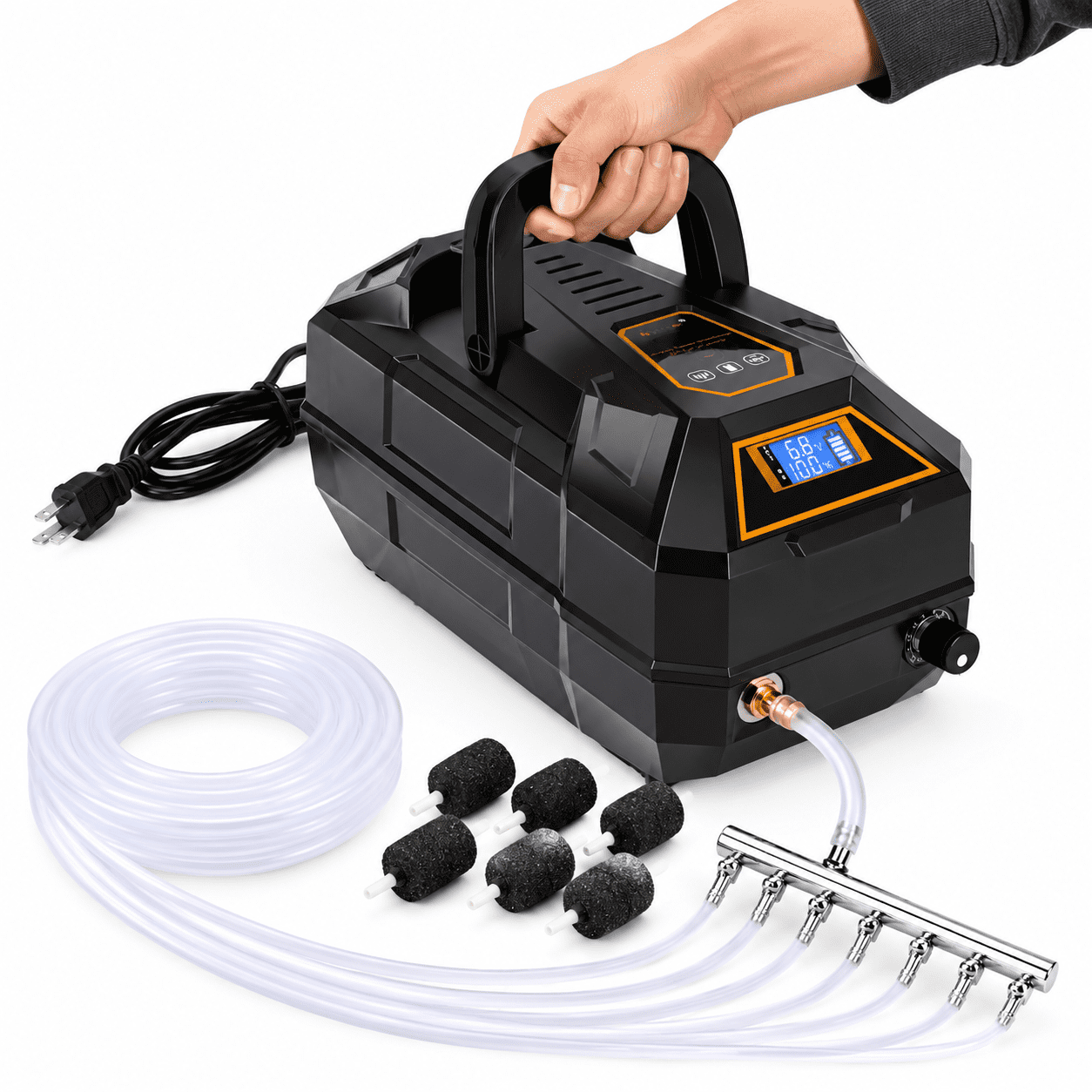
An external manifold with valves is often better than relying only on a small dial on the pump. A manifold can balance flow between air stones and close unused outlets.
Multiple outlets
Multiple outlets are useful for:
- Several buckets
- Separate propagation containers
- A reservoir with more than one air stone
- Backup air lines
Check whether the listed airflow is the total output or the output per port. Most product listings describe total airflow, but wording varies.
Replaceable diaphragms
Diaphragm pumps wear over time. A pump with available replacement diaphragms may cost less to maintain than a sealed model that must be replaced.
Before buying, check whether the manufacturer lists:
- Diaphragm kits
- Valve kits
- Replacement feet
- Warranty terms
- A manual with maintenance instructions
Low heat output
Most air pumps produce some heat. A large pump in a small grow tent can raise the temperature of the room or reservoir. Heat transfer is usually less important than water temperature, but it still matters in enclosed spaces.
Keep the pump outside the humidest part of the grow area when possible. Do not cover it with fabric or place it where airflow is blocked.
Power use
A pump that runs 24 hours a day can add to operating cost. Use this formula for a rough estimate:
Monthly energy cost = watts ÷ 1,000 × 24 × 30 × electricity rate
Hypothetical example:
- Pump: 15 watts
- Electricity rate: $0.18 per kilowatt-hour
- Monthly use: 15 ÷ 1,000 × 24 × 30 × $0.18
- Estimated cost: about $1.94 per month
Your local utility rate and actual pump wattage will change the result.
How to Set Up a Hydroponic Air Pump
Set up the pump so air can flow freely and water cannot run backward into the motor.
What you need
Prepare:
- Air pump
- Airline tubing
- Air stone or diffuser
- Check valve
- Manifold, if using several lines
- Scissors or tubing cutter
- GFCI-protected outlet
- Drip loop in the power cord
Setup steps
-
Place the pump above the reservoir if possible.
A shelf outside the wet zone is often a good location. -
Cut tubing to the shortest practical length.
Avoid sharp bends, crushed sections, and unnecessary loops. -
Install a check valve on each air line.
Follow the arrow on the valve. The arrow should point toward the reservoir. -
Connect the tubing to the air stone.
Keep the connection tight. A loose line can reduce airflow. -
Place the diffuser near the bottom of the reservoir.
Secure it so it does not float or rest against the plant roots. -
Connect the pump and inspect the bubbles.
Look for steady flow across the reservoir rather than one violent stream in a corner. -
Adjust the airflow.
Reduce flow if water splashes, the lid becomes soaked, or roots are pushed around. -
Check the system after several hours.
Look for leaks, unusual heat, noise, foam, and falling water level.
A drip loop means the power cord hangs below the outlet before rising to the plug. If water runs down the cord, the loop helps keep it away from the receptacle.

Signs the Air Pump Is Working Properly
A properly sized system usually produces steady bubbles and gentle circulation. The nutrient solution should remain mixed without excessive splashing.
Good signs include:
- Continuous bubbles from each diffuser
- No water entering the airline
- Similar flow from each open outlet
- No sharp rattling or grinding sound
- Stable water temperature
- Roots that remain firm and light-colored, depending on plant type and age
Bubbles alone do not prove that dissolved oxygen is high. Water temperature, organic matter, salt buildup, and poor sanitation can change oxygen conditions.
A dissolved oxygen meter is the most direct way to measure oxygen in solution, but many home growers do not need one. Consistent aeration, clean equipment, proper water temperature, and regular observation cover most basic DWC needs.
Common Air Pump Problems and Fixes
The pump makes a rattling noise
Possible causes include:
- The pump touches a hard surface
- Rubber feet are missing
- The diaphragm is worn
- The pump is overloaded
- The housing is loose
Move the pump to a firm surface with space around it. A thin rubber pad may reduce vibration. Do not wrap the pump in material that blocks ventilation.
One air stone produces weak bubbles
Check the line from the pump to the stone. Then inspect the check valve, manifold, and stone for blockage.
Mineral deposits can clog diffusers. Replace or clean the stone according to its material and the manufacturer’s instructions. Do not assume a weak stone means the pump has failed.
Water flows into the pump
Disconnect power before handling the equipment. Replace the check valve and inspect the tubing layout.
If the pump sits below the reservoir, water can siphon backward when the pump stops. A check valve reduces this risk but is not a reason to ignore safe placement. Put the pump above the water line whenever practical.
The reservoir foams
Foam may result from:
- Excessive airflow
- Plant compounds
- Organic nutrients
- Soap or cleaning residue
- Microbial activity
- Root damage
First reduce the airflow and inspect the reservoir. If the solution smells foul or the roots look slimy, do not treat foam as a simple pump problem. Check sanitation, water temperature, nutrient strength, and root health.
The pump runs but produces no air
Inspect the airline for kinks. Test each outlet without the manifold. Then inspect the diffuser and check valve.
A failed diaphragm or internal valve may need replacement. Do not open the housing while the pump is connected to power.
Hydroponic Air Pump Safety
Water and electricity create a serious shock hazard. Use equipment according to the manufacturer’s instructions and local electrical requirements.
Follow these rules:
- Use a GFCI-protected outlet in a wet growing area.
- Keep plugs and power strips above the reservoir.
- Use a drip loop on every cord.
- Unplug equipment before changing water or handling air stones.
- Do not place the pump where it can fall into the reservoir.
- Do not operate a damaged cord, cracked housing, or wet plug.
- Keep electrical connections away from spray and condensation.
- Do not overload a power strip.
- Use only equipment rated for the voltage and plug system in your location.
A check valve is a plumbing safeguard. It is not an electrical safety device. It helps reduce backflow but does not make unsafe placement safe.
Common Buying Mistakes
Choosing by advertised airflow alone
A high LPM number may describe free-air output. It may not reflect performance through a diffuser at your water depth.
Look for pressure information, outlet design, and user-serviceable parts.
Treating “more bubbles” as better
The aim is oxygen transfer and mixing. Excess bubbles can cause splash, wet lids, noise, and nutrient loss through spray.
Start with moderate airflow and increase it only when the system needs more circulation.
Ignoring replacement parts
A low-cost pump may become expensive if the diaphragm cannot be replaced. Check the manual and manufacturer support before buying.
Using one check valve for several lines
A shared valve may not protect every line equally. A safer layout uses one valve on each separate airline.
Buying an aeroponic pump for a DWC system
Aeroponics may use high-pressure water pumps, specialized misting pumps, or separate air systems. Read the system design before choosing equipment. An air pump cannot replace a water pump when the system needs pressurized nutrient solution.

Frequently Asked Questions
How many gallons can a hydroponic air pump support?
There is no reliable gallons-per-pump rule. The answer depends on water depth, diffuser size, plant load, temperature, and the desired circulation pattern.
For a small DWC system, size by air stone and depth. A 15 LPM pump may suit a modest tote or several small containers, while a large reservoir may require a commercial pump or multiple pumps.
Should a hydroponic air pump run all the time?
In most DWC systems, continuous aeration is the simplest approach. Roots remain in the nutrient solution, so stopping the pump for long periods reduces gas exchange.
Use a timer only when the system design supports it and the manufacturer or grower instructions permit it. A short power outage should not destroy a healthy system, but warm water and heavy root growth reduce the margin for error.
Can I use an aquarium air pump for hydroponics?
Yes. Aquarium air pumps can work well in small DWC and propagation systems. Choose one with enough airflow and pressure for the water depth, then use hydroponic-safe tubing and a suitable diffuser.
For many buckets or deep reservoirs, a commercial diaphragm pump may provide better pressure and serviceability.
Do hydroponic air stones need to be cleaned?
Yes. Mineral deposits and biological buildup can restrict airflow. Inspect the stones when flow drops or bubbles become uneven.
Replace a stone that remains clogged or damaged after cleaning. Always follow the diffuser manufacturer’s cleaning guidance, and rinse away all cleaning residue before returning the stone to the reservoir.
Is an air pump required for every hydroponic system?
No. Some systems naturally expose the nutrient solution to air or use a separate circulation design. DWC systems usually benefit strongly from active aeration because the roots remain submerged.
Read the instructions for the specific system. Do not add an air pump if it creates unwanted foam, spray, or unstable flow.
Final Recommendation
For many U.S. home growers, a 15 LPM multi-outlet air pump is a balanced starting point for a small DWC garden. The Active Aqua AAPA15L class is a practical option when you need several outlets without moving to a commercial pump. Choose a 25 LPM or larger model for several buckets, deeper reservoirs, or future expansion.
The most important step is not choosing the biggest pump. It is matching the pump to the number of air stones, water depth, tubing resistance, and reservoir size. Add check valves, use GFCI protection, keep the pump above the water line, and adjust the airflow until the solution mixes without excessive splash.
Availability, specifications, warranty terms, and prices can change. Check the current manufacturer manual before purchase, especially for airflow, pressure, replacement parts, and electrical requirements.