General Hydroponics FloraGro: Best Nutrient Guide
In U.S. hydroponic gardens, General Hydroponics FloraGro is the growth-focused part of the Flora Series nutrient system. It supplies key nutrients that support stems, leaves, and early plant growth. It is not a complete fertilizer by itself. Most growers use it with FloraMicro and FloraBloom, following the current U.S. product label and the needs of the crop.
The right amount depends on the plant, growth stage, water quality, growing medium, and other nutrients in the system. Start with a mild mix, check the plant and root zone, and adjust slowly.

What Is General Hydroponics FloraGro?
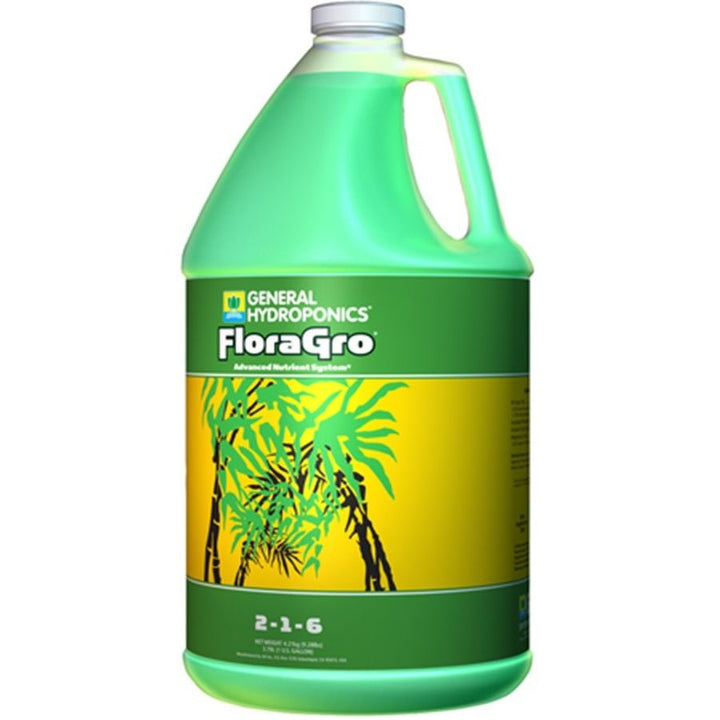
General Hydroponics FloraGro is a liquid plant nutrient made for use in hydroponic and soilless growing systems. It is one part of the General Hydroponics Flora Series, which also includes FloraMicro and FloraBloom.
The U.S. product label commonly lists FloraGro with an N-P-K analysis of 2-1-6:
- 2% nitrogen
- 1% available phosphate
- 6% soluble potash
Product labels can change by market or package version. Always use the label on your bottle as the final source for rates and directions.
What FloraGro does
FloraGro mainly supports:
- Leaf growth
- Stem growth
- Plant structure
- Early vegetative development
- Continued growth during some flowering programs
Nitrogen helps plants make chlorophyll and new tissue. Potassium supports water movement, enzyme activity, and general plant function. FloraGro also contains other nutrients as part of the complete Flora Series program.
FloraGro does not replace light, oxygen, water movement, or a balanced root-zone environment. A plant can show slow growth even when the nutrient bottle is used correctly if the water is too hot, the roots lack oxygen, or the light is weak.
Is FloraGro a complete fertilizer?
No. FloraGro is not intended to be a complete, stand-alone nutrient for most hydroponic programs.
The Flora Series uses separate products so the grower can change the balance of nutrients during different growth stages:
- FloraMicro supplies a base of nitrogen and micronutrients.
- FloraGro supports vegetative growth and plant structure.
- FloraBloom supplies nutrients used in later growth and flowering.
The three products work as a system. Using only FloraGro may leave the plant short of nutrients that come from the other bottles.

How to Use General Hydroponics FloraGro
Use FloraGro by mixing it into water as part of the Flora Series program. Do not pour concentrated nutrients together in the same measuring cup or bottle.
Basic mixing order
Use this order for a fresh nutrient solution:
- Fill the reservoir or mixing container with water.
- Add FloraMicro and mix well.
- Add FloraGro and mix well.
- Add FloraBloom and mix well.
- Add any approved supplements only after the base nutrients are mixed.
- Measure electrical conductivity, total dissolved solids, or both if you use those tools.
- Adjust pH last.
- Use the solution soon after mixing, unless the product label gives different storage advice.
The common rule is Micro first, then Gro, then Bloom. This helps reduce the chance of nutrient salts reacting in concentrated form.
Do not mix nutrient concentrates together
Avoid combining FloraGro and FloraMicro while they are still concentrated. Direct contact can cause precipitation. Precipitation forms solid particles that may block lines and reduce nutrient availability.
Add each product to a larger volume of water. Stir or circulate the solution after each addition.
Start with a light nutrient mix
A cautious starting point is better than a strong mix. Begin below the highest rate on the label, especially when:
- The plant is young
- The plant was recently transplanted
- You are using soft or reverse-osmosis water
- The root system is small
- The growing medium already contains nutrients
- The plant is stressed
Increase strength only when the plant shows healthy growth and the root-zone readings support the change. A strong nutrient mix cannot repair weak roots or poor light.
Example mixing calculation
This example shows the method, not a universal feeding rate.
If a label rate calls for 5 milliliters per gallon, a 5-gallon reservoir would require:
5 milliliters × 5 gallons = 25 milliliters
Measure each nutrient separately. Use the exact rate from the current product label for your plant stage and program.

FloraGro Feeding Schedule: Vegetative Growth and Flowering
Use more FloraGro during active vegetative growth only when the full nutrient schedule calls for it. Many growers reduce or stop FloraGro later in the crop, but the correct timing depends on the plant and the official schedule.
General Hydroponics provides feeding charts for different growing methods. These charts may include separate plans for:
- Hydroponic systems
- Drain-to-waste systems
- Soil or soilless media
- Aggressive feeding
- Mild feeding
- Hard or soft water
The chart for one method may not fit another method. A reservoir system, such as deep water culture, does not behave like a hand-watered container.
During the vegetative stage
FloraGro is most closely linked with the vegetative stage. This is when many plants build leaves, stems, and roots.
Look for:
- New leaves with a normal green color
- Firm stems
- Steady water use
- New roots that are white or cream colored
- No rapid buildup of salts around the root zone
Do not use leaf color alone to decide the dose. A dark green plant may already receive too much nitrogen, while pale leaves may result from high root-zone pH, root damage, or poor light.
During the flowering stage
Many flowering programs shift the balance toward FloraBloom. However, plants may still need some nitrogen during flowering. Removing nitrogen too early can cause premature yellowing and weak growth.
Use the current General Hydroponics schedule as a starting plan, then watch:
- New growth
- Leaf color
- Flower or fruit development
- Root-zone EC or TDS
- Runoff readings in drain-to-waste systems
- Water temperature and oxygen levels
A feeding chart is a guide, not a guarantee. Plant variety, light intensity, temperature, humidity, and water source all change nutrient demand.
Hydroponics versus soil
Hydroponic systems usually expose roots to nutrients more directly. This can make overfeeding appear quickly. Soil and many potting mixes also hold nutrients, so adding a full hydroponic dose may create excess salts.
For soil or soilless media:
- Follow the medium-specific chart.
- Check whether the mix already contains fertilizer.
- Avoid treating a soil garden like a bare-root hydroponic system.
- Use runoff testing carefully; runoff numbers do not always show the exact nutrient level at the root surface.

pH, EC, and Water Quality
The nutrient dose is only part of the result. pH, electrical conductivity, water temperature, and oxygen determine how well the plant can use the solution.
Recommended pH range
Many hydroponic crops perform well around pH 5.5 to 6.5, but the best range depends on the crop and medium. Some growers allow the pH to move within that range rather than forcing one exact number.
Check pH after all nutrients are mixed. Nutrients can change the pH of water, and pH adjusters can change it again.
EC and TDS
EC, or electrical conductivity, measures the solution’s ability to carry an electrical current. It provides a useful estimate of dissolved salts.
TDS, or total dissolved solids, is another reading derived from conductivity. TDS meters may use different conversion scales, so two meters can display different ppm values for the same solution.
Use EC when possible. Record:
- Source-water EC
- Fresh nutrient-solution EC
- Runoff EC, if applicable
- Water temperature
- Date and plant stage
There is no single correct EC for every plant. A young seedling, mature tomato, leafy green, and flowering plant can need very different levels.
Source water matters
Tap water in the United States may contain calcium, magnesium, bicarbonate, chlorine, or chloramine. These substances can affect nutrient balance and pH.
Reverse-osmosis water removes much of the mineral content. That can improve control, but it may also require a suitable calcium-and-magnesium source, depending on the crop and the rest of the nutrient plan.
Do not assume that “clean” water is automatically better. Test the water or obtain a current report from the local water supplier before changing the nutrient plan.
Common FloraGro Problems and Fixes
Most FloraGro problems come from dose, mixing, root conditions, or measurement errors. Check the simplest and safest causes first.
Brown leaf tips or curled leaf edges
Possible causes:
- Nutrient strength is too high
- Root-zone salts have accumulated
- The plant is losing water faster than it can replace it
- Light or heat stress is present
- The meter is inaccurate
What to check:
- Measure the nutrient solution EC.
- Compare it with the source-water EC.
- Inspect roots and reservoir temperature.
- Check whether the plant recently received a stronger mix.
- Reduce strength rather than adding more products.
Do not flush automatically. In a recirculating system, a full replacement may be appropriate if the solution is badly mixed or far too strong. In other systems, flushing can remove useful nutrients and create a sudden pH change.
Pale leaves
Possible causes:
- Too little nitrogen
- High root-zone pH
- Weak light
- Root damage
- Low solution temperature
- A nutrient lockout caused by an unsuitable pH
A pale plant does not always need more FloraGro. Check pH and roots first. If pH is outside the crop’s useful range, adding more fertilizer may worsen the problem.
Dark green leaves and slow growth
This pattern may indicate excess nitrogen or excess overall nutrient strength. It can also result from poor oxygen supply, compact media, or low light.
Reduce the nutrient strength only after checking the meter and the root zone. A clogged, dirty, or poorly calibrated meter can lead to incorrect changes.
Cloudy solution or sediment
Cloudiness or sediment can result from:
- Concentrates being mixed together
- Hard-water reactions
- Incompatible additives
- A dirty reservoir
- A nutrient product that was stored poorly
Replace the solution if it contains heavy sediment or if emitters and lines are clogging. Clean the system according to the equipment maker’s instructions, then mix a fresh batch with each product added to water separately.
pH keeps rising or falling
A changing pH can be normal in an active system, but rapid swings may point to:
- Unstable source water
- High alkalinity
- Root decay
- Microbial activity
- An undersized reservoir
- Large nutrient or water changes
Measure at the same time each day for several days. Record the trend instead of reacting to one reading.

General Hydroponics FloraGro Safety and Storage
Handle FloraGro as a concentrated fertilizer. Keep it away from children, pets, food, and drinking-water containers.
Use these basic precautions:
- Read the current U.S. label before use.
- Avoid contact with eyes and skin.
- Wear gloves and eye protection when mixing concentrates.
- Do not ingest the product.
- Do not store it in an unmarked container.
- Keep the bottle sealed and stored according to the label.
- Rinse spills with plenty of water when safe to do so.
- Follow local rules for disposal.
Do not use fertilizer containers for drinking water. If the product enters the eyes or is swallowed, follow the first-aid instructions on the label and contact Poison Control in the United States at 1-800-222-1222 or seek urgent medical help when needed.
FloraGro is a plant nutrient. It is not a pesticide, medicine, or food product.

Is General Hydroponics FloraGro Worth Using?
FloraGro can make sense for growers who want a flexible, three-part nutrient program and who are willing to measure and adjust the solution. It is especially useful when the grower wants to change the nutrient balance between vegetative and flowering stages.
It may not be the simplest option for a beginner who wants one complete bottle. A one-part nutrient can reduce mixing steps, although it may provide less control over the nutrient ratio.
The main trade-offs are:
| Factor | FloraGro three-part system | One-part nutrient |
|---|---|---|
| Control | More control over growth stages | Less adjustment |
| Mixing | Requires several bottles | Usually simpler |
| Measurement | More important | Often simpler |
| Troubleshooting | More variables | Fewer product variables |
| Best fit | Growers who want flexibility | Growers who want a basic routine |
No nutrient line can compensate for poor light, bad water temperature, low oxygen, or damaged roots. The system is only as strong as its least controlled part.

Frequently Asked Questions
Can I use FloraGro by itself?
You can mix it into water, but it is not generally intended to provide a complete nutrition program alone. Use it with the other Flora Series nutrients or another compatible plan that supplies the missing nutrients.
Should FloraGro be used with FloraMicro and FloraBloom?
Yes, that is the normal Flora Series approach. Add each product to water separately. The usual order is FloraMicro, then FloraGro, then FloraBloom.
Is FloraGro good for seedlings?
Seedlings often need a weaker nutrient solution than mature plants. Use a mild, label-based mix only after the seedling has true leaves and the root system can take up nutrients. Plain water may be suitable at the earliest stage, depending on the medium and seed-starting material.
Can I use FloraGro in soil?
The product may be used in some soil and soilless programs, but the rate and schedule differ from hydroponic use. Soil may already contain nutrients, so follow the soil-specific instructions and avoid applying a full hydroponic dose without checking the medium.
Does FloraGro expire?
Storage life depends on the product condition and label guidance. Keep the bottle sealed, protected from extreme temperatures, and stored in its original container. Do not use a product that has unusual separation, heavy crystals, contamination, or an unexplained change in appearance.
What should I add first: FloraGro or pH adjuster?
Add the nutrients first, mix thoroughly, and adjust pH last. Recheck pH after the solution has circulated.
Key Takeaways
- General Hydroponics FloraGro is the growth-focused part of the Flora Series.
- Its commonly listed U.S. analysis is 2-1-6, but the bottle label is the final authority.
- FloraGro is usually used with FloraMicro and FloraBloom.
- Add nutrients to water separately; do not mix concentrates together.
- Measure pH and EC after mixing.
- Start with a mild solution and increase only when the plant and readings support it.
- Check roots, water quality, temperature, and oxygen before assuming the plant needs more fertilizer.
Conclusion
General Hydroponics FloraGro can support strong leaves and stems when it is used as part of a balanced nutrient plan. The best results come from matching the dose to the crop, growth stage, water source, and growing method.
For a reliable routine, follow the current U.S. Flora Series label, mix in the correct order, measure pH and EC, and change only one variable at a time. That approach makes problems easier to spot and helps prevent overfeeding.