How To Build A Raised Garden Bed On Wheels: Easy DIY
A raised garden bed on wheels brings the garden to you. You can roll it into better sun, move it away from hail, or place it near the kitchen door. It also helps gardeners who have poor soil, limited space, or trouble bending to ground level.
The best mobile beds are sturdy, well-drained, and light enough to move when full. That last point matters most. Wet soil is heavy, so the frame, wheels, and floor must work as one safe system. I have built mobile beds for patios, small yards, and accessible gardens, and the same lesson comes up each time: build for weight first, then add planting depth.

Quick answer: build the frame before you add soil
To build a raised garden bed on wheels, make a shallow wood or metal box, add a strong bottom, attach four or six locking casters, line the inside, and fill it with light soil. Use exterior-rated lumber, drainage holes, and wheels rated for more than the bed’s full wet weight. A 2-by-4-foot bed that is 10 to 12 inches deep works well for most herbs and vegetables.

A 2-by-4-foot bed is a good first size because it fits through most gates and gives you access from both sides. Keep the soil depth near 10 inches for lettuce, basil, radishes, and many annual flowers. Use 16 to 18 inches for tomatoes, carrots, peppers, and larger root crops.
The project usually costs $120 to $300, depending on the lumber, casters, hardware, and soil. Plan on four to eight hours for a careful first build, plus time for the finish to dry.
Plan the bed around weight, light, and access
A mobile garden bed works best when you plan its final load before cutting wood. Soil, water, plants, and the box can weigh several hundred pounds. A bed that rolls easily when empty may become hard to steer after one deep watering.

Choose a practical size
For most home gardens, use one of these sizes:
- 2 by 3 feet: Easy to move and good for balconies or narrow paths.
- 2 by 4 feet: The best starting size for most gardeners.
- 3 by 4 feet: Holds more plants but needs stronger casters.
- 4 by 4 feet: Productive, but difficult to reach and very heavy.
Keep the bed no wider than 4 feet if you can reach it from both sides. If it will sit against a wall, keep it 2 feet wide or less. This prevents you from stepping into the soil or stretching across plants.
The bed length affects steering. A long bed tracks well but needs more room to turn. A short bed pivots more easily but may feel less stable on uneven ground.
Measure the route
Measure the narrowest gate, doorway, ramp, or path before you build. Add at least 2 inches of clearance on each side. Also measure the height of the bed after you add casters and soil.
A 2-by-4-foot bed often fits through a 36-inch gate with ease. A 4-foot-wide bed may not fit through a standard garden gate. If you rent or move often, use bolts instead of permanent glue so you can repair or take apart the frame.
Check sunlight first
Most vegetables need at least six hours of direct sun. Tomatoes, peppers, cucumbers, squash, and eggplant often perform better with eight hours. Lettuce, cilantro, parsley, and mint can handle some afternoon shade.
Watch the space for one full day before building. A patio that looks sunny at 10 a.m. may sit in shade by 3 p.m. A wheeled bed cannot fix a poor light plan unless you actually move it each day.
Match size to your climate
A mobile bed dries faster than a bed placed on open soil. This effect is strong in hot, dry areas such as USDA Zones 8 through 10. Dark containers and sunny patios can heat the root zone quickly.
In cool or wet Zones 3 through 6, a raised bed warms early in spring but can also lose heat at night. A deep bed with a light-colored finish may offer more stable root temperatures than a thin, dark box.
Tools and materials for a safe mobile bed
Use strong parts where the bed carries weight and save money on cosmetic details. The frame does not need to look like fine furniture, but it must resist twisting. Choose lumber that stays sound when wet and hardware that will not rust after one season.

The table below lists materials for a basic 2-by-4-foot bed that is about 12 inches deep. Adjust the list if you use metal, composite boards, or a deeper design.
| Material or tool | Suggested choice | Why it matters |
|---|---|---|
| Frame boards | Four 2-by-6-inch, 8-foot exterior boards | Gives a 10½-inch soil depth after assembly |
| Corner supports | Four 2-by-4-inch pieces | Adds strength and keeps corners square |
| Bottom slats | 1-by-4-inch or 2-by-4-inch boards | Supports soil while allowing drainage |
| Casters | Four or six locking, plate-mount casters | Swivel control and safe parking |
| Caster rating | At least 250 pounds per caster | Provides a safety margin for wet soil |
| Fasteners | 3-inch exterior screws and bolts | Resists rust and frame movement |
| Liner | Geotextile fabric or pond-safe liner | Keeps soil in while allowing water out |
| Finish | Exterior stain or water-based paint | Reduces water damage and sun wear |
| Tools | Drill, bits, saw, square, tape, and level | Makes clean and accurate cuts |

For a bed with four casters, choose a total rated capacity of at least 1,000 pounds. That does not mean the bed should weigh 1,000 pounds. It gives you room for wet soil, uneven floors, and sudden loads when you push.
A drill with a clutch helps prevent stripped screws. A countersink bit gives the wood a cleaner surface. Wear safety glasses when cutting, drilling, or driving fasteners.
Select the right casters
Use four locking swivel casters for a small bed. Use six casters for a 3-by-4-foot bed or a bed that holds deep soil. At least two casters should have wheel locks and swivel locks if the bed will sit on a slope.
Choose polyurethane or solid rubber wheels for concrete and wood decks. Pneumatic wheels handle rough ground better, but they need air and may leave marks on soft soil. Small furniture casters often fail because their plates bend or their bearings clog with grit.
Pick safe lumber
Use cedar, redwood, cypress, or exterior-rated lumber. Untreated pine costs less, but it may last only three to five seasons when exposed to constant moisture. Cedar can last five to 10 years, depending on drainage, climate, and finish.
Avoid old railroad ties, painted scrap wood, and unknown reclaimed boards. Older treated lumber may contain chemicals that you do not want near edible crops. Modern pressure-treated wood is widely used in gardens, but some gardeners still prefer cedar, metal, or a food-safe barrier for peace of mind.
Decide on the bottom design
A bottom is essential for a wheeled bed. Without it, the soil falls out and the frame can rack out of square. Use slats with small gaps, then add a permeable fabric liner.
Do not seal the bottom like a bathtub. Water must leave the bed after rain or irrigation. Standing water can cause root rot, sour soil, and fast wood decay.
Build the raised garden bed step by step
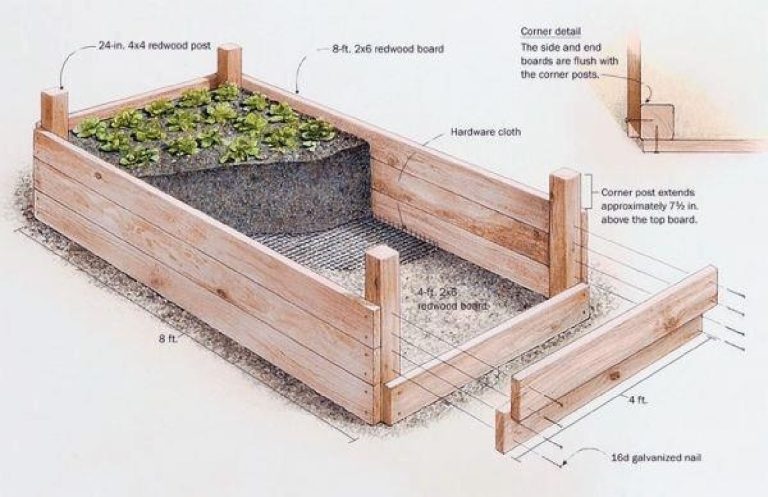
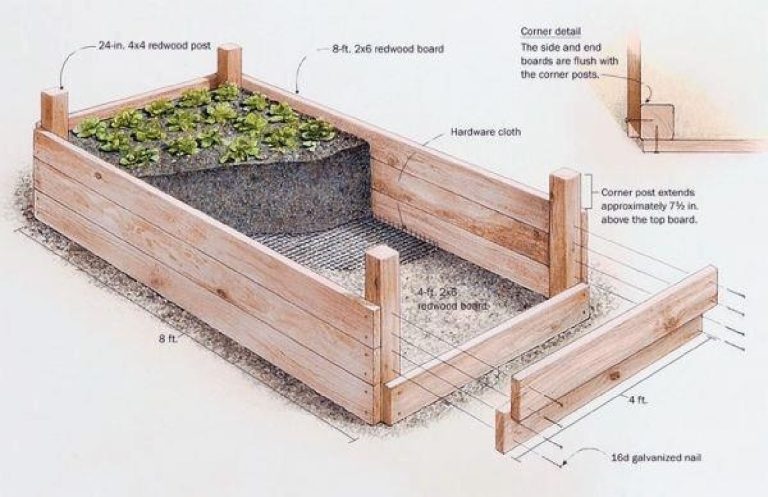
The most reliable method is to build a rigid box, reinforce the bottom, and mount the casters under corner blocks. Work on a flat surface. A small twist during assembly becomes a large steering problem once the bed is full.

1. Cut and inspect every part
For a 2-by-4-foot bed, cut two long boards to 48 inches and two short boards to 21 inches if you use 1½-inch-thick lumber. This gives an outside width close to 24 inches.
Cut four corner blocks from 2-by-4 lumber. Each block should be about 10 to 12 inches long. If your boards are 2 by 6 inches, the finished side height will be about 5½ inches per board.
Check each board for deep cracks, loose knots, or cupping. A board with a slight bow can still work, but place the curve outward so the screws pull it toward the frame.
2. Sand sharp edges
Sand the top edges and corners with 80- to 120-grit sandpaper. You do not need a smooth furniture finish. You do need to remove splinters that can catch clothing or cut your hands.
Round the outside corners slightly. This small step helps on narrow paths and makes the bed safer around children.
3. Assemble the side box
Stand the boards on edge and clamp each corner. Check that the top edges line up. Drill pilot holes before driving two or three exterior screws into each joint.
Measure both diagonals of the box. If both diagonal measurements match, the frame is square. If one is longer, push the long corner inward until the measurements match.
A square frame rolls better because the casters point in the same basic direction. A crooked frame may pull to one side, even on a smooth patio.
4. Add corner blocks
Place one 2-by-4 corner block inside each corner. Fasten it to both side boards with exterior screws. These blocks spread the load and give the caster plates a thick area to grip.
For a long or deep bed, add center supports along the long sides. A center support stops the side boards from bowing outward when the soil gets wet.
5. Build the bottom support
Turn the box upside down. Install two or three cross supports under the box, depending on its width. For a 2-by-4-foot bed, place supports near each end and one in the center.
Attach bottom slats across the supports. Leave a gap of about ¼ to ½ inch between slats. Small gaps help water drain but do not let large amounts of soil fall through.
For a 16- to 18-inch-deep bed, use thicker bottom boards and more supports. Deep soil creates much more pressure than a shallow herb bed.
6. Mount the casters
Center each caster plate on a corner block. Mark the holes, drill pilot holes, and use bolts with washers when the design allows. Through-bolts hold better than screws under heavy loads.
Place locking casters at the end where you will push from. If you use six casters, put two in the center along the long sides. Make sure all wheels touch the floor when the frame sits flat.
Lock the wheels and push the empty bed. It should stay still when you apply firm pressure. Unlock the wheels and test a slow turn. Fix caster alignment now, not after adding soil.
7. Add a liner
Line the inside with geotextile fabric. Let the fabric rise a few inches above the soil line, then trim it after filling. Staple it above the drainage gaps, not across them.
A pond liner can hold moisture, but a solid sheet needs many drainage holes. In hot climates, a full liner can keep the root zone too wet if the holes clog.
8. Drill extra drainage holes
Drill ½-inch holes through the bottom at 8- to 12-inch intervals if your slats do not drain well. Keep holes clear of caster plates and structural supports.
Test drainage with a hose. Water should pass through within a few minutes. If water pools on the bottom, adjust the liner or add more openings.
9. Apply a finish
Use an exterior stain or water-based paint on the outside only. Let the finish cure based on the label. Do not fill the bed while it still smells strongly of solvent.
Leave the inside unfinished if you use a fabric liner. Finish can peel inside and mix with soil. Recoat exposed wood every two to four years, or sooner in wet climates.
10. Add a handle or push bar
A simple horizontal handle makes the bed easier to steer. Mount it low enough to keep the bed stable and high enough that you do not hit your knees.
Use a removable handle if you need to fit the bed through a gate. A handle also gives you a clear place to push instead of pressing on a thin side board.
11. Load the bed in stages
Place the empty bed where you plan to grow. Add the soil mix in thirds, then test the wheels after each third. This shows when the bed becomes difficult to push.
Do not fill a heavy bed on a slope. If it starts rolling, you may not stop it. Use wheel chocks when loading on any surface that is not flat.
12. Test the full bed
Water the soil fully and wait 15 minutes. Then push the bed over the route you will use. Watch for caster flex, frame movement, wheel wobble, and water leaking from one corner.
If the bed pulls hard, check whether one caster does not touch the ground. If it rocks, add a center support or replace soft wheels with larger casters.
Use a light soil mix that still holds water
A mobile bed should not use heavy native clay as its main fill. Clay holds water and adds a great deal of weight. A light mix drains well but still holds enough moisture for roots.

For most vegetables, mix about 40% quality topsoil, 40% finished compost, and 20% perlite, pumice, or fine pine bark. In a dry climate, use a little more compost or coconut coir. In a wet climate, add more bark or pumice instead of peat-heavy material.
Do not fill the bed with pure compost. Compost settles, dries unevenly, and may contain more soluble salts than young roots can handle. Use mature compost with an earthy smell and no heat.
Soil depth by crop
Different plants need different root space. Shallow roots can grow in a 10-inch bed, while deep roots need more depth or a second container.
| Plant or crop | Useful soil depth | Spacing note |
|---|---|---|
| Lettuce and spinach | 6–8 inches | Plant close, with 6–8 inches between heads |
| Radish and green onion | 8–10 inches | Thin seedlings to prevent small roots |
| Basil, parsley, and cilantro | 8–10 inches | Harvest often to keep plants compact |
| Bush beans | 10–12 inches | Add a small trellis if plants lean |
| Carrots | 12–16 inches | Use a short variety such as ‘Paris Market’ |
| Peppers | 12–16 inches | Stake plants before fruit gets heavy |
| Tomatoes | 16–20 inches | Use compact types for easier steering |
| Strawberries | 10–12 inches | Keep crowns at soil level |

The table assumes loose soil and good drainage. Heavy soil may need more depth because roots cannot spread as freely. Compact patio tomatoes, bush beans, kale, chard, and herbs usually suit mobile beds better than full-size vining crops.
Mix in a small amount of balanced organic fertilizer only if a soil test or label supports it. A fertilizer near 5-5-5 can work for many beds, but too much nitrogen gives lush leaves and fewer tomatoes or peppers.
Test pH and nutrients
Most vegetables grow well at a soil pH of 6.0 to 7.0. Blueberries need a much lower pH, often 4.5 to 5.5, so they are a poor match for a mixed vegetable bed.
A basic soil test can show pH, phosphorus, potassium, and organic matter. Test after the first season if plants look weak, leaves turn pale, or growth stays small despite good watering.
Plant the bed for stability and easy care
Plant choice affects weight, wind resistance, and how often you need to move the bed. A mobile bed works best with compact crops and a simple layout.

Good plants for beginners
Start with crops that forgive small errors:
- Leaf lettuce
- Kale and Swiss chard
- Radishes
- Bush beans
- Basil
- Parsley
- Chives
- Strawberries
- Marigolds
- Dwarf peppers
Leaf crops also let you test the bed before committing to heavy fruiting plants. In my own beds, lettuce and basil have been the easiest first crops because they grow fast and do not need deep stakes.
Use companion planting with common sense
Companion planting can improve space use, but it will not replace good soil or pest control. Pair basil with tomatoes, chives with leafy greens, and marigolds with many summer crops for color and pollinator activity.
Avoid crowding plants because a rolling bed may have less airflow near a wall or fence. Crowded tomatoes and cucumbers invite powdery mildew and leaf spot, especially in humid USDA Zones 7 through 10.
Add support before plants need it
Install a tomato cage, trellis, or stake before roots fill the bed. Pushing a stake into mature soil can damage roots and shift the bed.
Use compact tomato varieties such as ‘Patio Choice’ or ‘Tiny Tim’ for a small mobile bed. Full-size indeterminate tomatoes can work in a deep 3-by-4-foot bed, but their vines and fruit may make the bed top-heavy.
Watering and feeding a wheeled bed
A raised bed on wheels often needs water more often than a ground bed. It has no access to deep soil moisture, and air can move under the bottom. Check the soil with your finger rather than watering by the calendar alone.

Water when the top 1 to 2 inches feel dry. Apply water slowly until a little drains from the bottom. Then empty any tray beneath the bed so the roots do not sit in water.
Morning watering works well because leaves dry before night. A soaker hose or short drip line can save time. Secure the line so it does not catch on the casters when you move the bed.
| Season or condition | Check frequency | Practical action |
|---|---|---|
| Cool spring, mild weather | Every 2–3 days | Water when the top inch dries |
| Hot summer, full sun | Daily | Check each morning and water deeply |
| Windy patio | Daily | Add mulch and inspect moisture by afternoon |
| Rainy period | After each storm | Check drainage before watering again |
| Winter dormancy | Weekly or less | Water only if evergreen plants dry out |
| Freshly planted seedlings | Daily | Keep the top layer evenly moist |

Use 1 to 2 inches of shredded leaf mulch or clean straw on top of the soil. Keep mulch away from plant stems. Mulch slows evaporation, reduces soil splash, and helps prevent weeds.
For feeding, use compost at planting and a light side dressing during the season. Heavy feeders such as tomatoes and peppers may need more fertilizer after the first flowers form, but follow the product rate.
Secure and move the bed safely
The main safety rule is simple: move a mobile bed only on a level, clear route. Wet soil can shift, and a heavy bed can crush toes or damage a deck.

Before moving it
- Remove loose tools, trays, and watering cans.
- Check that the soil is not saturated.
- Inspect each caster and bolt.
- Unlock all wheels.
- Stand behind the handle.
- Push slowly with both hands.
- Keep feet clear of the wheels.
- Lock the wheels when you arrive.
Never pull a heavy bed downhill. Push from the uphill side if you must move it on a gentle slope. For steep slopes, use a second adult or leave the bed in place.
⚠️ Warning: Do not place a full mobile bed near a stair edge, pool, drop-off, or loose gravel slope. Caster locks stop rolling, but they do not make a heavy bed safe on a steep grade.
Protect decks and patios
Use nonmarking wheels on finished decks. Test one wheel on a hidden area first. Soil water can stain wood, and fertilizer salts can leave pale marks on concrete.
A drip tray may protect the surface, but it can also block drainage. If you use one, empty it often and keep air moving under the bed.
Keep children and pets safe
A low bed may invite children to climb. Use strong casters with locks and avoid sharp corner hardware. Keep fertilizers, slug pellets, and treated plant material out of reach.
If dogs or cats visit the area, avoid toxic plants and secure tall supports. A moving trellis can tip if a pet pushes against it.
Common problems and practical fixes
Most failures come from underbuilt casters, poor drainage, or soil that is too heavy. The problem often appears after the first large watering, not during construction.

| Problem | Likely cause | Fix |
|---|---|---|
| Bed pulls to one side | Caster height or frame is uneven | Check level, tighten bolts, and add a shim |
| Wheels jam | Small wheels collect grit or soil | Clean bearings and use larger wheels |
| Soil stays wet | Liner blocks drainage | Add holes and clear the bottom gaps |
| Bed bows outward | Long side lacks support | Add a center brace or thicker board |
| Screws loosen | Wood moves as it dries | Use bolts, washers, and pilot holes |
| Bed rocks on flat ground | One caster does not touch | Shim the mount or replace the caster |
| Plants wilt each afternoon | Bed dries too fast | Add mulch, shade cloth, or deeper soil |
| Wood rots at the bottom | Water stays against the frame | Improve drainage and reseal exposed wood |

Why does the bed become hard to push?
The usual cause is weight. One cubic foot of wet soil can weigh roughly 60 to 90 pounds, depending on its mix. A 2-by-4-foot bed with 12 inches of soil holds 8 cubic feet, so the soil alone may weigh 480 to 720 pounds.
If your bed is too heavy, remove soil before changing the wheels. Then use a lighter mix, reduce depth, or split the garden into two smaller beds. Six larger casters may improve rolling, but they do not make an overloaded frame safe.
Why is water pooling inside?
Water pools when the liner has no holes, the bottom slats sag, or the bed sits on a solid tray. Root rot often follows. Brown roots, sour smells, and yellow lower leaves are common signs.
Remove the plants only if needed. First clear the drainage path and test with a hose. If the bottom has sagged, replace the slats and add a center support.
Why do plants wilt even when the soil is wet?
Wet soil can still produce wilt when roots lack oxygen. Heat from a dark patio can also stress leaves while the soil remains moist. Root damage from overwatering, vine borers, or fungal disease may create the same symptom.
Check roots, not just the soil surface. Healthy roots are usually firm and pale. Brown, soft, or smelly roots point to poor drainage or root rot.
🔧 Quick Fix: Move the bed into bright morning sun with afternoon shade for a few days, improve airflow, and stop watering until the top 2 inches dry. This helps separate heat stress from overwatering.
Maintain the frame, wheels, and soil
A mobile bed needs a short inspection each month and a deeper check at the end of the growing season. Small repairs cost little when you catch them early.

Use this routine during active growth:
| Task | How often | What to check |
|---|---|---|
| Test wheel locks | Weekly | Each lock holds the bed firmly |
| Inspect caster plates | Monthly | No bent plates or loose bolts |
| Check drainage | Monthly | Water exits within a few minutes |
| Inspect wood | Every 2–3 months | No soft spots or open joints |
| Refresh mulch | As needed | Soil stays covered but stems stay clear |
| Add compost | Each planting season | Top-dress with 1–2 inches |
| Recoat exterior wood | Every 2–4 years | Sand peeling areas before coating |
| Replace worn casters | When damaged | Match rating and wheel size |
At the end of the season, remove dead plants and diseased leaves. Do not compost tomato foliage with serious blight unless your compost pile reaches a reliable hot temperature.
Leave healthy roots in the soil when possible. They add organic matter as they break down. Cut plants at soil level if you want to reduce disturbance.
Winter storage
In cold zones, park the bed on a covered surface if possible. Remove standing trays, clean soil from the caster bearings, and lock the wheels.
Do not drag the bed through frozen soil or ice. Water trapped in wood cracks can expand and split boards. If you grow winter crops, cover the bed with a low hoop frame and frost cloth instead of plastic touching the leaves.
In USDA Zones 8 through 10, you may grow kale, lettuce, parsley, and carrots through much of winter. Keep watering light during cold, wet periods.
How long does a wheeled raised bed last?
A well-built cedar bed may last five to 10 years. Treated pine may last three to eight years. Metal frames can last longer, but their soil heats and dries faster in full sun.
Casters often fail before the frame. Expect to replace them when the wheels wobble, locks slip, or plates bend. Good drainage, a roofed storage spot, and regular bolt checks extend the life of the entire bed.
What worked for me and what did not
I first built a 2-by-4-foot bed with four small swivel casters. It looked fine and rolled well when empty. After I added a deep soil mix and watered it, the caster plates flexed and the bed became hard to steer.
I rebuilt it with six larger polyurethane casters, corner blocks, and a center bottom support. That version stayed square through two growing seasons in a Zone 6 garden. The most useful change was not the extra wheel. It was reducing the soil depth from 16 inches to 12 inches.
I also tried a dark stain on a south-facing patio. The soil warmed quickly, but lettuce bolted several days earlier than lettuce in a lighter bed. A pale exterior finish, mulch, and afternoon shade gave better results.
One more surprise was wind. A tall pepper plant with a cage acted like a sail. I solved that by placing the bed near a wall, staking the plant, and using a lower-growing variety.
Pros and cons of a garden bed on wheels
A mobile bed offers real benefits, but it is not a perfect replacement for a garden planted in the ground. The strongest reason to build one is control over location and access.
| Pros | Cons | Best response |
|---|---|---|
| Moves into better sunlight | Heavy when full | Use a smaller bed and light soil |
| Easier access for limited mobility | Costs more than a fixed bed | Invest in strong casters |
| Works over poor soil or pavement | Needs frequent watering | Add mulch and drip irrigation |
| Can avoid hail or frost | Wheels can fail | Inspect and replace worn casters |
| Good for rentals and patios | Limited root depth | Choose compact crops |
| Can extend the season | May tip on slopes | Use level ground and locks |
The design is worth the money for renters, gardeners with back or knee pain, and anyone with a sunny patio but poor native soil. It is less useful if you have rich ground soil and no reason to move the bed.
For a low-cost alternative, build a fixed raised bed with a gravel base. For maximum mobility, use a smaller grow cart or fabric grow bags, but expect less stability and shorter service life.
When to hire help or choose another design
Most people can build a small wheeled bed with basic tools. Ask for help when the finished bed may weigh more than you can safely control or when you need to move it over a slope.
Hire a skilled builder if you need:
- A bed wider than 4 feet
- A wheelchair-height design with a reinforced frame
- A bed on a roof deck or raised balcony
- A custom metal frame
- A ramp or sloped route
- A structure that must meet rental or building rules
Check balcony load limits before placing a full bed above ground level. A building manager or structural professional can confirm the safe load. Never assume a balcony can carry a large wet garden because it carries patio furniture.
A fixed elevated planter may suit you better if you need maximum access and never plan to move the garden. A vertical planter saves floor space but dries faster and may not support large crops.
FAQs
Can I build a raised garden bed on wheels from pallets?
You can, but inspect pallets for the HT heat-treatment mark and avoid pallets with unknown stains or chemical odors. Pallets often have weak boards, large gaps, and hard-to-clean surfaces. A purpose-built frame from exterior lumber is safer and lasts longer.
How many wheels should a raised garden bed have?
Use four locking casters for a small 2-by-3-foot or 2-by-4-foot bed. Use six casters for a wider, longer, or deeper bed. The combined weight rating should exceed the estimated full weight by a wide margin.
Should the wheels lock and swivel?
At least two wheels should lock. Swivel casters make turns easier, while fixed casters track better in a straight line. For a heavy bed, use locking swivel casters at the push end and larger casters at the other end.
Can I put a wheeled raised bed on grass?
Yes, but small casters may sink into grass or soil. Use large pneumatic wheels or move the bed only when the ground is dry and firm. Repeated movement can damage turf and compact soil.
What is the best soil for a raised garden bed on wheels?
Use a light mix of quality topsoil, finished compost, and perlite, pumice, or fine pine bark. Avoid pure compost and heavy clay. The mix should hold moisture but drain within a few minutes after watering.
Can I grow tomatoes in a mobile raised bed?
Yes. Use a deep bed with at least 16 inches of soil, a compact tomato variety, and a strong cage or stake. Full-size indeterminate tomatoes may make a small bed top-heavy and hard to move.
How do I stop a mobile bed from tipping?
Keep the bed low and wide, use strong corner blocks, avoid tall plants on windy sides, and park it on level ground. Do not move it with saturated soil or a tall trellis attached.
Should I use landscape fabric inside the bed?
Use a permeable geotextile fabric to hold soil while allowing water out. Do not use ordinary plastic unless you add many drainage holes. A sealed liner can cause root rot.
How often should I water a wheeled garden bed?
Check daily during hot, sunny weather. Water when the top 1 to 2 inches dry, and water deeply until a little drains from the bottom. Weather, crop size, wind, and soil mix all change the schedule.
What breaks first on a mobile raised bed?
Casters and bottom supports usually fail before the side boards. Small wheels clog or bend, while weak slats sag under wet soil. Use larger casters, center supports, and through-bolts to reduce these failures.
Conclusion: build smaller, stronger, and easier to move
A raised garden bed on wheels succeeds when the structure matches the soil load. Start with a 2-by-4-foot box, use a strong bottom, install well-rated locking casters, and fill it with a light, fertile mix. Test movement before planting and again after the first full watering.
Keep the bed on level ground, check drainage each month, and grow compact crops such as lettuce, herbs, bush beans, kale, peppers, and patio tomatoes. If you plan for weight from the start, the bed can give you several seasons of flexible, accessible gardening without turning every watering into a heavy lifting job.
Meta description: Learn how to build a raised garden bed on wheels with strong casters, safe materials, proper drainage, light soil, planting tips, maintenance advice, and troubleshooting fixes.