How To Build A Square Foot Garden: Simple Guide
A square foot garden lets you grow many crops in a small space by dividing a raised bed into one-foot squares. The method works well for yards, patios, balconies, and community plots. It also reduces wasted space, cuts down on weeds, and makes watering and harvesting easier. With the right bed size, soil mix, plant spacing, and crop plan, even a first-time gardener can grow fresh lettuce, carrots, herbs, beans, and tomatoes in one season.
I have used square foot gardening in clay soil, sandy soil, and raised beds across USDA Zones 5, 7, and 9. The method is simple, but the details matter. A crowded square can invite mildew and pests, while poor soil can limit growth no matter how carefully you water.
Quick answer: how to build a square foot garden
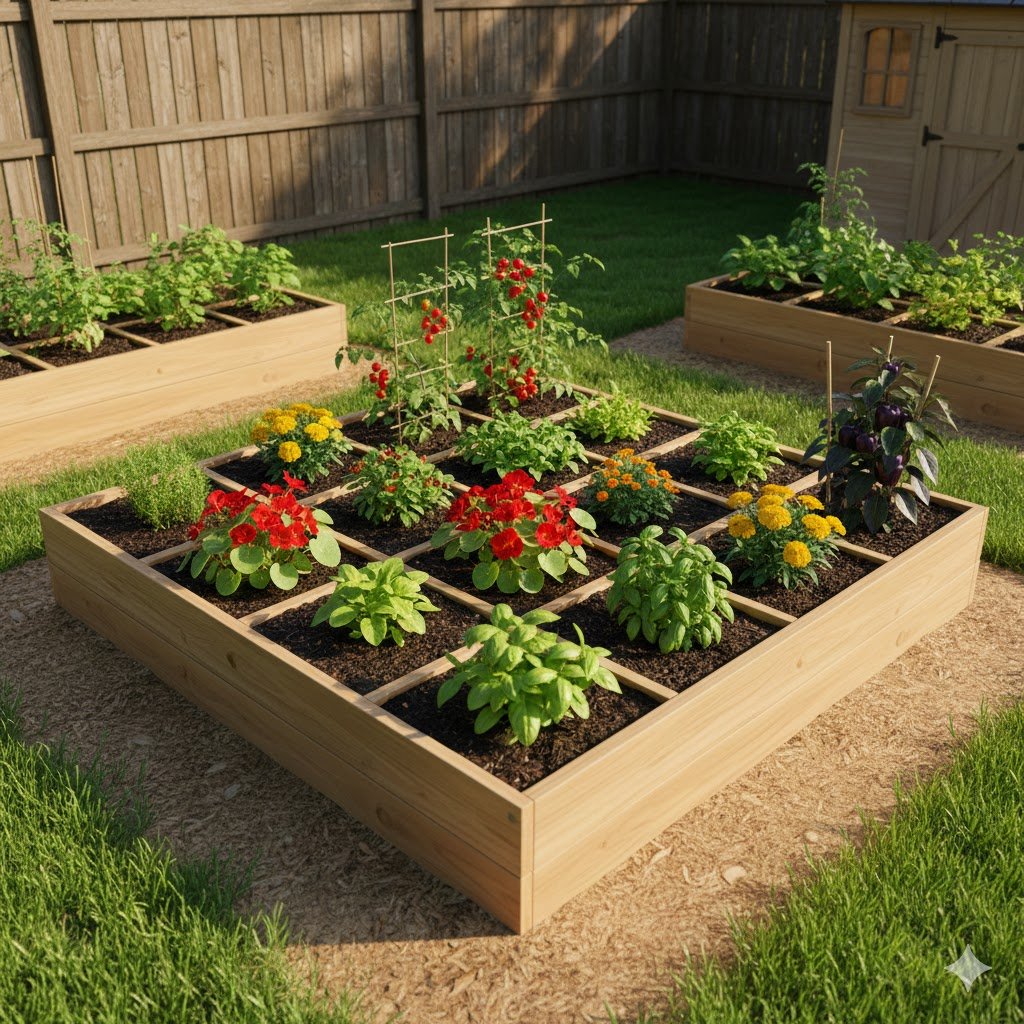
To build a square foot garden, choose a sunny site, make a raised bed no wider than 4 feet, fill it with fertile soil, and divide the surface into 1-foot squares. Place crops by mature size, such as 16 radishes, 9 onions, 4 lettuce plants, or 1 tomato per square. Water deeply, add compost, and replant empty squares through the season.

What you need before you start
A square foot garden needs a level site, at least 6 to 12 inches of growing mix, and six or more hours of direct sun. Most vegetables grow best in loose soil with a pH between 6.0 and 7.0. Leafy greens can tolerate a little less sun, but tomatoes, peppers, cucumbers, and melons need strong light.
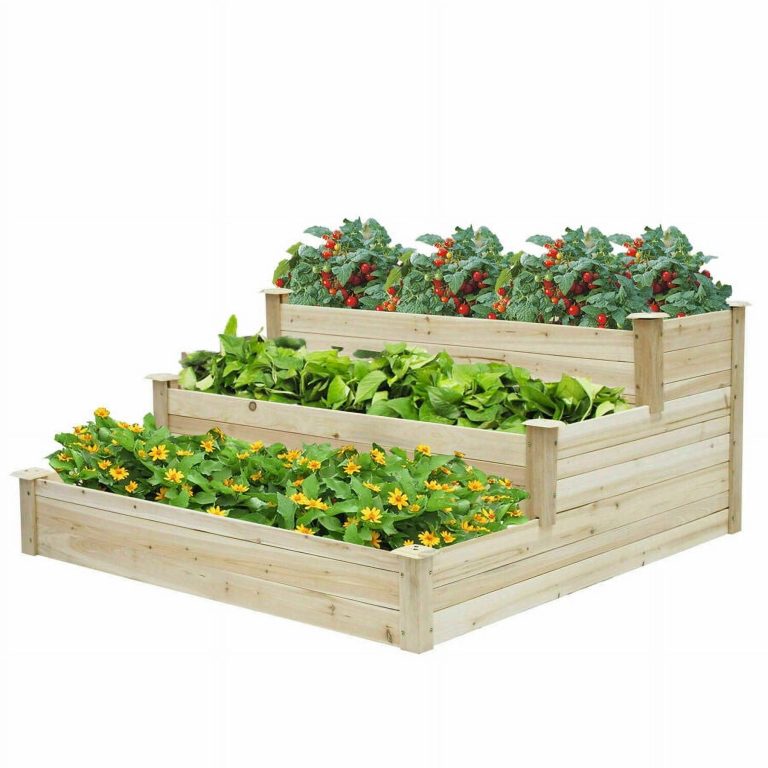
Start with a bed that you can reach from both sides. A 4-by-4-foot bed gives you 16 squares and is easy to manage. A 4-by-8-foot bed gives you 32 squares, but you may need to divide it into two sections to keep the soil easy to reach.

Choose the right location
Place the bed near a water source if possible. Carrying a hose across a lawn becomes tiring after a few weeks, especially when plants need water every day during a heat wave.
Avoid low areas where rain collects. Wet roots can lead to root rot, fungus, and poor growth. A site with morning sun and some late-day shade can work well in hot climates such as USDA Zones 8 and 9.
Keep the garden away from large trees. Tree roots compete for water and nutrients, while dense canopies block sunlight. Black walnut trees also release juglone, a natural compound that can damage some vegetables.
Pick a practical bed size
The best beginner bed is 4 feet wide and 4 feet long. You can reach every square from the edge without stepping into the soil. Do not make a bed wider than 4 feet unless you add a center path.
Length is flexible. You can build a 2-by-4-foot bed for a balcony or a 4-by-12-foot bed for a larger family garden. Several small beds often work better than one huge bed because you can rotate crops and repair one area without disturbing the rest.
| Garden size | Number of squares | Good use |
|---|---|---|
| 2 × 4 feet | 8 | Balcony, patio, or beginner garden |
| 4 × 4 feet | 16 | Small family harvest |
| 4 × 8 feet | 32 | Larger harvest with two access sides |
A 4-by-4-foot bed offers enough room to learn spacing, crop rotation, and succession planting without creating a large workload. If you have limited mobility, narrow beds also reduce reaching and bending.

Decide whether to build a bottom
Most square foot gardens do not need a bottom. An open-bottom bed drains better and lets earthworms move into the growing mix. This design works well on grass, bare soil, or compacted ground after you remove weeds.
A bottom can help on a balcony, deck, or paved patio. Use a strong planter liner with drainage holes, not a sealed box. Without drainage, rain and irrigation can turn the bed into a swamp.
For a bed placed over grass, mow the area short and cover it with cardboard. Overlap the cardboard by several inches to block light from weeds. The cardboard will break down over time and add carbon to the soil.
Materials and tools for a square foot garden
You can build a square foot garden with basic lumber and hand tools. Untreated cedar lasts well, but it costs more than pine. Pressure-treated lumber made for modern residential use is widely considered suitable for raised beds, but avoid old reclaimed boards with unknown chemical treatments.
Use exterior screws rather than nails. Screws hold the corners tight as the wood expands and shrinks. A drill, tape measure, square, and level will make the project faster and cleaner.

| Material or tool | Suggested choice | Why it matters |
|---|---|---|
| Bed boards | Cedar, redwood, or untreated pine | Creates a stable frame |
| Fasteners | 3-inch exterior screws | Holds corners together |
| Soil mix | Compost, vermiculite, and coco coir or peat | Supports roots and drainage |
| Grid material | Thin lath, twine, or PVC strips | Marks 1-foot squares |
| Tools | Drill, saw, tape, level, tape measure | Speeds safe construction |
| Watering tool | Soaker hose or watering wand | Reduces soil disturbance |
You do not need an expensive kit. A homemade grid made from twine works just as well as a decorative wooden grid. The most important tool is a tape measure because accurate spacing prevents overcrowding.

Estimate the soil volume
Measure the bed length, width, and depth in feet. Multiply those numbers to find cubic feet.
For example, a 4-by-4-foot bed that is 1 foot deep needs 16 cubic feet of growing mix. A 4-by-8-foot bed at the same depth needs 32 cubic feet.
| Bed size | Depth | Approximate soil needed |
|---|---|---|
| 2 × 4 feet | 12 inches | 8 cubic feet |
| 4 × 4 feet | 12 inches | 16 cubic feet |
| 4 × 8 feet | 12 inches | 32 cubic feet |
Buy a little extra soil because the mix settles after watering. I usually add 10 percent more than the exact volume. A 4-by-4-foot bed may settle by 2 to 3 inches during the first month.

Build the garden bed step by step
Build the frame before you buy plants. This lets you test the location, confirm the sun pattern, and prepare the soil without leaving seedlings in small pots for too long.
The steps below suit a simple 4-by-4-foot bed. Adjust the measurements for a different size.

1. Mark and prepare the site
Mark a 4-by-4-foot square with stakes and string. Check the area at different times of day. The site may look sunny in the morning but become shaded by a fence or tree in the afternoon.
Remove tall grass and perennial weeds. You do not need to remove every annual weed if you cover the soil with cardboard, but pull plants with strong roots such as bindweed, quackgrass, and nutsedge.
Level the ground as much as possible. A slightly uneven surface is fine, but a steep slope can cause water to run to one side of the bed.
2. Cut and assemble the frame
Cut four boards to form the bed. For a simple 4-by-4-foot frame, use boards that are 4 feet long and about 10 to 12 inches wide. If the boards are 1 inch thick, the outside size will be slightly larger than 4 feet after assembly.
Drill pilot holes near each corner. Drive two or three exterior screws into each joint. Check the frame with a carpenter’s square before tightening the screws.
Set the frame on the prepared site. Use a level from front to back and side to side. A level bed spreads water more evenly.
3. Add a weed barrier when needed
Lay plain brown cardboard under the frame if the bed sits over lawn or weedy soil. Remove tape, plastic labels, and glossy sections first. Wet the cardboard so it stays in place while you add soil.
Do not use thick plastic under an open-bottom bed. Plastic blocks drainage and can trap excess water near plant roots. Landscape fabric can stop weeds, but it also blocks earthworms and roots from using the soil below.
4. Mix and add the growing medium
A common square foot gardening mix uses equal volumes of compost, vermiculite, and peat moss or coco coir. This creates a light, moisture-holding medium, but the quality of the compost controls the result.
Use compost from several sources when possible. Blended compost may contain plant compost, aged manure, leaf mold, or mushroom compost. Avoid fresh manure because it can burn roots and add excess salts.
Coco coir holds water well and has a near-neutral pH. Peat moss is light and acidic, so it may need lime after a soil test. Vermiculite improves water retention, while perlite improves drainage but can float to the surface.
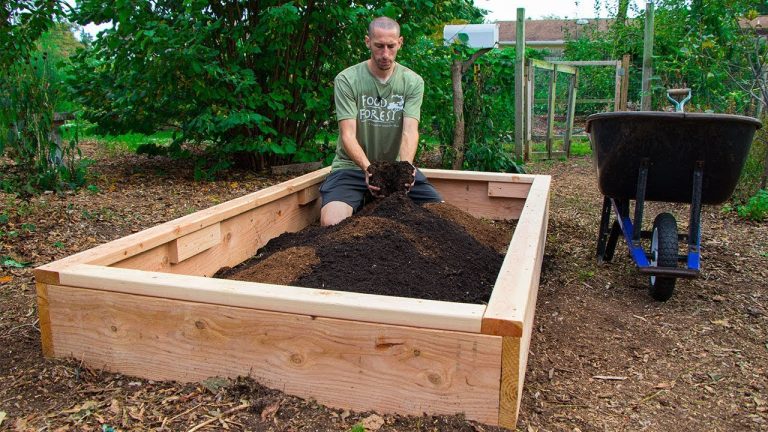
Fill the bed in 2- to 3-inch layers. Water each layer lightly to settle it. Do not press the soil down with your feet because compacted soil limits air around roots.
5. Install the one-foot grid
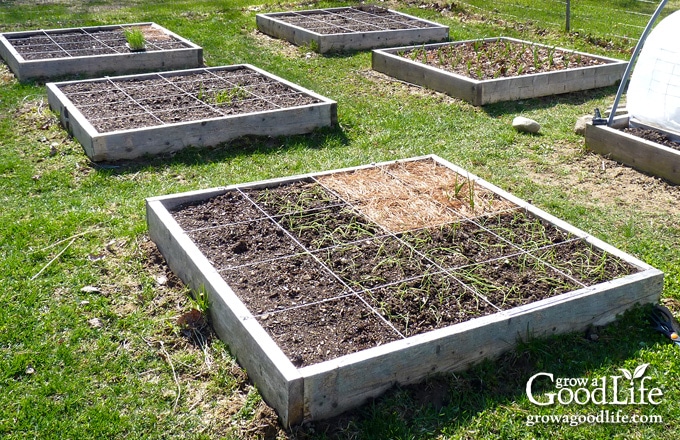
The grid turns the bed into separate planting areas. Measure 12 inches from each side and mark the lines. Use thin wooden strips, bamboo, PVC, or weather-resistant twine.
A grid should sit on the surface, not several inches above it. Tall dividers can shade seedlings and make it hard to hoe or add compost. Secure the lines with small nails, garden staples, or screws.
You can use a permanent grid in a wood bed, or mark squares with string each spring. I prefer removable wooden lath because I can lift it during soil renewal.

Plan crops by plant size
The central idea of square foot gardening is spacing plants by their mature size. One large tomato may fill one square, while 16 small radishes can share that same area.
Read the seed packet, not just the plant tag. Seed packets often give a thinning distance, such as 3 or 4 inches. Divide the square into equal sections and plant one seed at each point.
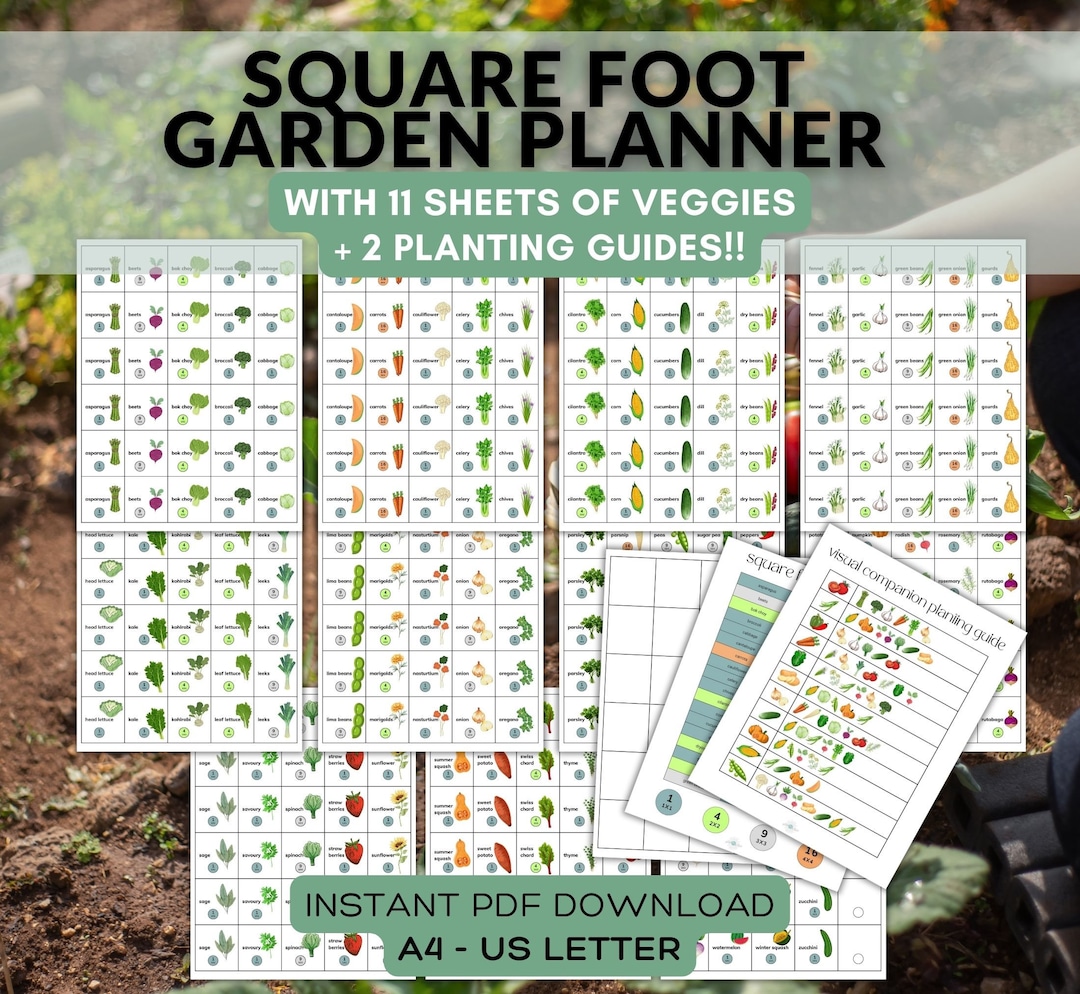
| Plants per square | Examples | Approximate spacing |
|---|---|---|
| 16 | Radish, carrot, small beet, green onion | 3 inches |
| 9 | Bush bean, spinach, baby beet, small onion | 4 inches |
| 4 | Lettuce, Swiss chard, parsley, turnip | 6 inches |
| 1 | Tomato, pepper, eggplant, cabbage, broccoli | 12 inches |
Spacing must match the plant’s mature size. A large romaine lettuce may need one square, while a small butterhead variety can fit four. Follow the larger spacing if the packet gives conflicting advice.

Choose plants for the first season
Start with crops that grow quickly and stay manageable. Leaf lettuce, spinach, radishes, bush beans, carrots, beets, scallions, parsley, basil, and kale are friendly choices.
Tomatoes, cucumbers, zucchini, pumpkins, and melons need more planning. A tomato may need one square, but its roots and branches can spread beyond the bed. Use a cage or trellis to move the plant upward.
Avoid planting mint directly in the bed. Mint spreads through underground stems and can take over. Grow it in a separate container instead.
Use vertical space
A trellis increases the yield from each square. Place it on the north side of the bed so tall crops do not shade shorter plants.
Use a sturdy trellis for cucumbers, pole beans, peas, and small melons. A trellis made from welded wire fencing can support beans, but heavy fruit may need extra ties.
Tie tomato stems loosely with soft cloth or stretchy garden tape. Do not use thin wire, which can cut into stems as they swell.
Include flowers and herbs
Flowers help attract pollinators and beneficial insects. Calendula, sweet alyssum, nasturtium, borage, and dwarf marigolds can fit near vegetables.
Basil grows well near tomatoes, but companion planting does not replace good spacing, clean soil, or pest control. The main benefit comes from plant diversity. More plant types create a less predictable environment for pests.
🌱 Beginner Note: Plant only a few varieties in the first bed. Six types of lettuce may sound exciting, but each crop adds a different harvest time, watering need, and pest risk.
Plant a square foot garden through the seasons
The best planting time depends on your USDA hardiness zone and local frost dates. Cool-season crops tolerate light frost, while warm-season crops need warm soil and frost-free nights.
In Zone 5, you may start peas and spinach outdoors in early spring, then wait until late May for tomatoes and peppers. In Zone 9, you may grow lettuce and peas through winter but struggle with them during hot summer weather.

| Season | Crops to plant | Main task |
|---|---|---|
| Early spring | Peas, spinach, radish, lettuce, kale | Protect from frost and slugs |
| Late spring | Beans, basil, cucumber, tomato, pepper | Wait for warm soil |
| Summer | Beans, chard, carrots, herbs | Water deeply and shade greens |
| Fall | Broccoli, cabbage, arugula, beets | Sow before cold weather |
| Winter in mild zones | Lettuce, parsley, kale, onions | Use row cover during cold snaps |
Use local frost dates as a guide, not a strict rule. Soil temperature matters more than the calendar for beans, cucumbers, squash, and basil.

Start seeds or buy transplants
Direct sow carrots, radishes, peas, beans, beets, and most greens. Their roots can suffer when moved. Sow a few seeds in each position, then thin the seedlings with scissors.
Buy transplants for tomatoes, peppers, eggplant, rosemary, and slow-growing brassicas if you want an earlier harvest. Choose short, sturdy plants with dark green leaves. Avoid plants with yellow leaves, circling roots, or insect damage.
Harden off indoor-grown plants for about one week. Set them outside in a sheltered spot for a few hours at first, then increase their exposure to wind and sun.
Practice succession planting
Succession planting means replacing a finished crop with a new one. After harvesting radishes, plant basil, beans, carrots, or fall lettuce in the empty square.
A 4-by-4-foot bed can produce more when you replant instead of leaving harvested squares bare. Add a small handful of compost before each new crop.
Do not plant the same crop family in the same square repeatedly. Rotate tomatoes, peppers, and eggplants away from the square next season when possible. This reduces the buildup of soil pests and diseases.
Water, feed, and mulch the bed
Square foot gardens need steady moisture because raised beds drain faster than heavy ground soil. Water when the top inch feels dry, but do not wait until plants wilt.
Young seedlings need light, frequent watering until their roots grow. Mature plants usually prefer a deep soak that reaches 6 to 8 inches into the soil. Morning watering reduces evaporation and gives leaves time to dry.

| Plant stage or weather | Watering approach | Check |
|---|---|---|
| New seeds | Light water daily as needed | Surface stays damp |
| Young seedlings | Water when top inch dries | Roots do not sit in water |
| Mature plants | Deep water 1–3 times weekly | Soil moist 6–8 inches down |
| Heat wave | Check daily, water early | Leaves stay firm by morning |
| Heavy rain | Pause irrigation | Drainage remains clear |
Your soil type and climate change the schedule. Sandy mixes may need water more often than loamy mixes. In humid Zones 7 and 8, overwatering can cause more problems than underwatering.
Use mulch with care
Add 1 to 2 inches of shredded leaves, clean straw, or fine compost around plants. Mulch slows evaporation, buffers soil temperature, and reduces weed growth.
Keep mulch away from tomato stems and lettuce crowns. Wet mulch touching stems can encourage rot and provide shelter for slugs.
Avoid dyed mulch, fresh wood chips, and hay that contains weed seeds. Straw works well, but inspect it for seed heads before use.
Feed based on plant needs
Good compost provides a steady supply of nutrients, but heavy feeders still benefit from extra fertilizer. Tomatoes, peppers, cucumbers, cabbage, broccoli, and squash remove more nutrients than radishes or herbs.
Use a balanced organic fertilizer such as 4-4-4 according to the label. The three numbers show the percentage of nitrogen, phosphate, and potash by weight. Too much nitrogen creates soft leaves and fewer fruits.
Leafy crops need nitrogen for leaf growth. Root crops need moderate fertility because excess nitrogen can produce large tops and small roots. A soil test gives better guidance than guessing.
⚠️ Warning: Do not add fertilizer every week unless the label calls for it. Salt buildup can damage roots, especially in containers and raised beds with little natural drainage.
Solve common square foot garden problems
Most garden problems come from crowding, poor drainage, irregular watering, or weak light. Fix the growing conditions before reaching for a pesticide.
Check leaves often. Look under lettuce leaves, around bean stems, and inside tomato branches. Early action usually works better than a large treatment later.
| Problem | Common signs | Practical fix |
|---|---|---|
| Crowding | Thin stems, small leaves, mildew | Thin seedlings and remove weak plants |
| Dry soil | Wilted leaves, cracked soil | Add mulch and water deeply |
| Poor drainage | Yellow leaves, soft roots | Improve mix and reduce watering |
| Slugs | Ragged holes, shiny trails | Handpick, remove hiding places |
| Aphids | Curled leaves, sticky residue | Spray with water; protect lady beetles |
| Powdery mildew | White coating on leaves | Improve airflow and avoid wet foliage |
| Blossom-end rot | Dark base on tomatoes | Keep soil moisture steady |
Many square foot beds fail because gardeners plant one carrot variety at 3 inches and then forget to thin it. Crowded carrots stay small and develop poor roots. Thin seedlings while they are young, even if it feels wasteful.
Manage pests without harming pollinators
Inspect plants every few days. Handpick caterpillars, squash bugs, and beetles when numbers are low. Spray aphids from the underside of leaves with a firm stream of water.
Use insect netting over cabbage, kale, and broccoli to block cabbage moths. Remove the cover when flowering crops need pollination, or hand-pollinate plants that require insects.
If you use insecticidal soap, apply it to the underside of leaves in the evening. Test one leaf first. Do not spray open flowers or active pollinators.
Prevent plant disease
Give plants enough room for air movement. Wet leaves that stay crowded for hours create a good setting for fungal disease.
Water the soil rather than the foliage. Clean up diseased leaves and place them in the trash if your compost pile does not heat enough to kill pathogens.
Do not save seed from a badly diseased plant. Rotate tomato-family crops and avoid planting tomatoes in the same soil year after year.
Fix yellow leaves
Yellow leaves can mean too much water, poor drainage, nitrogen shortage, root damage, or normal aging. Feel the soil before adding fertilizer.
If the soil is wet and the lower leaves turn yellow, pause watering and check drainage. If the plant grows slowly in pale soil, add finished compost or a light dose of balanced fertilizer.
A single yellow leaf near the base often means old age. A whole plant turning yellow needs a closer check.
🔧 Quick Fix: Push a finger 2 inches into the soil before watering. If it feels damp and cool, wait. If it feels dry and crumbly, water slowly at the base.
Maintain the bed during the season
A square foot garden stays productive with small weekly tasks. Spend 10 minutes checking soil moisture, tying tall plants, removing weeds, and harvesting ripe crops.
Harvest often. Beans become tough when left too long, lettuce can bolt in heat, and cucumbers become seedy. Frequent harvest also signals many plants to produce more.
Weekly maintenance checklist
- Check the top 1 to 2 inches of soil.
- Look under leaves for aphids, eggs, and caterpillars.
- Tie tomatoes, cucumbers, and beans to supports.
- Remove weeds before they flower.
- Harvest beans, greens, herbs, and ripe fruit.
- Trim damaged leaves with clean pruners.
- Check the bed after heavy rain for standing water.
Clean pruners between diseased plants. A household disinfectant or diluted bleach solution can reduce the spread of some pathogens, but rinse and dry tools after use to prevent corrosion.
Refresh the soil between crops
Remove spent plants by cutting them at soil level when possible. Pull roots only if they show disease or if you need to clear the square for a new crop.
Top-dress each empty square with about 1 inch of finished compost. Mix it lightly into the top few inches without turning the whole bed.
After two seasons, check the soil level. Add more growing mix if it has settled below the frame. Do not bury plant crowns or raise the soil against wooden sides where water can collect.
Protect the garden from weather
Use lightweight row cover for frost, cabbage moths, and harsh wind. Support it with hoops so the fabric does not rest directly on plants.
In hot climates, shade cloth with 30 percent coverage can protect lettuce and spinach from bolting. Do not use heavy shade over tomatoes and peppers unless extreme heat causes flower drop.
Anchor covers well. A sudden wind can turn a row cover into a sail and damage stems.
Personal experience: what worked and what did not
My first square foot bed looked neat but produced less than expected because I planted too many large crops. I placed a cherry tomato, cucumber, zucchini, and pepper in the same 4-by-4-foot bed. By midsummer, the cucumber had climbed over the tomato cage, and the zucchini shaded three squares.
The next season, I kept one tomato and one pepper in the bed. I moved cucumbers to a trellis along the north edge and grew zucchini in a separate mound. The bed produced more lettuce, beans, basil, and carrots because the plants had better light and airflow.
I also tried a cheap compost blend that smelled sour and stayed wet. Seedlings grew slowly and the soil formed hard clumps after it dried. Replacing part of the mix with mature leaf compost and coarse coco coir fixed the texture after about four weeks.
In a dry Zone 7 summer, a soaker hose under straw worked better than hand watering. In a wet spring, the same setup held too much water, so I removed the straw and watered less. A square foot garden is not a fixed recipe; it responds to weather, soil, and plant size.
Cost, lifespan, and storage
A small square foot garden can cost less than $50 if you use reclaimed untreated boards, homemade compost, and saved materials. New cedar, bagged compost, vermiculite, trellis supplies, and irrigation may raise the cost to $150 or more for a 4-by-4-foot bed.
The frame can last 5 to 15 years, depending on the wood, moisture, and construction. Cedar and redwood often outlast pine. The grid may break first, especially if you leave twine exposed to sun.
Soil does not need full replacement every year. Add compost, inspect drainage, and test the pH every few seasons. Replace the mix only when it contains disease, has poor structure, or has become contaminated.
| Component | Typical lifespan | Care that extends life |
|---|---|---|
| Cedar frame | 8–15 years | Keep soil below the top edge |
| Pine frame | 3–8 years | Reduce constant wet contact |
| Wood grid | 3–7 years | Store dry in winter |
| Twine grid | 1–3 seasons | Remove before snow and rain |
| Soaker hose | 3–6 years | Drain and store out of sunlight |
Remove hoses, trellis netting, and loose grids before winter in cold regions. Store them dry and away from rodents. Leave the soil in place, cover it with compost and leaves, and avoid walking on the bed.
Square foot gardening versus other methods
Square foot gardening is not the only way to grow food in limited space. Row gardening works well for large quantities of one crop, while containers suit renters and paved spaces.
Raised beds offer deeper soil and simpler access. In-ground beds cost less but may need more weed control. A square foot layout adds structure to either system.
| Method | Main advantage | Main limitation |
|---|---|---|
| Square foot bed | Efficient spacing and easy planning | Needs careful thinning |
| Traditional rows | Efficient for large harvests | Uses more paths and open soil |
| Containers | Works on patios and rentals | Dries out quickly |
| In-ground garden | Low setup cost | More weeds and poor soil risk |
Choose square foot gardening if you want variety in a small area. Choose rows if you plan to grow many pounds of corn, potatoes, or processing tomatoes. Choose containers if you cannot place a permanent bed.
Common mistakes to avoid
A square foot garden can look easy because the grid is simple. The plants still need the same light, water, nutrients, and disease care as plants in any other garden.
Avoid these errors during your first season:
- Making the bed too wide: You will step into the soil or neglect the center.
- Using poor compost: Immature compost can stunt roots and attract flies.
- Planting by seedling size: Space plants by mature size, not by the size of the plug.
- Skipping a trellis: Vining crops soon spread into nearby squares.
- Watering on a calendar: Soil moisture changes with heat, wind, and rain.
- Ignoring succession planting: Empty squares waste the growing season.
- Adding too much fertilizer: Excess nitrogen creates leaves instead of fruit.
- Planting mint in the bed: It can spread beyond its square.
Answers to common questions
Q: How deep should a square foot garden be?
A: Most vegetables grow well in 6 to 12 inches of soil. Use 12 inches for tomatoes, carrots, parsnips, potatoes, and other deep-rooted crops. A 6-inch bed suits lettuce, radishes, herbs, and many greens if the soil below drains well.
Q: Can I build a square foot garden on concrete?
A: Yes, but use a bottom or place the bed inside a large planter with drainage holes. Use at least 10 to 12 inches of growing mix and protect the surface from standing water. Containers on concrete dry faster, so check moisture often.
Q: What is the best soil mix for square foot gardening?
A: Use a light mix with quality compost, a moisture-holding material such as coco coir, and a drainage material such as vermiculite or perlite. A blend of equal volumes can work, but compost quality matters more than an exact recipe.
Q: How many plants fit in one square foot?
A: The number depends on mature plant size. You can grow 16 small plants such as radishes, 9 onions or bush beans, 4 lettuce plants, or 1 tomato or pepper. Always follow the seed packet when its spacing differs.
Q: Can tomatoes grow in a square foot garden?
A: Yes. Plant one tomato per square and provide a strong cage or trellis. Determinate varieties such as ‘Roma’ stay more manageable than large indeterminate varieties, but any tomato can outgrow a small bed without support.
Q: How often should I water a square foot garden?
A: Check the top inch of soil each day during hot weather. Mature plants often need a deep soak one to three times each week, while new seeds may need light water daily. Sandy soil, wind, and full sun increase water needs.
Q: Should I use wood chips in a square foot garden?
A: Use fine, aged wood chips only as surface mulch, not as the main growing medium. Fresh chips can tie up nitrogen while they break down. Keep mulch away from plant stems to reduce rot and pest shelter.
Q: Can I grow root vegetables in a shallow bed?
A: Radishes, small carrots, beets, and turnips can grow in 6 to 8 inches of loose soil. Long carrots and parsnips need deeper soil, often 12 inches or more. Remove stones and clumps so roots can grow straight.
Q: Do square foot gardens need crop rotation?
A: Rotation helps, especially for tomatoes, peppers, potatoes, eggplants, cabbage, and broccoli. Move each plant family to a different square or bed each year when possible. Adding compost does not remove all soil disease risks.
Q: Is square foot gardening good for beginners?
A: Yes, if the bed stays small and the crop list stays simple. Start with lettuce, radishes, beans, carrots, basil, and one tomato. Avoid filling every square with a different crop until you understand your site.
Q: How long does a square foot garden last?
A: The frame may last 3 to 15 years, depending on wood and moisture. The soil can remain productive for many years with compost, proper watering, and occasional testing. Grids and hoses often need replacement before the frame.
Final thoughts
The best square foot garden is not the one with the most plants. It is the one you can reach, water, harvest, and renew without stress. Build a 4-by-4-foot bed, use healthy compost, follow mature plant spacing, and grow a short list of reliable crops.
After one season, you will know which squares get the best sun, where water collects, and which crops thrive in your climate. Then you can add a second bed, a trellis, or a fall crop with much more confidence.
Meta description: Learn how to build a square foot garden with simple materials, soil mix, plant spacing, watering tips, seasonal crops, and expert solutions for common problems.