How To Maximize A Raised Bed Garden: Smart Growing Tips
A raised bed can produce far more food than its footprint suggests. The key is not to pack plants tightly at random. You need good soil, full use of vertical space, steady water, smart crop spacing, and a planting plan that changes through the season. A 4-by-8-foot bed can grow salads, herbs, roots, beans, tomatoes, and flowers when each plant has a clear job.
I have managed raised beds in cool, wet gardens in USDA Zone 6 and hot summers in Zones 8 and 9. The same lesson came up each time: the bed performs best when I treat it as a small, living system rather than a box of dirt. Good planning also cuts waste, reduces disease, and makes daily care much easier.
The quickest way to maximize a raised bed garden
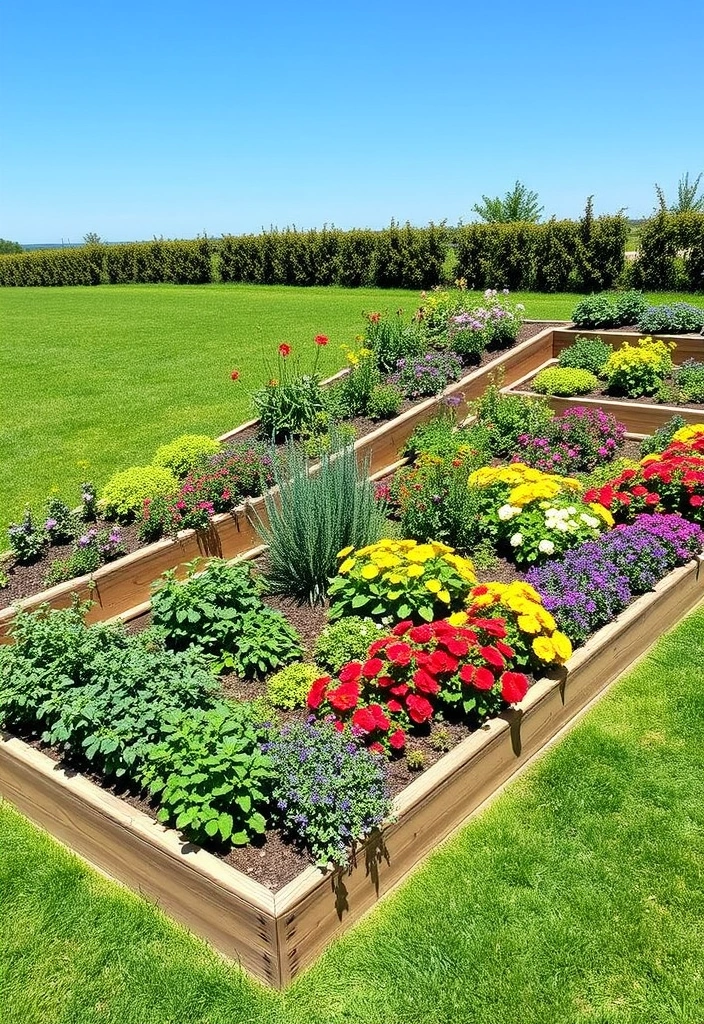
The best way to maximize a raised bed garden is to improve the soil, map the bed by mature plant size, use vertical supports, and replant empty spaces. Grow compact crops between slower crops, place tall plants on the north side, and water at the root zone. A 4-by-8-foot bed can supply a steady harvest when you use succession planting instead of planting everything on one day.

Start with the bed, light, and layout
A raised bed works best when its basic structure matches the plants you want to grow. Before adding seeds or compost, check the bed’s depth, light, drainage, walking space, and access from all sides. These details decide how much usable growing space you really have.

Choose the right bed size and depth
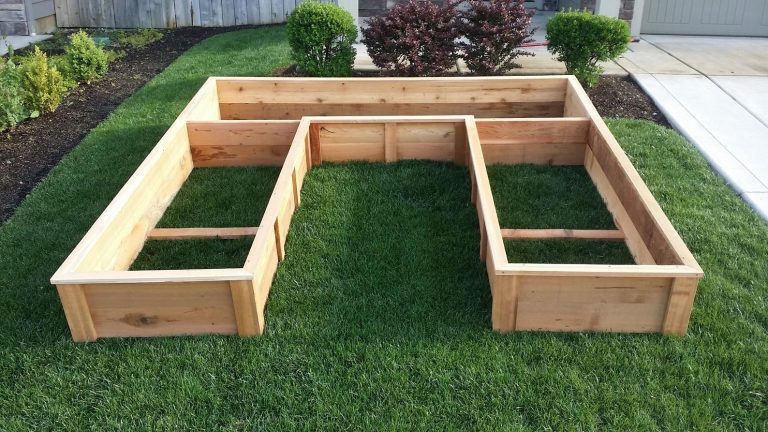
A 4-by-8-foot bed gives you 32 square feet of growing area. It is a useful size because you can reach the center from either side without stepping on the soil. Keep most beds no wider than 4 feet if you can walk around them. A bed against a wall should be no more than 2 feet wide.
A depth of 8 to 12 inches works for lettuce, beans, herbs, onions, and many annual vegetables. Root crops need more room. Carrots grow better in 12 inches of loose soil, while long parsnips may need 18 inches or more. Tomatoes and large peppers also benefit from deeper soil because their roots spread widely.
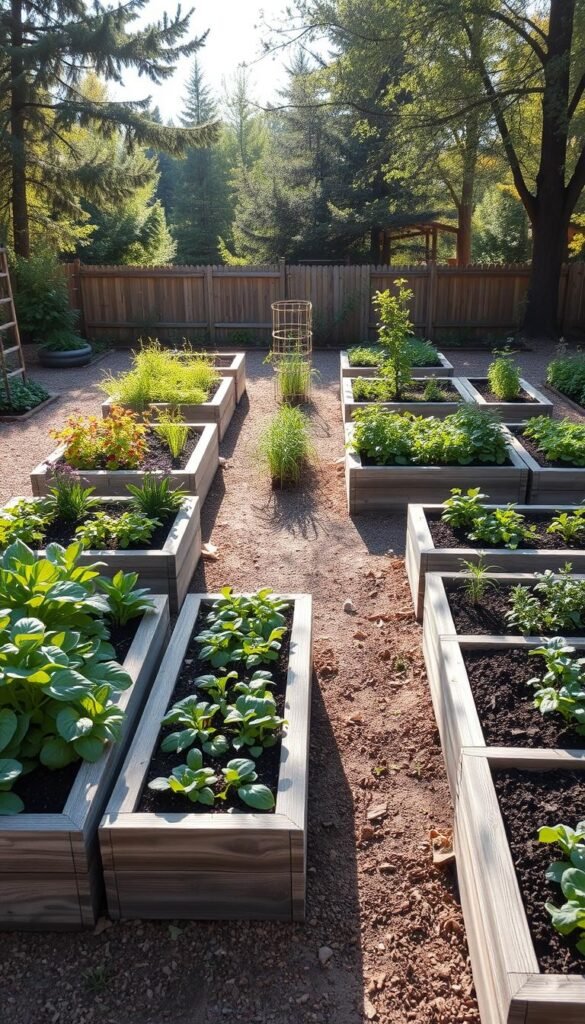
Leave at least 18 to 24 inches between beds for walking. If you use a wheelbarrow, plan closer to 30 inches. I once placed beds only 16 inches apart in a new garden. The layout looked efficient, but weeds became hard to pull and a full harvest basket would not fit through the gap.
Measure sunlight before planting
Most vegetables need at least six hours of direct sun. Fruiting crops such as tomatoes, cucumbers, eggplants, squash, and peppers often need eight hours for strong growth. Leafy greens can handle four to six hours, especially in hot climates.
Watch the bed at several times of day. A fence, tree, shed, or neighboring house can cast a long shadow in spring and fall. Put tall crops on the north side of the bed so they do not shade smaller plants. In the southern Hemisphere, use the south side for tall crops, but this guide focuses on US conditions.
Use a simple grid layout
Divide the bed into 1-foot squares with thin stakes, string, or a homemade grid. This method makes spacing clear and prevents the common mistake of leaving large bare gaps between rows.
Square-foot spacing varies by plant size:
| Crop type | Plants per square foot | Good examples |
|---|---|---|
| Large plants | 1 | Tomato, pepper, eggplant |
| Medium plants | 4 | Lettuce, bush beans, Swiss chard |
| Small plants | 9–16 | Radish, carrot, scallion |
Use mature plant size, not the size of the seedling, when you plan. A tiny cucumber plant may look lost in a square, but one vine can cover several feet once it climbs.
The grid method gives you a clear map, but do not treat it as a strict rule. A tomato needs more room than one square foot if you let it grow as a bush. A determinate tomato, such as ‘Roma VF’ or ‘Celebrity,’ is easier to fit than a sprawling indeterminate variety.
Build soil that supports dense planting
Rich, well-drained soil is the foundation of a productive raised bed. Plants compete for water and nutrients when you grow them close together, so weak soil shows its problems quickly. Aim for a loose mix with steady moisture, air space, organic matter, and a pH suited to vegetables.
Use a balanced soil mix
A practical raised bed mix contains topsoil, finished compost, and an airy material such as aged bark fines or coconut coir. Many gardeners use a rough 60:30:10 ratio, but the exact mix depends on the materials available in your area.
Do not fill a bed with pure compost. Compost holds nutrients, but it can shrink, dry fast, or contain too much soluble salt when used alone. A mix with about 5% organic matter is often enough for garden soil, while fresh beds may need more compost during the first few seasons.
Have the soil tested before adding lime, sulfur, or large amounts of fertilizer. Most vegetables grow well at a pH of 6.0 to 7.0. Blueberries need much more acidic soil, around pH 4.5 to 5.5, so they usually belong in a separate container or bed.
Add compost at the right rate
Spread 1 to 2 inches of finished compost over the bed each year. Mix it into only the top few inches before planting, or leave it as a surface layer for soil organisms to pull down. Avoid digging deeply each season because frequent digging breaks soil structure and harms earthworms.
For a 4-by-8-foot bed, a 1-inch compost layer takes about 2.7 cubic feet. A 2-inch layer takes about 5.3 cubic feet. Buying by the bag can cost more than buying in bulk, so measure the bed first.
Feed heavy crops without overfertilizing
Tomatoes, cucumbers, corn, squash, and cabbage need more nutrients than herbs or radishes. Still, more fertilizer does not always mean more food. Too much nitrogen can create huge leaves and few flowers, and it can increase aphid pressure.
A soil test should guide fertilizer use. If you need a general feed, use a complete organic fertilizer near the rate on the label. A product marked 5-5-5 has equal parts nitrogen, phosphate, and potash by weight. Work it into the top layer rather than placing dry fertilizer against roots.
| Soil task | Timing | Amount or action |
|---|---|---|
| Compost top-dress | Spring and after heavy harvests | Add 1–2 inches |
| Soil test | Every 2–3 years | Test pH and major nutrients |
| Organic fertilizer | Before heavy feeders grow | Follow the label rate |
| Mulch renewal | Once or twice per season | Keep a 1–2-inch layer |
A thin mulch layer helps the soil stay cool and reduces weeds. Use shredded leaves, clean straw, or untreated grass clippings. Keep mulch a few inches away from tomato stems and plant crowns to reduce rot.
💡 Pro Tip: Mix a handful of compost into each planting hole only when the bed soil is poor. In good soil, the extra compost can hold too much water around young roots.
Plan crops by height, speed, and root depth
The most productive raised bed gardens use more than one layer. Tall plants occupy the air above the bed, medium plants fill the center, and quick crops use the open soil below. This approach is called intensive planting, but it still requires room for airflow and harvest access.
Put tall crops on the north side
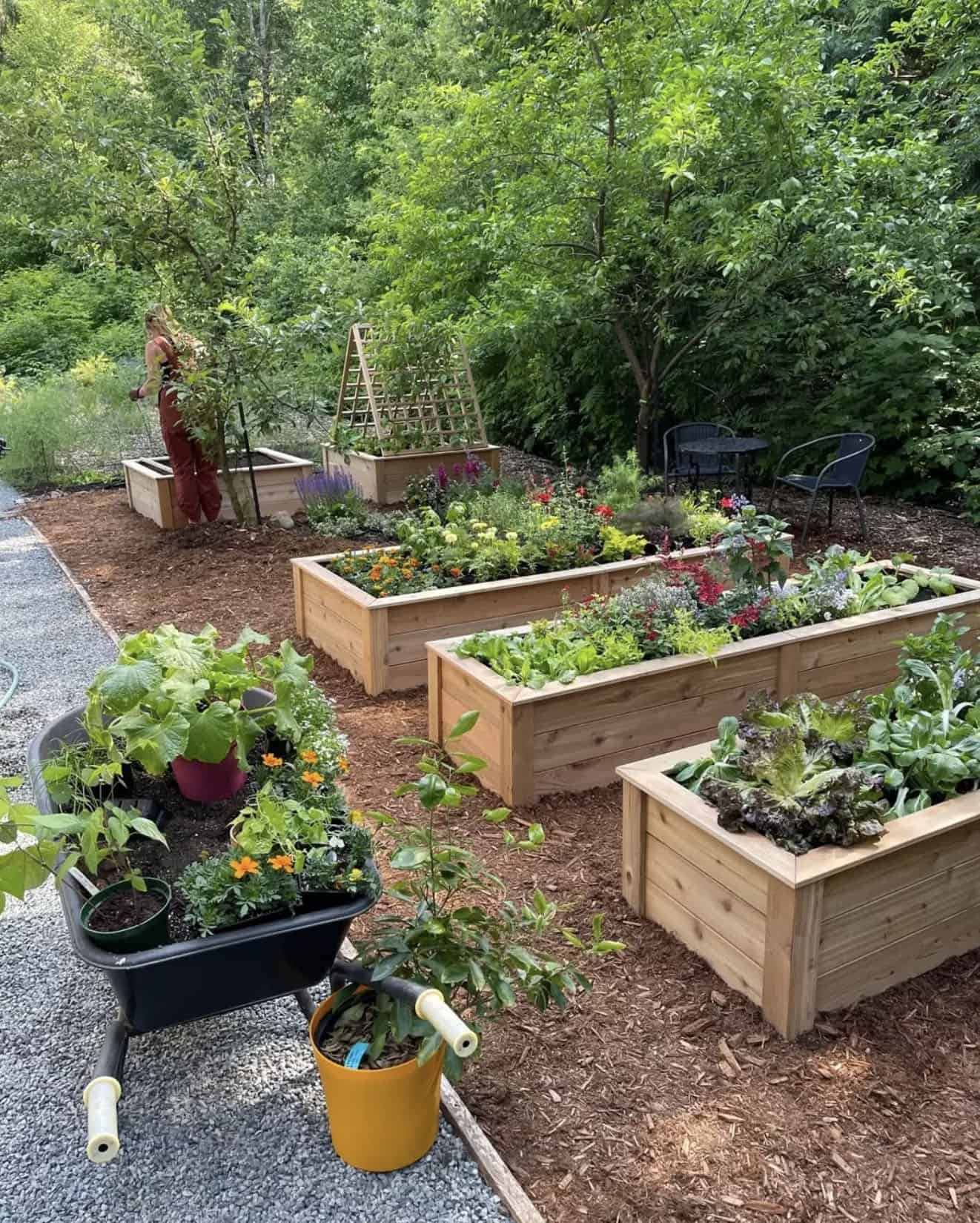
Place trellised tomatoes, cucumbers, pole beans, and peas along the north edge. A 5- to 7-foot trellis lets vines grow upward rather than across the soil. This can free several square feet for lettuce, basil, radishes, or carrots.
Use strong supports before planting. A mature cucumber vine can become heavy after rain, and a tomato cage that seems sturdy in May may bend under a full plant in July. I prefer metal cattle panels, welded wire trellises, or solid wooden frames over thin plastic supports.
Match roots to soil layers
Plants use soil at different depths. Shallow-rooted greens can grow near deeper-rooted carrots or parsnips. Herbs such as thyme and oregano prefer drier, leaner soil, while lettuce and radishes like more even moisture.
A mixed root plan might include:
- Lettuce over shallow roots
- Bush beans over medium roots
- Carrots between slower crops
- Chives along the bed edge
- One trellised cucumber on the north side
Avoid planting two large, thirsty crops beside each other in a small bed. A tomato and a cucumber can both grow well, but they may compete for water if they share a narrow root zone.
Select compact varieties
Variety choice can double the useful output of a small bed. Look for words such as bush, patio, dwarf, compact, baby, container, or determinate on the seed packet.
Useful choices include:
- ‘Patio Choice Yellow’ tomato
- ‘Tiny Tim’ tomato
- ‘Bush Pickle’ cucumber
- ‘Provider’ bush bean
- ‘Little Gem’ lettuce
- ‘Thumbelina’ carrot
- ‘Space’ spinach
- ‘Fairy Tale’ eggplant
Compact does not mean low yield. A bush bean plant may produce heavily for several weeks, while a pole bean can produce over a longer period if you keep picking the pods.
Grow a living mulch
A living mulch is a low plant that covers soil between larger crops. Lettuce, arugula, purslane, and clover can reduce bare soil, but they must not crowd the main crop. Harvest them young before they compete for light and water.
Do not use aggressive spreading herbs such as mint in the bed unless you want them to take over. Grow mint in a pot set near the bed instead.
Use succession planting to avoid empty space
Succession planting means sowing or transplanting crops at several dates instead of planting the whole bed at once. It keeps the bed productive after an early crop finishes. It also spreads harvests so you do not receive 20 heads of lettuce in one week.

Follow one crop with another
When radishes finish, pull them and plant basil, bush beans, or fall carrots. When spring peas fade in early summer, replace them with cucumbers, beets, or a heat-tolerant green.
The best replacement depends on your USDA zone and frost dates. In Zone 6, I can often grow spinach and peas in spring, beans and basil in summer, then kale and winter lettuce in fall. In Zone 8, fall planting may begin while summer crops still produce.
Use the harvest window
Each crop has a useful harvest window. Radishes may mature in 25 to 30 days, baby lettuce in about 30 days, and bush beans in 50 to 60 days. This lets you plan the next crop before the current one ends.
| First crop | Approximate harvest time | Follow-up crop |
|---|---|---|
| Radish | 25–30 days | Bush bean or basil |
| Peas | 55–70 days | Cucumber or fall beet |
| Early lettuce | 30–45 days | Carrot or kale |
| Garlic | Mid to late summer | Fall lettuce or spinach |
Remove diseased plants instead of composting them in a home pile. Healthy roots can sometimes stay in the soil, but cut large stems at the surface. This leaves the soil structure in place and reduces disturbance.
Sow small amounts often
For salad crops, sow a short row every 10 to 14 days. This works well with radish, baby lettuce, arugula, cilantro, and scallions. Stop sowing when heat or frost makes the crop unreliable.
In hot weather, use shade cloth over lettuce and spinach. Bolting means a plant sends up a flower stalk and turns bitter. Heat, long days, crowding, and dry soil can all cause it.
🌱 Beginner Note: Start with two or three succession crops, not ten. A simple plan that you follow beats a complex plan that becomes hard to track.
Grow upward and use the bed edges
Vertical growing is one of the easiest ways to increase output without making a bed crowded. It also keeps vines and fruit off wet soil, which can reduce rot and improve air flow.

Choose the right support
Use a trellis for peas, pole beans, cucumbers, small melons, and some tomatoes. Install it on the north side and anchor it firmly. For cucumbers and small melons, use slings made from old cloth if the fruit becomes heavy.
A tomato cage supports a plant but does not always train it. Tie stems loosely with soft cloth or garden tape. Avoid wire that cuts into expanding stems.
Keep heavy fruit safe
Not every fruit should hang without support. A cucumber usually needs no sling, but a cantaloupe or small watermelon may pull down a trellis. Use mesh hammocks tied to the frame and check them as the fruit grows.
Pumpkins and large squash rarely suit a small raised bed. They can send vines 10 feet or more in every direction. If you grow them, train the vines outside the bed or use a separate mound.
Use the edges for useful plants
The outer edge is a good place for compact herbs and flowers. Chives, parsley, basil, alyssum, calendula, and dwarf nasturtiums can attract pollinators and fill small spaces.
Avoid placing tall, spreading herbs such as rosemary or sage in the middle of a small bed. Their woody growth can shade vegetables and make replanting difficult.
Water deeply, but do not keep the bed soggy
Raised beds drain faster than in-ground soil, especially when they use a loose soil mix. Water needs vary with temperature, wind, crop size, soil type, and mulch. The goal is even moisture at the root zone, not wet soil all day.
Check soil before watering
Push a finger 1 to 2 inches into the soil. If it feels dry at that depth, water most vegetables. For seedlings, check more often because their roots are shallow. A moisture meter can help, but your finger gives useful information once you learn the soil.
Water in the morning when possible. Leaves dry faster, and plants have water before the heat of the day. Drip irrigation or a soaker hose works better than a sprinkler for dense beds because it keeps foliage dry.
| Weather and crop stage | Typical watering pattern | Check |
|---|---|---|
| New seedlings | Light water most days | Top inch of soil |
| Established plants in mild weather | Deep water 1–2 times weekly | Top 2 inches |
| Hot, windy weather | Water more often | Soil and plant leaves |
| Mulched beds after rain | Less frequent watering | Soil below mulch |
These are starting points, not fixed rules. Sandy soil may need water more often than loam. Heavy clay may stay wet for days and need better drainage instead.
Avoid common irrigation mistakes
Short, shallow watering causes shallow roots. Plants may wilt each afternoon even when the soil surface looks damp. Water slowly until the top 6 to 8 inches of soil are moist for established vegetables.
Do not wet the same spot with a hose at high pressure. It can expose roots and wash away fine soil. Use a gentle spray, drip line, or a watering wand with a breaker head.
⚠️ Warning: Never leave a hose or irrigation line where it can become a tripping hazard. Secure lines along the bed edge, and check that automatic timers do not run after heavy rain.
Add mulch after the soil warms
Mulch slows evaporation and protects soil from heavy rain. Wait until spring soil warms before applying thick mulch around heat-loving plants. Cold, wet soil can delay cucumber, pepper, and tomato growth.
Keep mulch 1 to 2 inches away from stems. This small gap reduces slug shelter and keeps wet material from touching the plant crown.
Prevent crowding, pests, and disease
Intensive planting raises production, but crowded plants can trap moisture and make pests hard to find. Good spacing, crop rotation, clean tools, and regular checks prevent many problems before they spread.
Inspect plants twice each week
Look under leaves, along stems, and near the soil line. Check for holes, sticky honeydew, webbing, pale leaves, black spots, and wilt. Early action is safer than a large spray program.
Common raised bed pests include aphids, flea beetles, cabbage worms, cucumber beetles, slugs, squash bugs, and spider mites. Beneficial insects such as lady beetles, lacewings, hoverflies, parasitic wasps, and ground beetles help control many pests.
Use barriers first
Floating row cover protects young cabbage, kale, broccoli, radish, and turnip plants from flea beetles and cabbage moths. Secure every edge because insects will enter through a small gap.
Use copper tape or hand picking for slugs. Remove squash bugs and egg clusters by hand when possible. A strong stream of water can dislodge aphids from sturdy plants, but avoid blasting fragile seedlings.
Rotate plant families
Do not grow tomatoes, peppers, eggplants, and potatoes in the same soil year after year. They belong to the nightshade family and can share diseases such as early blight and soil-borne pathogens.
Rotate by family when your bed plan allows:
| Plant family | Common crops | Rotation concern |
|---|---|---|
| Solanaceae | Tomato, pepper, eggplant | Blight and soil disease |
| Brassicaceae | Kale, cabbage, broccoli | Clubroot and cabbage pests |
| Cucurbitaceae | Cucumber, squash, melon | Wilt and squash pests |
Rotation is harder in one small bed, but you can still move crops to a different section each year. Remove plant debris after harvest and avoid saving seeds from diseased plants.
Support pollinators without inviting trouble
Flowers such as calendula, sweet alyssum, borage, and dwarf sunflower can bring pollinators near cucumbers, squash, beans, and tomatoes. Place flowers at the bed edge so they do not block light or spread into paths.
Not every flower helps every crop. Borage attracts bees but can self-sow freely. Mint attracts pollinators but spreads by underground stems. Choose plants that fit your space and your ability to control them.
Harvest often to extend production
Frequent harvesting tells many plants to keep producing. Bush beans, cucumbers, zucchini, basil, snap peas, and summer squash become less productive when mature fruit stays on the plant.

Pick at the right size
Pick beans when pods are firm but before the seeds swell. Harvest cucumbers while they are crisp and before they turn yellow. Cut zucchini when it is about 6 to 8 inches long unless you need a larger fruit for cooking.
Harvest leafy greens from the outside first. For kale and chard, remove the lower leaves and leave the growing center intact. Cut basil just above a pair of leaves to encourage branching.
Harvest in cool weather
Morning harvest often gives better flavor and crispness. Lettuce, peas, herbs, and leafy greens lose water quickly in midday heat. Use a sharp knife or clean pruners rather than tearing stems.
Wash tools between diseased plants. Rubbing alcohol or a household disinfectant used according to its label can help reduce the spread of pathogens. Clean cuts also heal faster on tomatoes and herbs.
Leave roots when useful
Peas, beans, and other legumes form relationships with soil bacteria that help fix nitrogen. Their roots can remain after harvest. Cut the plant at soil level and leave the roots to break down.
Do not leave diseased roots in place. Pull or remove them with surrounding soil if they show serious wilt, rot, or galling.
A raised bed plan for four seasons
A seasonal plan helps you use the same square more than once. Planting dates depend on frost, day length, and heat. The table below fits a broad temperate US garden, but gardeners in Zones 3 to 5 may shift spring work later, while Zones 8 to 10 may plant fall crops earlier.

| Season | Main crops | Bed work |
|---|---|---|
| Early spring | Peas, radish, spinach, lettuce | Add compost and install supports |
| Late spring | Tomato, pepper, beans, cucumber | Mulch after soil warms |
| Summer | Basil, beans, chard, carrots | Harvest often and check water |
| Fall | Kale, beet, turnip, garlic | Remove diseased plants and cover soil |
| Winter | Garlic, hardy greens, cover crop | Protect soil and plan rotation |
In mild Zones 8 and 9, tomatoes may grow in fall but struggle in the peak summer heat. In colder zones, use row cover or a low tunnel to extend the season. Raised soil warms early in spring but can also freeze more deeply in winter.
Protect soil in the off-season
Bare soil loses structure to rain, wind, and temperature swings. Cover it with compost, leaves, straw, or a cover crop such as crimson clover, winter rye, or field peas.
Cover crops need management. Cut them before they set seed and allow the plant material to dry before turning it into the top layer. In a small bed, a thick layer of shredded leaves may be simpler than a living cover crop.
What worked and what failed in my beds
My highest yields came from beds with a simple plan: one tall crop, two medium crops, two quick crops, and a few herbs or flowers. I used a cattle-panel trellis for cucumbers and pole beans, then planted lettuce and radishes beneath it early in the season.
A method that failed was growing three indeterminate tomatoes in a 4-by-8-foot bed. The plants filled the entire space by July, shaded the basil, and held too much moisture after rain. The next season, I grew one indeterminate tomato, two compact peppers, and bush beans instead. The bed produced more usable food and had fewer disease problems.
I also learned that black plastic mulch was not ideal in my hottest Zone 8 trial. It warmed the soil well in spring but made the root zone too hot during a summer heat wave. Straw and shredded leaves worked better after June.
My simple high-output layout
For one 4-by-8-foot bed, I often use this pattern:
- North edge: one trellis with pole beans or cucumber
- Back corner: one tomato or two compact peppers
- Center: bush beans, chard, or basil
- Front edge: lettuce, radish, scallions, and herbs
- Open squares: carrots or beets for later harvest
This plan leaves enough room to reach the soil. It also gives me crops with different harvest times instead of one large harvest followed by an empty bed.
Keep a short garden record
Write down the variety, planting date, first harvest, pest issues, and final harvest. You do not need a large notebook. A phone note or simple calendar works.
After two seasons, patterns become clear. You may find that ‘Black Krim’ tomatoes crack in your wet summer, that ‘Sungold’ needs more support, or that lettuce lasts longer on the east side of the bed.
Pros and cons of maximizing a raised bed
Maximizing a raised bed can produce high yields in a small space, but intensive growing needs more attention. The main trade-off is simple: you save land and improve access, but you must manage water, soil fertility, and crowding.

| Pros | Cons |
|---|---|
| High yield from a small footprint | Soil can dry fast |
| Easier access and less bending | Beds cost more to build |
| Warms early in spring | Dense plants may spread disease |
| Better control of soil quality | Frequent crops can deplete nutrients |
| Simple to add trellises and covers | Poor layout can cause shade |
Raised beds suit gardeners with poor native soil, compact yards, mobility needs, or contaminated ground. They may not suit someone who wants a low-care food garden or who cannot provide regular water in summer.
Common mistakes that reduce raised bed yields
Even a well-built bed can underperform when the plan ignores mature plant size. Most problems come from crowding, poor watering, weak supports, or planting at the wrong time.

Planting too close
Close spacing looks productive at first. By midsummer, leaves overlap, air flow drops, and harvest becomes difficult. Follow seed packet spacing for full-size plants, then adjust only when you understand the variety.
Using fresh manure or unfinished compost
Fresh manure can burn roots and add harmful levels of salts or nitrogen. It may also contain weed seeds or pathogens. Use aged manure or finished compost instead.
Growing too many large plants
One zucchini plant can fill a 4-by-4-foot area. Two or three large tomatoes may overpower a small bed. Count the canopy, not just the base of the plant.
Ignoring access
Never design a bed that requires you to step into the soil. Foot pressure removes air space and compacts roots. If you cannot reach the center, split the bed or add a narrow path.
Watering on a fixed timer
A timer may water during a cool week when the bed is already wet. It may also fail to provide enough water during a hot, windy period. Use a timer as a tool, but check the soil by hand.
🔧 Quick Fix: If a bed looks crowded, remove the weakest plant early. Do not wait until disease spreads. One healthy tomato often gives more food than three stressed plants growing in the same space.
The tools and supplies that make a difference
You do not need a shed full of tools to manage a productive raised bed. A few reliable tools make planting, watering, and harvest faster.

| Tool or supply | Useful feature | Main job |
|---|---|---|
| Hand trowel | Narrow steel blade | Planting and mixing compost |
| Bypass pruner | Sharp ¾-inch cutting capacity | Harvest and light pruning |
| Watering wand | Breaker head | Gentle root-zone watering |
| Soaker hose | Porous rubber or fabric | Even bed watering |
| Garden fork | Strong tines | Loosening compact spots |
| Insect mesh | Fine woven cover | Pest protection |
| Plant ties | Soft, stretchable material | Supporting stems |
A bypass pruner cuts with two curved blades and gives a clean cut on live stems. Anvil pruners crush softer stems and suit dry, dead wood better. For raised bed crops, a small bypass pruner is usually the better choice.
Keep blades clean and sharp. A dull blade tears stems and makes harvesting harder. Store hoses out of direct sun when possible, and drain them before freezing weather.
Improve the bed without buying more
Many improvements cost little:
- Make a cardboard planting grid.
- Use saved sticks as row markers.
- Tie tall crops to a wire panel.
- Chop clean leaves for mulch.
- Reuse clean nursery pots for slug barriers.
- Collect rainwater where local rules allow.
Do not use treated lumber, painted scrap wood, or unknown pallets for bed walls. Chemicals may move into the soil, and pallets may carry oil or pesticide residue.
When to change the bed or call for help
Most raised bed problems are easy to solve, but structural issues need attention. A wall that bows outward can spill soil and damage roots. A bed that stays wet for days may need drainage work or a different soil mix.
Repair the structure
Replace rotten boards before they collapse. Cedar, redwood, stone, metal, and food-safe composite materials can all work, depending on cost and climate. A bed wall may last five to 15 years or longer, but wet soil, termites, rot, and poor construction change that range.
If the bed is over 18 inches high, check that the walls have strong corner posts and cross braces. Tall beds hold more soil pressure than low frames.
Fix poor drainage
Do not add gravel under a raised bed as a general drainage fix. A gravel layer can create a perched water table instead of solving the problem. Improve the soil mix, check for blocked drainage holes, and make sure the bed does not sit in a low spot.
Call a professional if water enters from a slope, a retaining wall is failing, or the bed connects to a drainage system. Structural water problems can damage paths, foundations, or neighboring property.
Know when a bed needs replacement
Replace soil or the whole bed when it contains unknown chemical contamination, persistent disease, or material that has rotted into the growing mix. If the soil level drops by several inches, add compost and fresh soil rather than rebuilding without testing.
Frequently asked questions
Q: How many plants can fit in a 4-by-8-foot raised bed?
A: It depends on the crop. You may fit one large tomato, 16 lettuce plants, 32 radishes, nine bush bean plants, or four to eight pepper plants. Use mature size, not seedling size, and leave space for harvest access.
Q: What is the best soil mix for a raised bed?
A: Use quality topsoil mixed with finished compost and an airy material such as aged bark fines or coconut coir. Avoid pure compost. Test the soil if you plan to add lime, sulfur, or strong fertilizer.
Q: How deep should a raised bed be for vegetables?
A: Eight to 12 inches suits most leafy greens, beans, herbs, and many annual vegetables. Use 12 to 18 inches for carrots, parsnips, tomatoes, and other crops with larger root systems.
Q: Can I grow tomatoes and cucumbers in the same raised bed?
A: Yes, if the bed has enough space and strong support. Place the cucumber on a trellis, give the tomato good air flow, and monitor water closely. Two large, sprawling plants can compete in a narrow bed.
Q: How often should I water a raised bed garden?
A: Check the top 1 to 2 inches of soil. Established plants often need deep watering once or twice a week in mild weather, but hot, windy conditions may require more frequent watering. Sandy soil dries faster than loam.
Q: Why are my raised bed plants growing leaves but no fruit?
A: Excess nitrogen, low light, heat stress, poor pollination, and crowding can all cause this problem. Reduce high-nitrogen fertilizer, improve light and air flow, and attract pollinators with flowers. Tomatoes may drop blossoms during extreme heat.
Q: Should I line the bottom of a raised bed?
A: Do not line it with plastic if you want normal drainage. Hardware cloth can block burrowing pests, and cardboard can suppress grass at the start. Make sure the bed still drains freely.
Q: Is raised bed gardening worth the cost?
A: It is often worth the cost when native soil is poor, compacted, contaminated, or difficult to reach. It may not be the best choice for a large low-maintenance garden because beds require materials, soil, irrigation, and upkeep.
Q: How long does a raised bed last?
A: Bed life depends on the material and climate. Untreated softwood may last a few years, while cedar, stone, metal, and quality composite materials can last much longer. Wet soil and poor drainage shorten the life of wood.
Q: Can I leave a raised bed empty in winter?
A: You can, but covered soil performs better. Add compost and shredded leaves, plant a cover crop, or use a light mulch layer. Remove diseased plant debris before winter and protect any irrigation lines from freezing.
Q: Which crops should I avoid in a small raised bed?
A: Avoid large pumpkins, full-size melons, sprawling winter squash, Jerusalem artichokes, and aggressive mint unless you can train or contain them. They can occupy most of the bed and shade smaller crops.
Q: How do I maximize a raised bed garden with limited time?
A: Choose compact varieties, install drip irrigation, mulch the soil, grow crops with long harvest windows, and inspect plants twice each week. Bush beans, chard, herbs, lettuce, peppers, and trellised cucumbers offer useful returns with manageable care.
Final thoughts
To maximize a raised bed garden, plan in layers and in time. Use the air with trellises, the soil with mixed root depths, and each season with succession planting. Keep tall crops north, feed the soil with finished compost, water deeply, and harvest often.
Start with one well-planned 4-by-8-foot bed. Grow fewer large plants than you first expect, record what works, and adjust after one full season. A productive bed is not the one with the most plants. It is the one where every plant has enough light, root room, water, and time to produce.
Meta description: Learn how to maximize a raised bed garden with smart layouts, soil tips, vertical growing, succession planting, watering, pest control, and seasonal crop plans.