How To Landscape Around Raised Garden Beds: Easy Ideas
Raised garden beds make growing vegetables, herbs, and flowers easier, but the space around them can look unfinished without a clear plan. Bare soil turns muddy, grass creeps into the bed, and weeds often gather along the edges. Good landscaping solves these problems while making the garden easier to water, weed, harvest, and enjoy.
The best way to landscape around raised garden beds is to combine firm paths, low-growing plants, mulch, and enough space for daily care. Your choices should match your climate, soil, drainage, bed height, and the way you use the garden. A garden in humid Georgia needs a different surface and plant list than one in dry Colorado or cold Minnesota.
I have built and maintained raised beds in USDA Zones 5, 7, and 9. I have used gravel, wood chips, pavers, turf, living ground covers, and plain soil around them. Some ideas looked good at first but failed after one wet winter or one hot summer. The most successful layouts were simple, dry underfoot, and easy to reach with a hose or wheelbarrow.

Start with a layout that supports daily garden work
The best raised-bed landscape gives you room to walk, kneel, move soil, and carry a full basket of produce. Begin by measuring the whole garden area, not just the beds. Mark the bed locations with stakes and string before you buy mulch, edging, or plants.
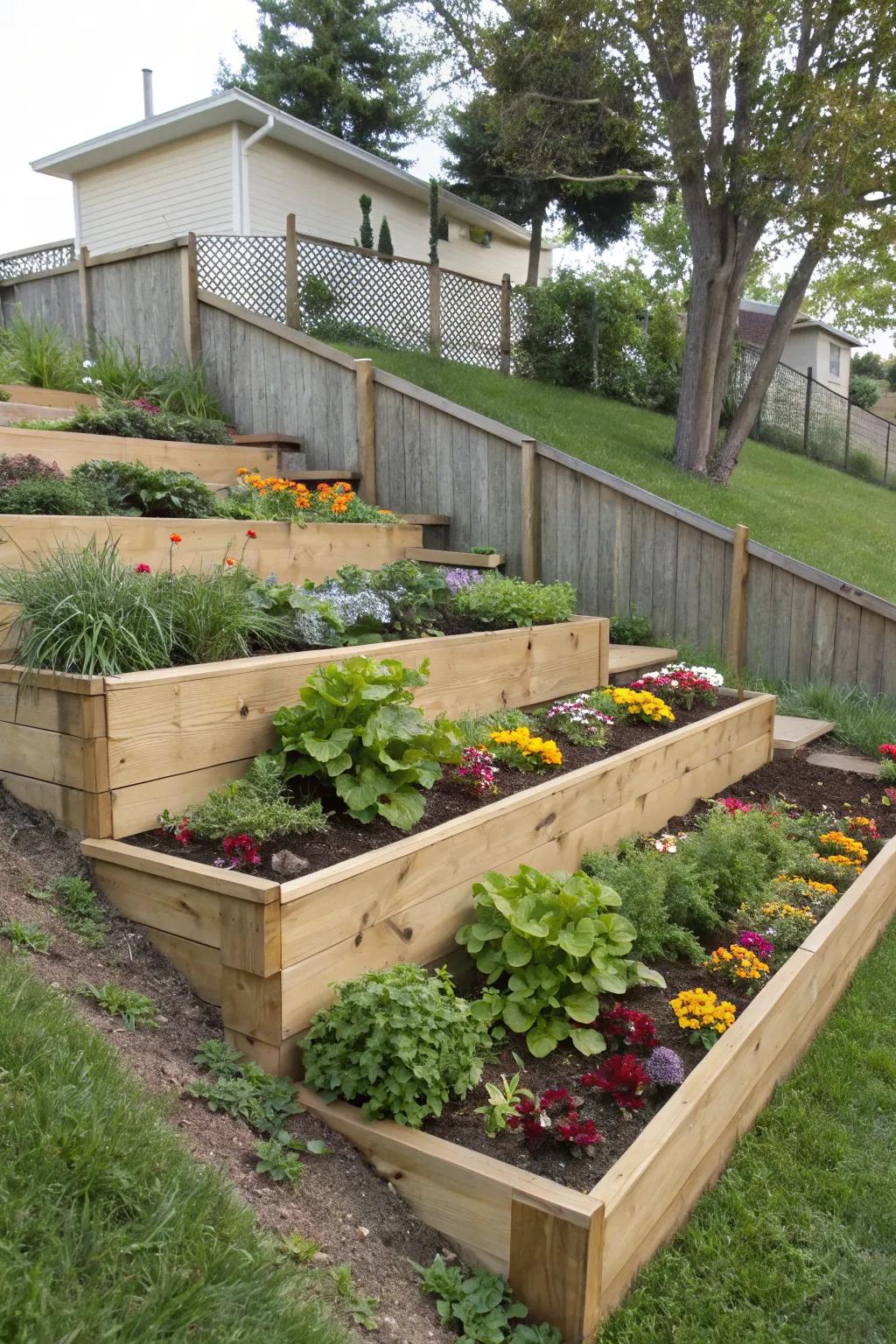
A practical layout often includes:
- Beds no wider than 4 feet if you can reach from both sides
- Paths at least 24 inches wide for foot traffic
- Paths 36 to 48 inches wide for wheelbarrows
- A wider turning area at the garden entrance
- Space for a hose, compost bin, and tool storage
- A clear route from the house to the harvest area
A 4-foot-wide bed works well because most people can reach about 2 feet from each side. If a bed touches a fence or wall, keep it closer to 2 or 3 feet wide. Do not build a narrow path that forces you to step on wet soil or brush against thorny plants.
Plan for sun, slope, and water flow
Place raised beds where they receive at least six hours of direct sun for tomatoes, peppers, cucumbers, and most root crops. Leafy greens can handle four to six hours, especially in hot areas. Watch the site for a full day before you settle on the final layout.
Drainage matters as much as sunlight. Water should move away from wood beds and never pool against the outside walls. On a slope, run paths across the slope or add shallow swales to slow runoff. Do not place loose gravel where heavy rain will wash it downhill.
Leave working space around the outside
Raised beds need air around them. Leave at least 6 inches between a bed and a fence, wall, or hedge. This gap helps you inspect the bed sides, repair boards, remove weeds, and avoid trapping moisture against the wood.
For beds made from untreated cedar or redwood, this small gap can extend the life of the boards. In my garden, beds with open air around the sides stayed drier and needed fewer repairs than beds packed tightly against a fence.
Choose a path surface that fits your climate and budget
the most useful landscaping material around raised beds is a stable path surface. Gravel, wood chips, pavers, brick, and living ground covers can all work. The right choice depends on drainage, mobility, cost, appearance, and how often you move a wheelbarrow.

Here is how common materials compare:
| Path material | Best use |
|---|---|
| Wood chips | Low-cost garden paths with good drainage |
| Pea gravel | Dry climates and neat, long-lasting paths |
| Crushed stone | Wheelbarrow traffic and firm footing |
| Pavers or brick | Formal layouts and permanent paths |
| Grass | Large gardens with wide mowing lanes |
| Clover or thyme | Soft living paths with low foot traffic |
Wood chips are my usual choice for vegetable gardens. A 3- to 4-inch layer feels soft, drains well, and slowly improves the soil as it breaks down. Use arborist chips when possible because they contain a mix of small and large pieces. Fine bark mulch can compact and stay wet.
Pea gravel looks neat but can shift under a wheelbarrow. Crushed stone with fines creates a firmer surface. It feels less soft, though, and may become hot near the beds in Zones 8 and 9.
Pavers cost more at the start but create the cleanest permanent path. They also reduce mud and make the garden easier to access for people using a cane, walker, or wheelchair. Set them on a compacted base, not directly on loose soil.
Use landscape fabric with care
Landscape fabric can reduce weeds under gravel, but it is not a complete weed solution. Seeds still land on top, and roots can grow through seams. Fabric also slows the natural movement of compost and organic matter into the soil beside the path.
If you use fabric, choose a woven product, overlap seams by at least 6 inches, and pin it well. Cut only small openings for permanent plants. For most organic vegetable gardens, I prefer thick cardboard under wood chips. It breaks down after one or two seasons and does not create a lasting barrier.
Build a firm base for pavers and stone
For a permanent path, remove 3 to 5 inches of soil. Add compacted crushed stone, then a thin layer of bedding sand. Set the pavers with a slight slope so rain moves away from the bed.
Use a hand tamper for small paths or a plate compactor for a larger project. Check the path with a long level or straight board. A small dip can collect water and turn into ice in cold USDA Zones 3 through 6.
Use mulch to control weeds and protect the bed edges
Mulch is one of the easiest ways to landscape around raised garden beds. It blocks light, reduces mud, protects soil life, and creates a visual line between the bed and the path. Apply it after removing existing weeds and leveling the ground.

Good mulch choices include:
- Arborist wood chips
- Shredded bark
- Pine straw
- Chopped leaves
- Straw around vegetable beds
- Gravel in dry, low-rain areas
Keep mulch 2 to 3 inches away from the outside wall of a wooden bed. Wet mulch pressed against wood can speed decay. Keep it away from plant stems as well, since deep mulch around tomatoes, peppers, and fruit shrubs can encourage rot and pests.
A 3-inch mulch layer usually works well. In windy areas, use heavier chips or anchor the edges with stone. In wet climates, avoid a very deep layer of fine mulch because it may stay damp and attract slugs.
Match mulch to the plants you grow
Straw works well around strawberries, pumpkins, and sprawling squash. It keeps fruit off wet soil and reduces splashing from soil-borne diseases. Use clean straw, not hay, because hay often contains weed seeds.
Pine straw suits acid-loving plants such as blueberries, azaleas, and some ornamental beds. It does not make soil strongly acidic on its own, but it can form a loose, airy cover.
Gravel works near Mediterranean herbs such as rosemary, sage, and thyme. It performs poorly beside plants that need cool, moist roots. Dark stone can also raise soil temperature around lettuce and spinach during summer.
Add edging for a clean line and easier maintenance
Edging keeps mulch, gravel, and grass from mixing. It also protects the lower boards of raised garden beds from string trimmers and mower wheels. A clean edge makes even a simple garden look planned.
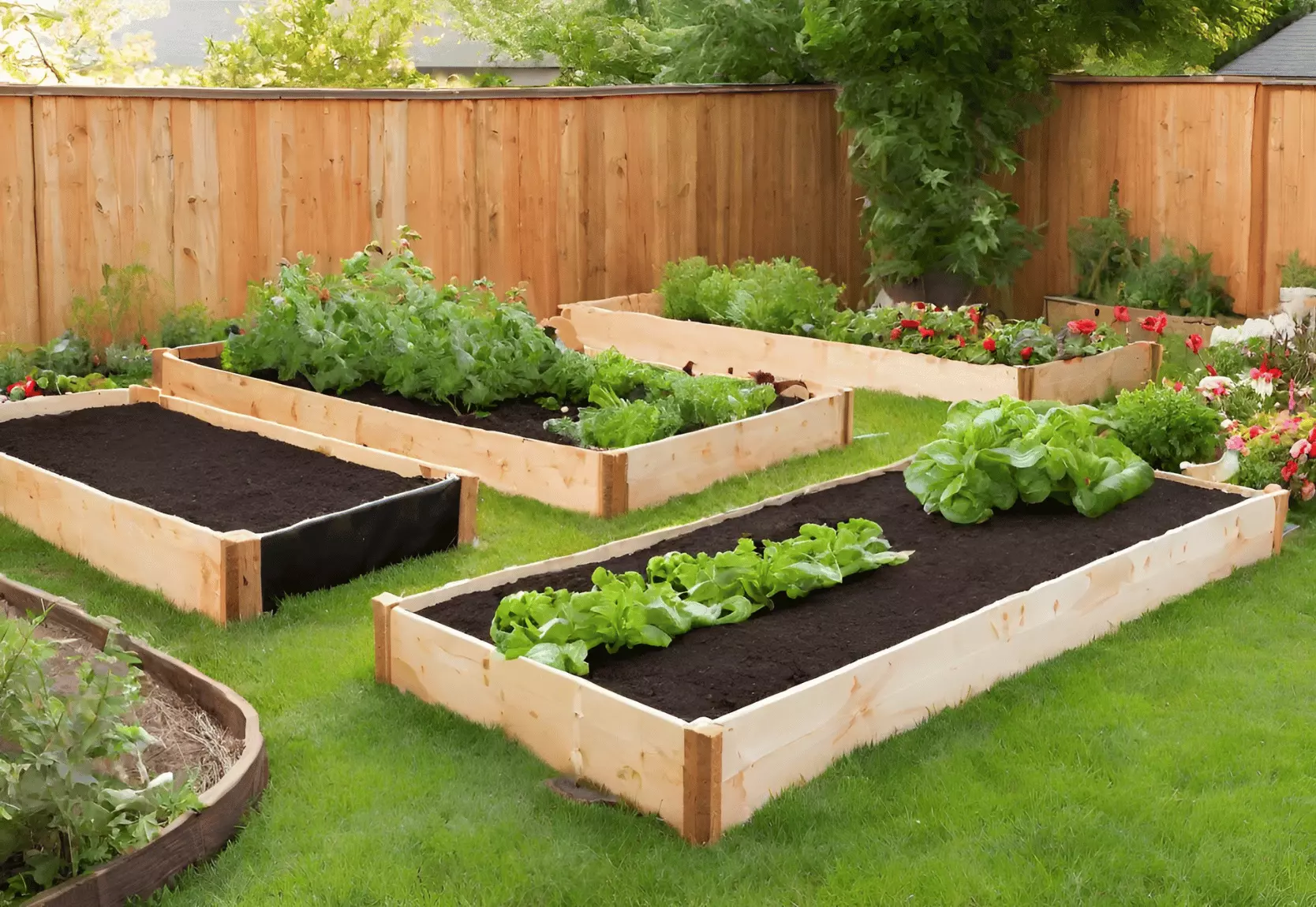
Common edging options include:
- Steel or aluminum edging
- Brick or concrete pavers
- Flat fieldstone
- Recycled plastic edging
- Pressure-treated landscape timbers
- A narrow trench edge
Metal edging gives a crisp line and lasts for many years. Choose a product with a rounded top if children use the garden. Sharp metal edges can cut skin, gloves, hoses, and mower tires.
Brick and stone look natural beside cedar beds. They need a stable base, though. If you place them directly on loose soil, frost heave may lift them in northern zones.
Keep edging below the mower line
If grass grows near a raised bed, set the top of the edging level with or slightly below the soil surface. This lets a mower pass without hitting it. Never run a string trimmer directly against a wooden bed. One careless pass can remove bark, paint, and several years of board life.
Use a trench edge for a low-cost option
A trench edge costs little and looks natural. Cut a 4- to 6-inch-wide trench along the bed. Keep the trench about 2 inches deep, then fill it with mulch or gravel.
This method needs twice-yearly upkeep because soil and mulch slowly fill the trench. It works well in informal cottage gardens and is easy to change when you move a bed.
Select plants that will not invade the raised beds
Plants around raised garden beds should stay low, clump neatly, and tolerate foot traffic or dry soil. Avoid aggressive runners and deep-rooted plants near the bed walls. Their roots can enter the growing mix, compete with vegetables, and make the path hard to maintain.
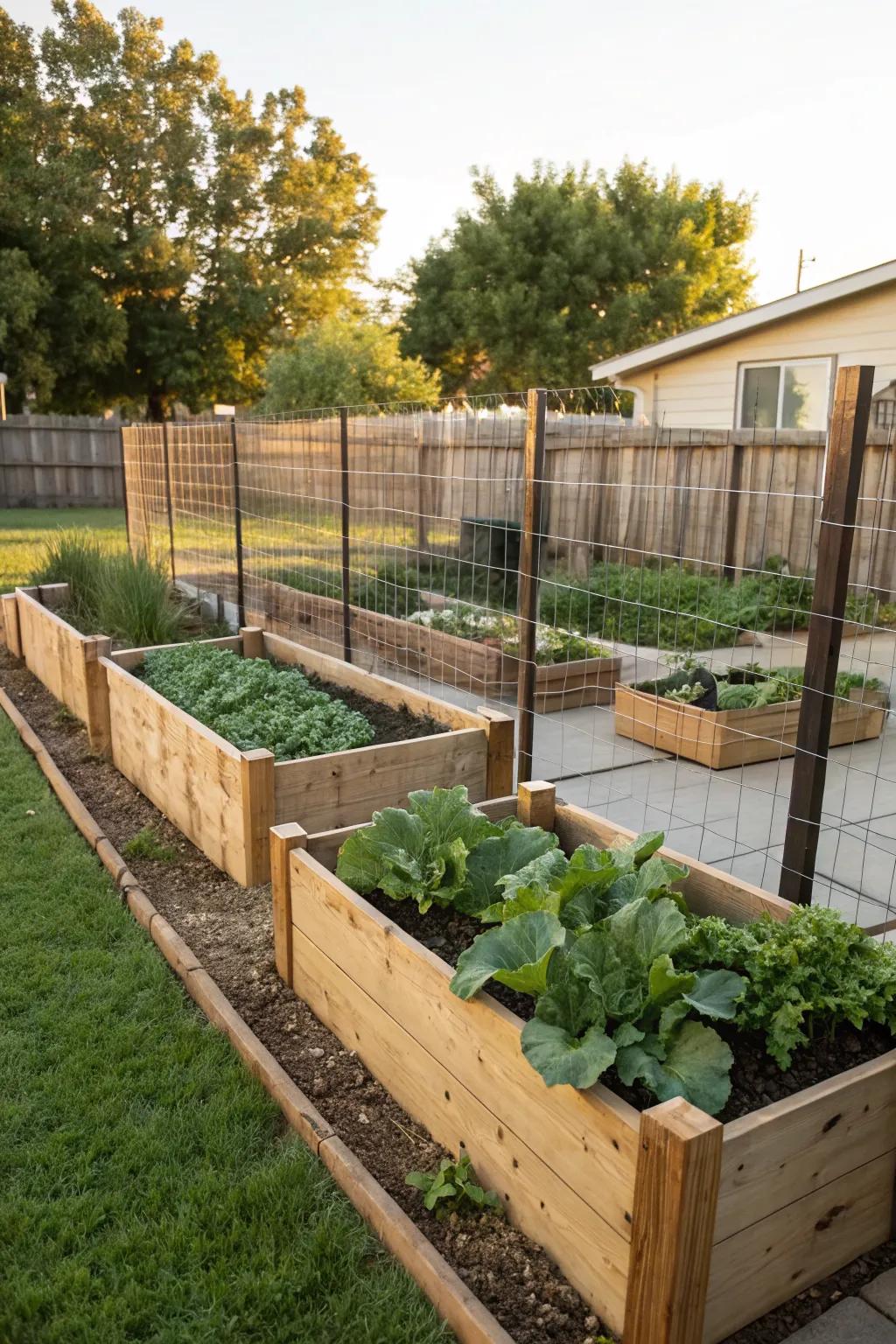
Useful plants for garden edges include:
| Plant | Light and zone notes |
|---|---|
| Creeping thyme | Full sun; Zones 4–9; dry, well-drained soil |
| White clover | Sun to part shade; Zones 3–10; needs regular mowing |
| Sweet alyssum | Full sun to part shade; annual in cold zones |
| Chives | Sun to part shade; Zones 3–9; clumps stay manageable |
| Dwarf mondo grass | Part shade; Zones 7–10; slow and tidy |
| Sedum ‘Angelina’ | Full sun; Zones 3–9; dry sites |
| Strawberries | Full sun; Zones 3–10; keep runners trimmed |
Creeping thyme makes a fragrant edge and attracts bees when it blooms. It needs sharp drainage and does not like heavy clay. It also takes time to fill in, so do not expect instant coverage.
Sweet alyssum is useful along the sunny side of a bed. Its small flowers attract hoverflies and other beneficial insects. It is shallow-rooted and easy to remove if it spreads too far.
Chives can form a neat border, but they may reseed. Cut the flowers before seed forms if you want tight control. Their purple blooms also support pollinators.
Avoid these plants near food beds
Do not plant running bamboo, mint, lemon balm, goutweed, or aggressive ornamental grasses beside raised beds. Mint and lemon balm are especially deceptive. They look small in spring, then spread through underground stems and seed.
Avoid large shrubs with thirsty roots, such as willow, birch, and some hydrangeas, within several feet of vegetable beds. Their roots can dry the bed mix during hot weather.
Use companion plants without crowding the paths
Marigolds, calendula, nasturtiums, and basil can decorate the area around raised beds. Their value comes from flowers, scent, and insect habitat, not from magic pest control. I have seen nasturtiums attract aphids away from kale, but I have also seen them become a dense tangle that blocked access.
Keep companion plants at least 8 to 12 inches from the bed wall. Trim them before they lean into the path. Choose compact varieties where possible, such as French marigolds instead of tall African types.
Combine paths, borders, and plants into a useful design
A good raised-bed landscape usually has three layers: a firm path, a low border, and taller plants beyond the working area. This creates order without making the garden feel stiff.

For a simple layout, place raised beds in parallel rows. Use 30-inch paths between beds and a 4-foot main path from the gate to the compost area. Plant thyme or alyssum along the sunny outer edge, then use a low fence or hedge beyond that if you need to block wind.
For a formal design, frame each bed with brick or stone. Keep the color of the path close to the bed material. Cedar looks good with warm brick, tan gravel, or natural stone. Painted beds can work with gray gravel and silver plants such as lavender or dusty miller.
For a wildlife garden, use wider borders with native flowers. Good choices vary by region. Black-eyed Susan, purple coneflower, bee balm, goldenrod, yarrow, and native asters can support pollinators, but place taller plants where they will not shade sun-loving vegetables.
Create a transition from lawn to garden
A sharp edge between lawn and garden is easy to mow but may look harsh. A 2-foot mulch strip creates a softer transition. Add three or five repeating plants rather than many single plants.
If you keep lawn paths, choose turf that suits your climate. Kentucky bluegrass needs more water in dry summer regions. Tall fescue performs better in many cool-season transition areas. Bermudagrass spreads into beds quickly, so install strong edging and inspect it often.
Add height away from the beds
Place tall structures on the north side of the garden when possible. Trellises, berry canes, sunflowers, and ornamental grasses can shade beds if placed on the south side.
In the Northern Hemisphere, a tall crop on the north edge casts less shade across vegetables. This rule matters most in Zones 3 through 6, where the sun stays lower in the sky. In hot Zones 8 through 10, some afternoon shade may help lettuce and cilantro.
Use this materials plan before you build
Measure the length and width of each path before you shop. One cubic yard of mulch covers about 108 square feet at 3 inches deep, although settling will reduce the depth over time. Buy a little extra if the site has slopes or uneven ground.
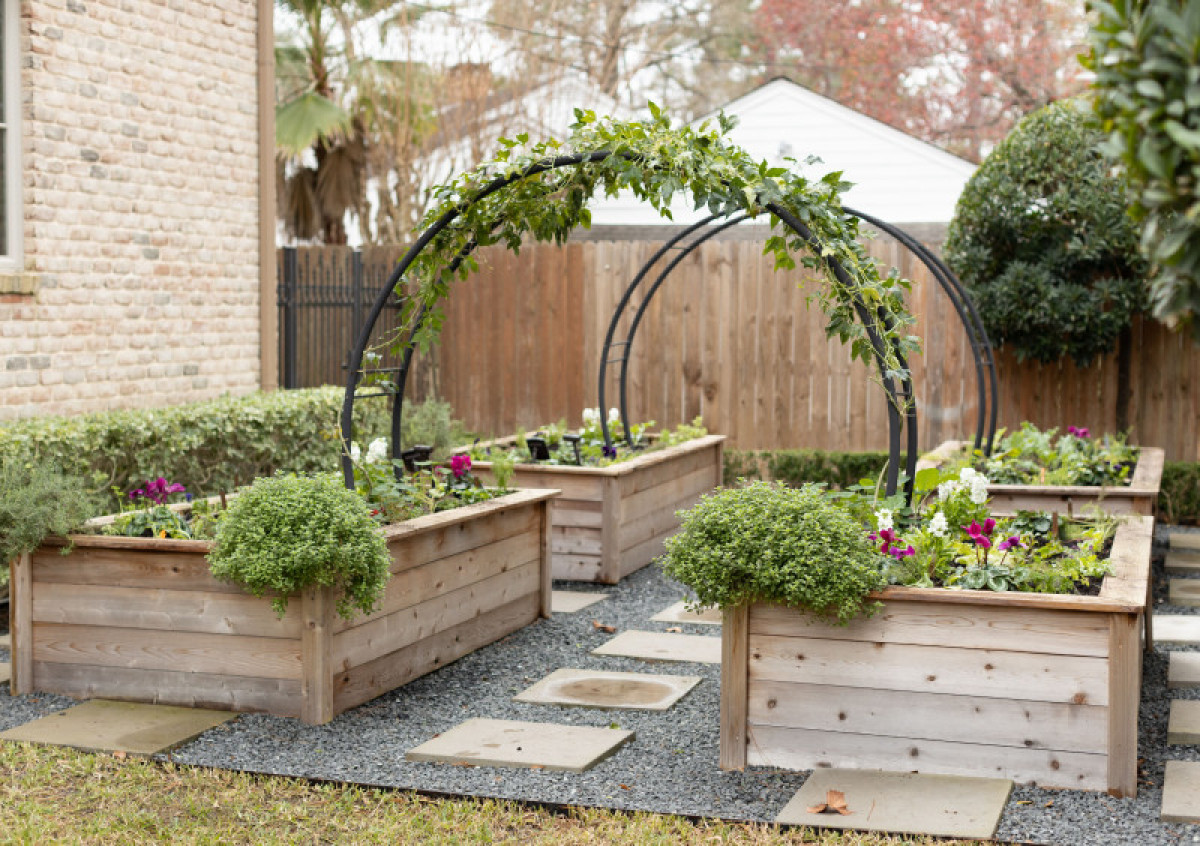
| Material or tool | Suggested amount or use |
|---|---|
| Wood chips or bark | 3–4 inches deep for paths |
| Crushed stone | 3–5 inches for a firm base |
| Cardboard | Overlap sheets by 6–8 inches |
| Steel or plastic edging | Measure every exposed bed side |
| Hand tamper | Compact small path areas |
| Wheelbarrow and rake | Move and level materials |
| Level and string line | Check slope and straight edges |
Wear gloves, sturdy shoes, and eye protection when spreading stone or cutting edging. A dust mask helps when handling dry compost, fine gravel, or old mulch. Do not use a chainsaw or power saw near children, pets, or stored fuel.
Takeaway: most path failures begin with too little base preparation or too little material. Measure first, compact the ground, and plan for settling.
Build the landscape around raised beds step by step
The best time to landscape around raised garden beds is before you fill the beds or plant them. If your beds already contain crops, work in short sections and cover the soil with a board when moving heavy materials nearby.

Step 1: Mark the final bed and path lines
Use stakes, string, spray paint, or a garden hose to mark the plan. Walk every path with a wheelbarrow. Turn at the entrance and check that you can reach each bed without stepping into the growing area.
Leave more room than you think you need around gates and corners. A 24-inch path may be enough for walking, but a wheelbarrow handle can need 36 inches or more when turning.
Step 2: Remove turf and perennial weeds
Cut the grass short, then remove sod with a flat shovel. Dig out bindweed, quackgrass, Bermuda grass, and other spreading weeds. Do not simply cover large patches of perennial weeds with a thin layer of mulch.
For annual weeds, wet cardboard under wood chips often works well. Overlap the cardboard, soak it, and cover it with at least 3 inches of chips. Check after four to six weeks and pull weeds that emerge through seams.
Step 3: Grade the soil and correct drainage
Rake high spots into low spots, but do not bury the bed walls. Keep the finished path slightly lower than the surrounding bed area. Add a shallow slope away from wooden beds.
If water still collects, install a French drain, dry creek, or drain outlet before adding a final surface. A few inches of mulch cannot fix a site that stays saturated.
Step 4: Install edging or a border
Set edging before the final mulch or gravel. Use a level for straight borders and anchor flexible edging every 18 to 24 inches. Leave no large gaps where grass roots can pass.
For stone or brick, compact the base first. Tap each piece into place with a rubber mallet. Check the surface often because small height differences become trip hazards.
Step 5: Add the path material
Spread wood chips 3 to 4 inches deep. For gravel, add 3 to 5 inches of crushed stone and rake it smooth. Keep loose materials slightly below the top of the bed edge so they do not wash into the growing mix.
Do not place fresh manure or unfinished compost in paths. These materials can smell, attract flies, and add weed seeds. Finished compost belongs in the raised bed, not under your shoes.
Step 6: Plant low borders and water deeply
Set plants at their mature width, not their current size. A thyme plant that is 6 inches wide may spread to 18 inches. Water new plants deeply, then let the soil surface dry slightly between waterings unless the plant needs constant moisture.
Add labels while the layout is fresh. Mark herbs, perennial flowers, and varieties that may look similar in spring.
Prevent common problems before they cost time
Landscaping around raised garden beds fails when it looks good in a photo but does not fit real garden work. The most common mistakes involve narrow paths, poor drainage, invasive roots, and materials that move or decay.

| Problem | Likely cause | Practical fix |
|---|---|---|
| Mud beside the bed | No stable path surface | Add cardboard and 3–4 inches of chips |
| Gravel spreads into beds | No edging or shallow base | Install edging and compact crushed stone |
| Grass invades the bed | Roots or runners cross the border | Use a deep edge and inspect each season |
| Wood rots at the bottom | Mulch touches wet boards | Pull mulch back 2–3 inches |
| Plants block access | Mature size was ignored | Prune, move, or replace with compact plants |
| Slugs gather in mulch | Deep, damp organic cover | Thin mulch and improve airflow |
The first season often reveals problems that were invisible during construction. After four weeks, check path depth, drainage, plant spread, and bed access. Fixing a small edge or moving one plant is easier than repairing a whole layout later.
Control slugs and snails in damp gardens
Wood chips, boards, and dense ground covers can create cool hiding places for slugs. Check under mulch in the evening, especially in USDA Zones 6 through 9 with wet springs. Water at the soil line in the morning rather than wetting paths at night.
Remove boards, pots, and dense debris near the beds. If you use slug bait, choose an iron phosphate product and follow the label. Keep any treatment away from children, pets, and edible crops unless the label allows it.
Protect beds from string trimmer damage
A string trimmer can cut through soft cedar and damage bark on shrubs. Install a 6- to 12-inch strip of gravel or pavers between turf and the bed. This creates a visible no-trim zone.
If grass still reaches the bed, use hand shears or a small battery trimmer on a low setting. Hold the tool away from the boards. A few extra minutes of care can add years to the bed frame.
Adjust the landscape for each season
Raised-bed landscaping changes through the year. Spring brings wet soil and fast weeds. Summer brings heat, irrigation needs, and plant growth. Fall brings leaves, frost, and path repair. Winter exposes drainage and frost damage.

| Season | Main tasks |
|---|---|
| Spring | Re-edge paths, pull weeds, check drainage, refresh mulch |
| Summer | Trim border plants, inspect irrigation, remove tripping hazards |
| Fall | Clear diseased debris, spread leaves, repair pavers |
| Winter | Check erosion, protect tender plants, store loose tools |
In spring, wait until clay soil is dry enough to work. Walking on wet clay beside a raised bed can create hard, airless soil. Refresh only the mulch that has settled; do not bury bed boards under a new thick layer.
In summer, inspect paths after heavy watering. Drip irrigation is better than overhead sprinklers near wood chips because it keeps paths drier. Move hoses with care so they do not pull against plants or catch on edging.
In fall, remove tomato vines with blight, powdery mildew, or severe pest damage. Do not compost diseased material in a small backyard pile that does not get hot. Healthy leaves can become mulch, but thick layers may shelter slugs.
In winter, check whether frost lifted pavers or shifted gravel. In Zones 3 through 6, repair permanent paths after the ground thaws. Store hand tools under cover and drain hoses before freezing weather.
Improve the garden with water, lighting, and wildlife features
Functional details can make the area around raised garden beds more comfortable. Add a drip line, rain barrel, bench, trellis, or low-voltage light only after the main paths work well.

A simple drip system saves time and reduces wet foliage. Use ½-inch mainline tubing with emitters sized for your soil and crop. Sandy soil may need closer emitters or shorter watering intervals. Clay soil needs slower application to prevent runoff.
Place a rain barrel on a stable base near the garden, but check local rules and keep the lid secure. Mosquitoes breed in open water. Never use untreated rain-barrel water on leafy greens close to harvest unless you follow local food safety guidance.
Solar lights can mark the path, but cheap units often fail after one wet winter. Low-voltage LED fixtures last longer when the wiring stays protected. Keep lights aimed away from neighbors and avoid bright lighting near moths and nighttime pollinators.
A shallow dish of water can help birds and insects, but clean it often. Do not place bird feeders directly over raised beds because dropped seed can sprout and attract rodents.
Compare DIY and professional installation
Most homeowners can build a mulch path and simple edge in one weekend. More complex grading, stonework, drainage, and accessibility projects may need professional help.
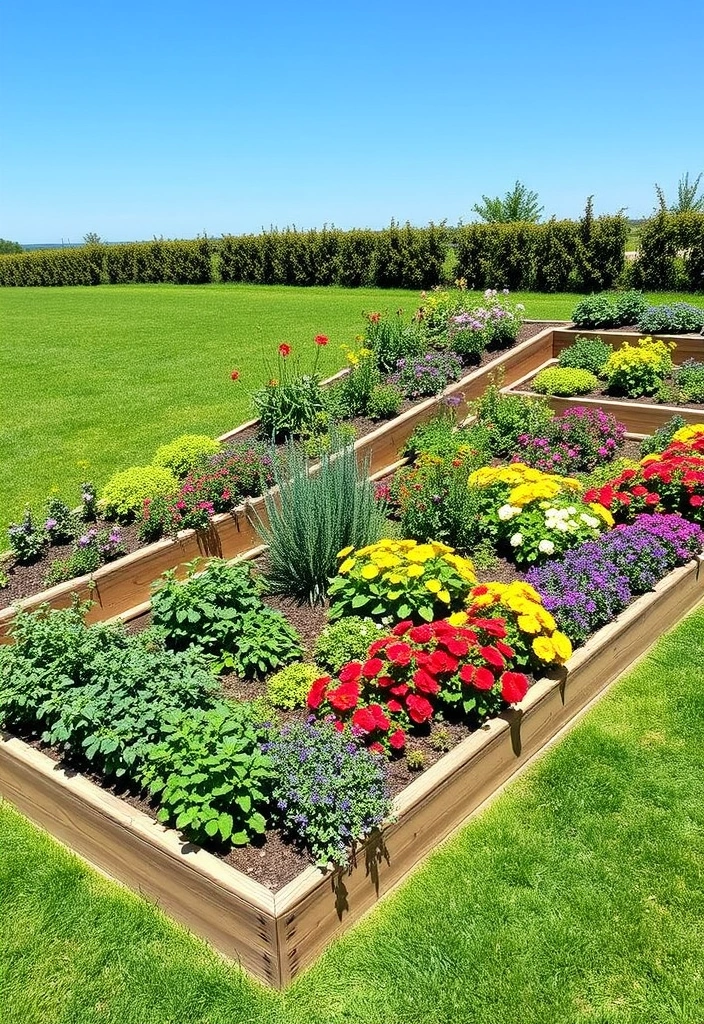
| Project type | DIY difficulty | When to hire help |
|---|---|---|
| Cardboard and wood-chip path | Low | Rarely needed |
| Gravel path with edging | Moderate | Hire for large slopes |
| Brick or paver path | Moderate to high | Hire for wheelchair access |
| Drainage or retaining wall | High | Hire if water threatens structures |
| Irrigation system | Moderate | Hire for buried or complex systems |
Current material prices vary by region, delivery fees, and stone type. Mulch is often the lowest-cost choice, while natural stone and installed pavers cost much more. Get local quotes before designing a path that depends on heavy materials.
Hire a professional if water flows toward your house, a retaining wall will exceed about 4 feet, or the garden must meet specific accessibility standards. Poor grading can damage foundations and create icy paths.
Make the design work for children, pets, and accessibility
A garden path should be safe for the people who use it most. Loose pea gravel can be hard for wheelchairs, walkers, and small wheeled carts. Large bark pieces can roll underfoot and create a trip risk.

For better access, choose a firm, compacted surface at least 36 inches wide. A 48-inch path allows two people to pass and gives a wheelchair more room to turn. Keep slopes gentle and avoid sudden steps at the garden entrance.
Use rounded stone and blunt edging in play areas. Avoid toxic plants and thorny shrubs near paths. Fence vegetable beds if dogs dig or children pick unripe fruit.
Raised beds themselves can improve access, but height matters. Beds 18 to 24 inches high suit many gardeners who dislike bending. Taller beds need stronger walls and more soil pressure support. A seated gardener may prefer a 30-inch-wide bed with a clear knee space.
Learn from what did not work in my gardens
My first raised-bed layout used narrow paths covered with fine bark. It looked neat in spring, but the bark compacted after heavy rain and turned slick. By midsummer, weeds rooted in the surface, and I had to remove it before adding coarser wood chips.

I also planted mint near a bed because I wanted fresh leaves close to the kitchen. Within two seasons, runners appeared under the bed edge. I moved mint into a container set on concrete, where it could not escape through the drainage hole into the soil.
A third mistake involved dark river rock in a sunny Zone 7 garden. The stone became hot enough to wilt lettuce along the bed edge. I replaced it with pale gravel and added thyme, which handled the heat much better.
The best change was widening the main path from 30 to 42 inches. That extra foot made a major difference when I moved compost, harvested pumpkins, and rolled a loaded wheelbarrow. Space that seems wasted on paper often becomes the most useful part of the garden.
Inspect the landscape twice each year
Walk the garden in early spring and late summer. Look for:
- Exposed cardboard
- Washed-out mulch
- Lifted pavers
- Roots crossing the bed edge
- Plants leaning into paths
- Loose edging
- Standing water
- Signs of rodents or slugs
Repair small issues while they are still small. Add mulch before bare soil grows weeds. Move a plant before its roots reach the bed. Tight maintenance keeps the design attractive without constant rebuilding.
Know what landscaping around raised beds costs
The cost depends on the path surface, total area, delivery fees, edging, and whether you do the labor. A small garden can cost less than a large one even when it uses expensive materials.
For a rough planning estimate:
- Cardboard and local wood chips: low cost, but may require pickup
- Bagged mulch: moderate cost and easy to handle
- Bulk gravel: moderate cost plus delivery
- Brick or pavers: moderate to high cost
- Natural stone: high cost and heavy labor
- Drainage work: high cost when excavation is needed
Measure path areas in square feet. Multiply length by width, then multiply by depth in feet to estimate cubic feet. Divide by 27 to estimate cubic yards.
A 10-foot by 4-foot path at 3 inches deep needs about 1.1 cubic yards of material before settling. Order extra for uneven ground, but do not overbuy organic mulch that may decompose before you use it.
Choose the right approach for your garden
Different gardeners need different landscapes. A low-cost food garden does not need the same finish as a formal courtyard garden.
| Garden situation | Good choice | Why |
|---|---|---|
| Beginner on a budget | Cardboard and wood chips | Easy to install and change |
| Wet climate | Raised gravel or pavers | Keeps paths firm and dry |
| Dry climate | Gravel with drought-tolerant plants | Limits water use |
| Wheelchair access | Compacted stone or pavers | Firm and easy to roll on |
| Formal garden | Brick, stone, and clipped edges | Creates a clean structure |
| Wildlife garden | Mulch and native border plants | Adds habitat and softens edges |
Beginners should start with mulch paths and a simple edge. This approach costs less and lets you learn how the site drains before committing to stone.
Gardeners in wet regions should avoid low spots filled with fine bark. Use compacted stone, pavers, or a raised walkway where needed. Gardeners in dry regions should limit thirsty turf and use plants such as thyme, sedum, lavender, and yarrow.
Formal landscaping suits gardeners who enjoy regular trimming and sweeping. Naturalistic landscaping suits those who prefer native plants and less rigid lines, but it still needs control. A wild look should not mean blocked paths or invasive plants.
FAQs about landscaping around raised garden beds
What should I put around my raised garden beds?
Use a stable path material such as wood chips, crushed stone, pavers, or brick. Add edging to keep the material in place. In most home vegetable gardens, a 3- to 4-inch layer of arborist wood chips offers a good balance of cost, drainage, comfort, and weed control.
How wide should paths be around raised beds?
Make footpaths at least 24 inches wide. Use 36 to 48 inches for wheelbarrows, carts, or wheelchair access. Add extra space at corners and entrances so you can turn without striking the bed.
Should I put landscape fabric around raised garden beds?
Landscape fabric can help under gravel, but it is not required. Woven fabric works best for permanent stone paths. For wood-chip paths, overlapping wet cardboard often costs less and breaks down naturally after one or two seasons.
Can I put grass around raised garden beds?
Yes, but grass needs clear edging and regular trimming. Avoid running a string trimmer against wooden beds. Bermuda grass, quackgrass, and other spreading types need extra control because they can send runners under the bed edge.
Is gravel or mulch better around raised beds?
Mulch is usually better for a low-cost vegetable garden because it drains well, feels comfortable, and is easy to refresh. Gravel lasts longer and looks neat, but it can shift, heat up, and become difficult to remove. Choose gravel for firm paths or dry gardens and mulch for flexible, organic layouts.
How do I stop weeds from growing around raised beds?
Remove perennial weeds first. Lay overlapping cardboard or install a suitable fabric, then add 3 to 4 inches of mulch. Inspect seams and bed edges every few weeks. No mulch stops all weeds forever because wind-borne seeds can sprout on top.
Can I plant flowers directly beside a raised bed?
Yes, if the flowers stay compact and do not invade the bed. Sweet alyssum, calendula, dwarf marigolds, chives, and creeping thyme work well in many gardens. Keep large shrubs, mint, bamboo, and running grasses away from the bed.
How far should mulch be from a raised bed?
Keep organic mulch 2 to 3 inches away from the bed wall. This gap helps the wood dry and reduces decay. Also keep mulch away from plant stems to lower the risk of rot, slugs, and rodent damage.
What is the best edging for raised garden beds?
Steel edging gives a clean, long-lasting line. Brick and stone match formal or rustic gardens and can support wheels. A shallow trench is the cheapest option, but it needs more upkeep. Choose rounded or protected edges where children and pets play.
How do I landscape raised beds on a slope?
Run paths across the slope when possible, then use shallow swales, terraces, or retaining structures to slow water. Compact gravel or install pavers on a stable base. Hire a professional if the slope threatens a home, driveway, foundation, or large retaining wall.
How do I make raised beds accessible?
Use beds no wider than 3 to 4 feet, paths at least 36 inches wide, and a firm surface such as compacted stone or pavers. Keep slopes gentle and avoid loose pea gravel. Beds 18 to 24 inches high can reduce bending for many gardeners.
Can I use river rock around raised beds?
Yes, but test the site first. Dark or dense river rock can become hot in full sun, especially in Zones 7 through 10. It also shifts more than crushed stone. Use pale stone, strong edging, and drought-tolerant plants where heat is a concern.
How often should I refresh mulch around raised beds?
Check mulch each spring and after major storms. Add enough to restore a 3- to 4-inch path depth, rather than piling new mulch over a thick old layer. Most wood-chip paths need a refresh every one to three seasons, depending on rain and traffic.
Final thoughts
The best landscape around raised garden beds is not the most expensive one. It is the one that keeps your feet dry, controls weeds, protects the bed walls, and leaves enough room to work.
Start with the layout. Set paths wide enough for your tools, solve drainage before adding mulch, and choose plants that stay polite near the beds. Use wood chips for a flexible budget design, gravel or pavers for firm access, and low native plants for beauty and pollinator support.
Build one section first if you are unsure. Live with it through a rainy spell, a hot month, and a harvest season. After that test, you will know what the rest of your garden needs.
Meta description: Learn how to landscape around raised garden beds with practical path ideas, mulch, edging, plants, drainage tips, costs, seasonal care, and beginner-friendly steps.