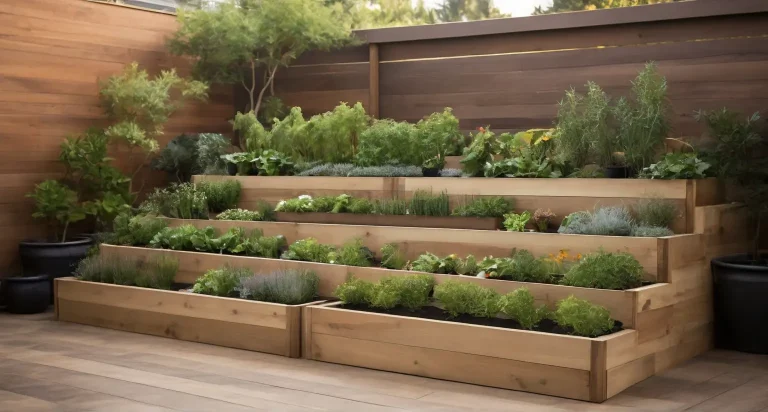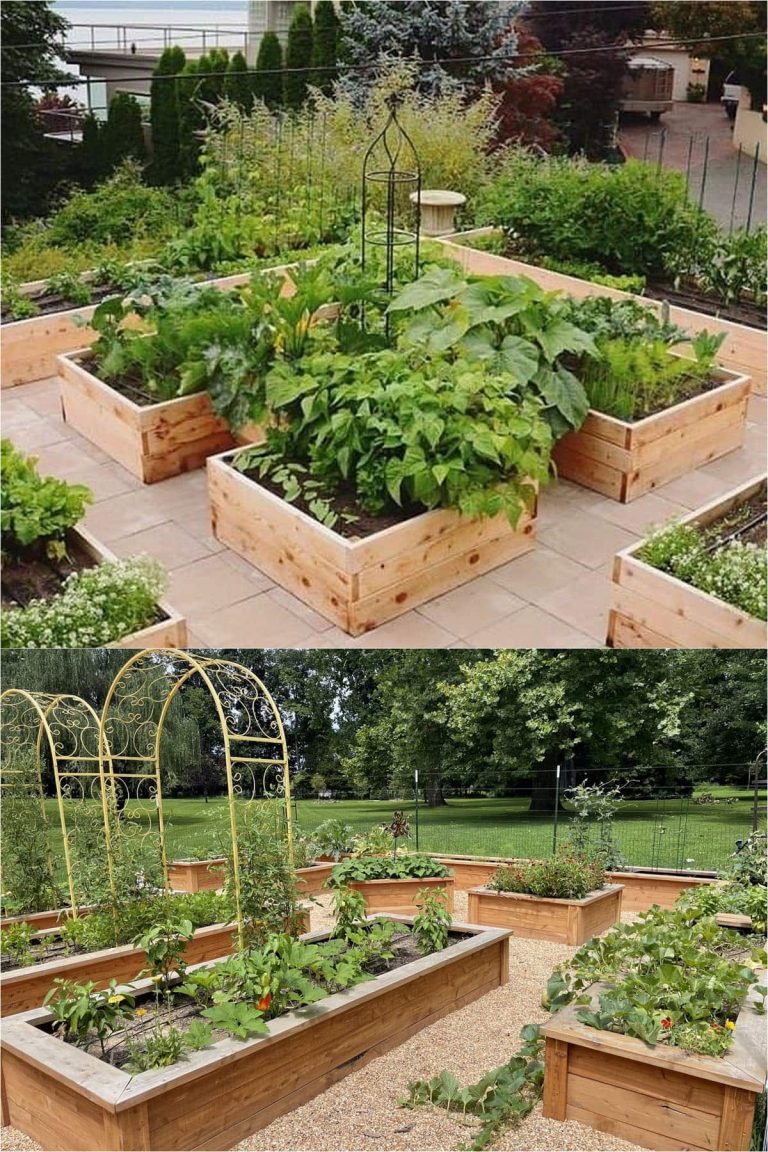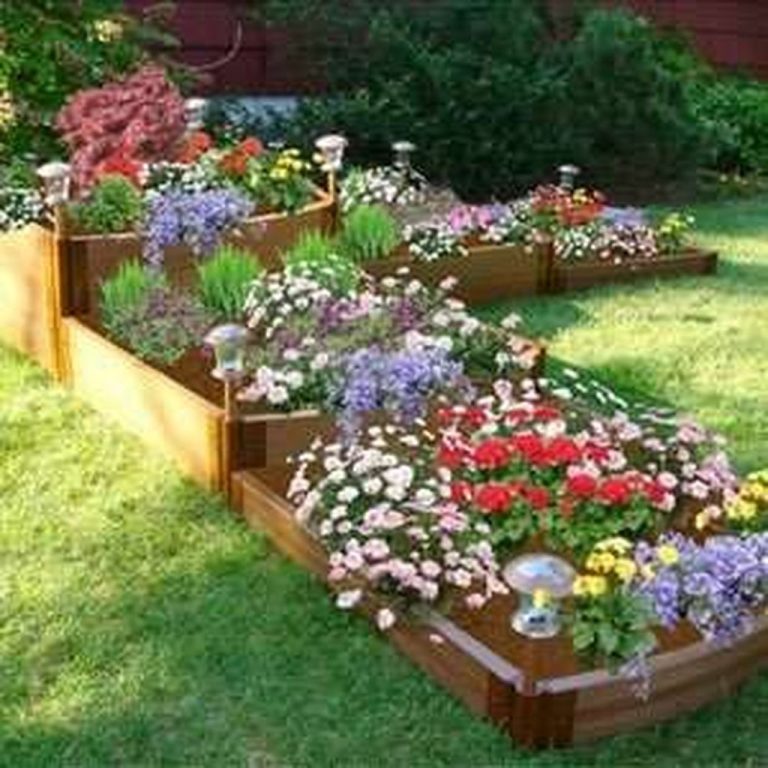
How To Arrange A Raised Garden Bed: Easy Layout Guide
A raised garden bed can turn a hard, wet, weedy patch into a productive growing space in one weekend. The secret is not the frame alone. Good results come from choosing the right site, setting a useful height, building healthy soil, and leaving enough room to reach every plant.
I have built raised beds in clay soil in the Midwest, sandy soil in the Southeast, and short-season gardens in USDA Zone 5. The same mistakes appear again and again: beds that are too wide, soil that drains too fast, untreated wood that rots at ground level, and plants packed so close that air cannot move.
This guide explains how to arrange a raised garden bed for vegetables, herbs, flowers, and small fruits. You will learn how to choose the layout, calculate bed size, prepare the base, fill the bed, plan plant spacing, install irrigation, and care for the bed through the seasons.
The Quick Answer: Arrange a Raised Garden Bed in This Order
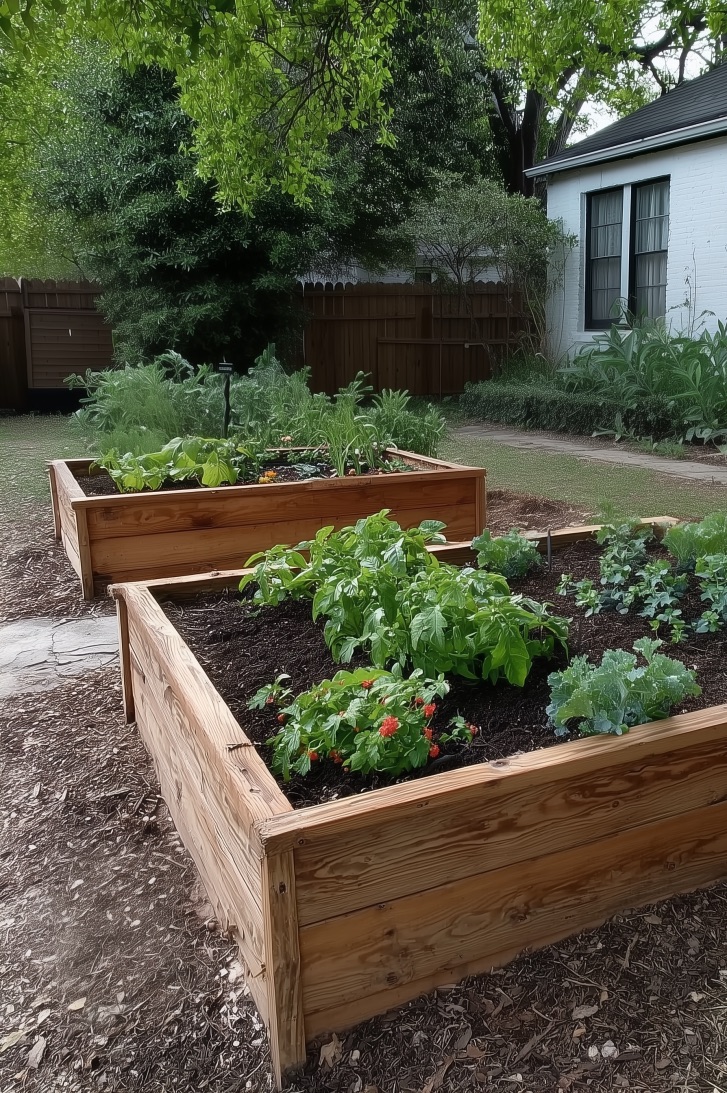
The best way to arrange a raised garden bed is to choose a level site with at least 6–8 hours of sun, orient long beds north to south, keep the width at 3–4 feet, leave 2–3 feet between beds, and fill the bed with a balanced soil mix. Place tall crops on the north side, group plants by water needs, and add a simple path for access.
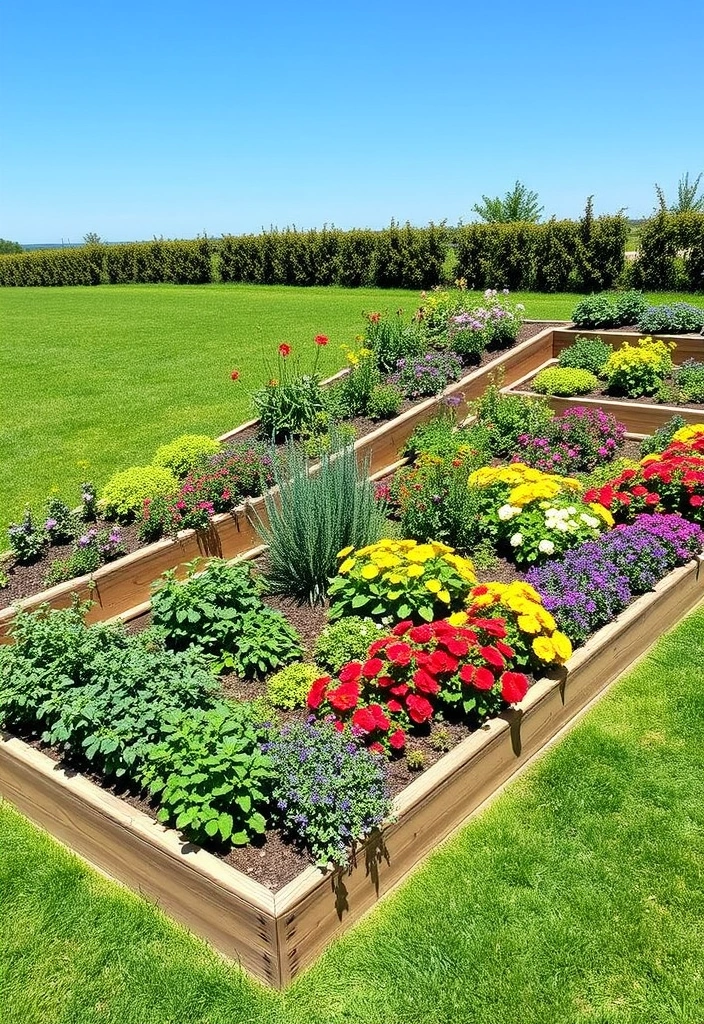
A raised bed works best when you can reach the center without stepping into it. For most adults, a 4-foot-wide bed is the practical limit. A 3-foot bed works better for children, wheelchair users, or anyone who wants easier access.
The bed height depends on your soil, mobility, and crops. A 6–8-inch bed works over decent ground soil. A 12–18-inch bed gives better drainage and less bending. A 24-inch bed helps gardeners with limited mobility, but it costs more to fill.
Start With the Site, Sun, and Main Garden Path
Choose the site before you buy lumber. A poor location can limit growth for years, while a good location makes watering, weeding, and harvest much easier.
Check Sunlight During the Day
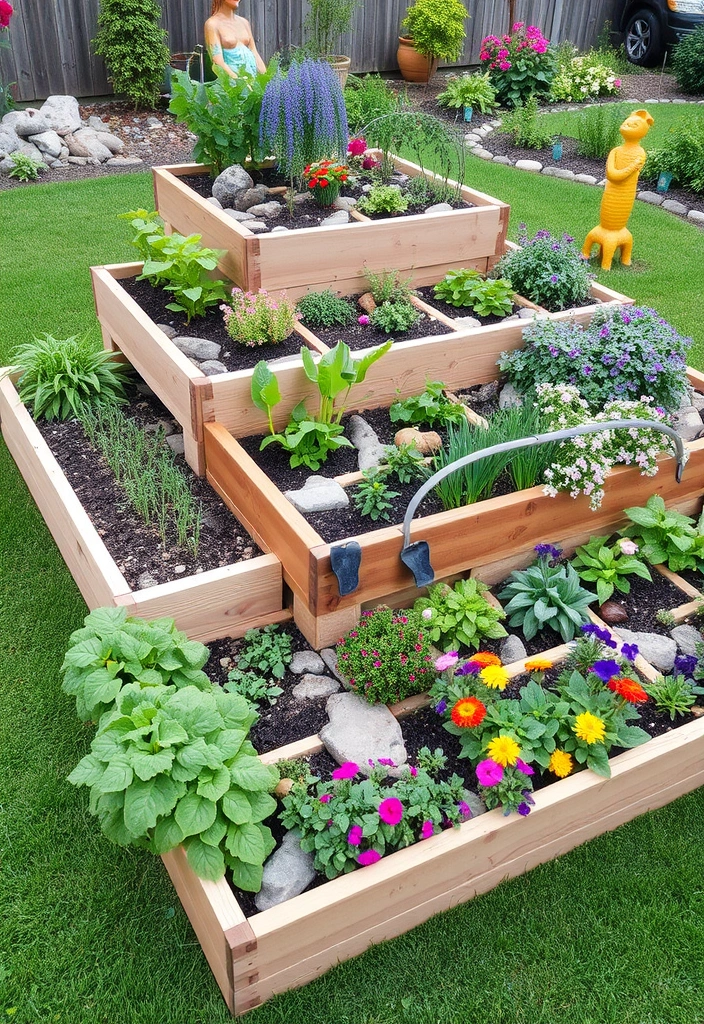
Most vegetables need full sun, which means at least 6 hours of direct light. Fruiting crops such as tomatoes, peppers, cucumbers, squash, eggplant, and melons often perform better with 8–10 hours.
Leafy crops tolerate less light. Lettuce, spinach, kale, cilantro, and parsley can grow with 4–6 hours, especially in warm climates. In USDA Zones 8–10, some afternoon shade can protect lettuce and cilantro from bolting.
Watch the site from morning to late afternoon. A spot that looks sunny at 9 a.m. may sit under a fence shadow by 2 p.m. Also check nearby trees. Tree roots may steal water, and tree canopies can block light or drop leaves into the bed.
Keep Water Close
Place the bed near a hose, rain barrel, or outdoor faucet. A full 4-by-8-foot bed can need several gallons of water on a hot day. Carrying watering cans across a lawn becomes tiring very quickly.
Do not place the bed where water already pools after rain. Raised beds drain well, but a saturated base can still cause root rot. If the site stays wet, raise the bed higher and improve the surrounding drainage before adding soil.
Leave Space for Walking and Tools
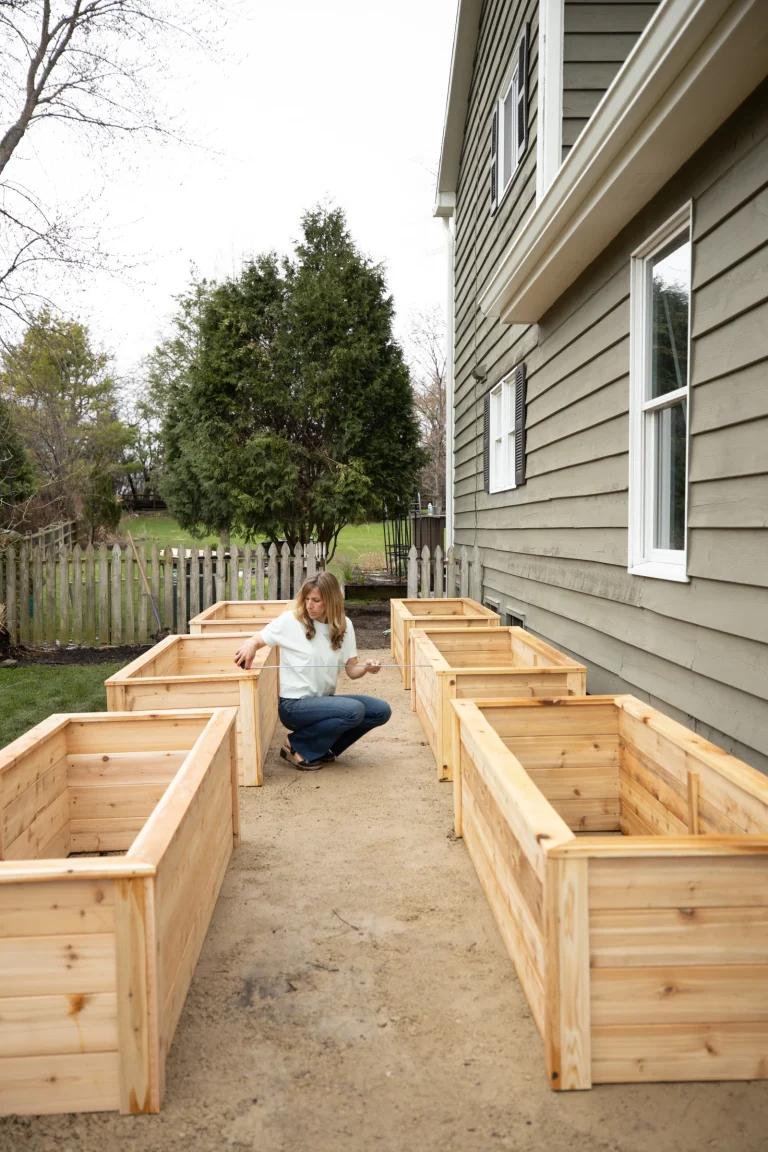
Leave 2–3 feet between beds for foot traffic. Use 3–4 feet if you plan to move a wheelbarrow, garden cart, or compact tiller through the space.
A path can use wood chips, straw, gravel, pavers, or grass. Wood chips work well in most home gardens, but keep fresh chips out of the bed because they can tie up nitrogen as they break down. Gravel drains well but may become hot in full sun.

Plan for Gates, Fences, and Future Beds
Sketch the garden with a tape measure before building. Mark the bed corners with stakes and string. Walk around the outline with a full watering can or wheelbarrow.
Think about future growth. A single 4-by-8-foot bed may become two beds, a trellis, and a compost area. It is easier to leave open space now than move a heavy bed later.
Choose a Bed Shape That Fits Your Reach
A raised garden bed should match the way you garden. The best shape is not always the largest shape.

Common Raised Bed Dimensions
The most useful width is 3–4 feet. A 4-foot width lets you reach about 2 feet from each side. If one side touches a wall or fence, keep the width to 2 feet or less.
Length is more flexible. An 8-foot bed gives good growing space without becoming difficult to build. A 12-foot bed works well for a permanent garden, but it may need extra support to prevent bowing.
| Bed design | Best use | Main limit |
|---|---|---|
| 2 × 8 feet | Narrow side yard or wall edge | Less planting space |
| 3 × 6 feet | Small garden or easy reach | Fewer crop rows |
| 4 × 8 feet | General vegetable garden | Needs a wide access path |
| 4 × 12 feet | Large family garden | Harder to reach across |
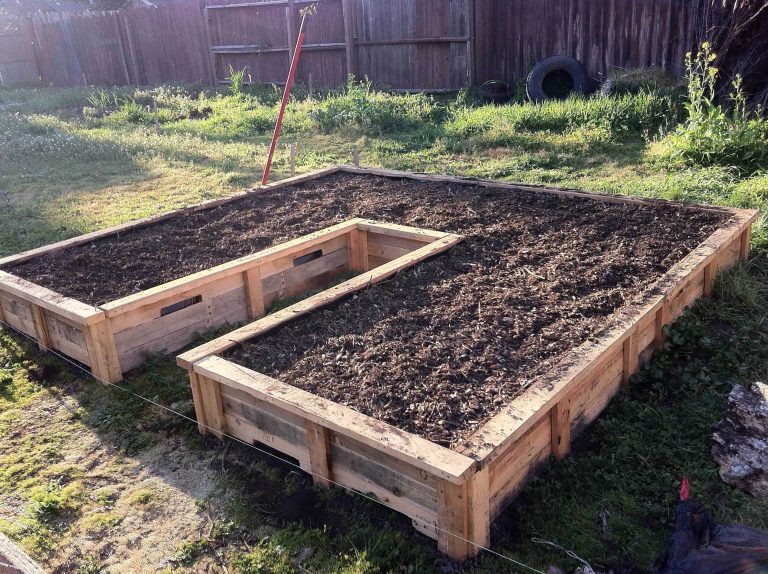
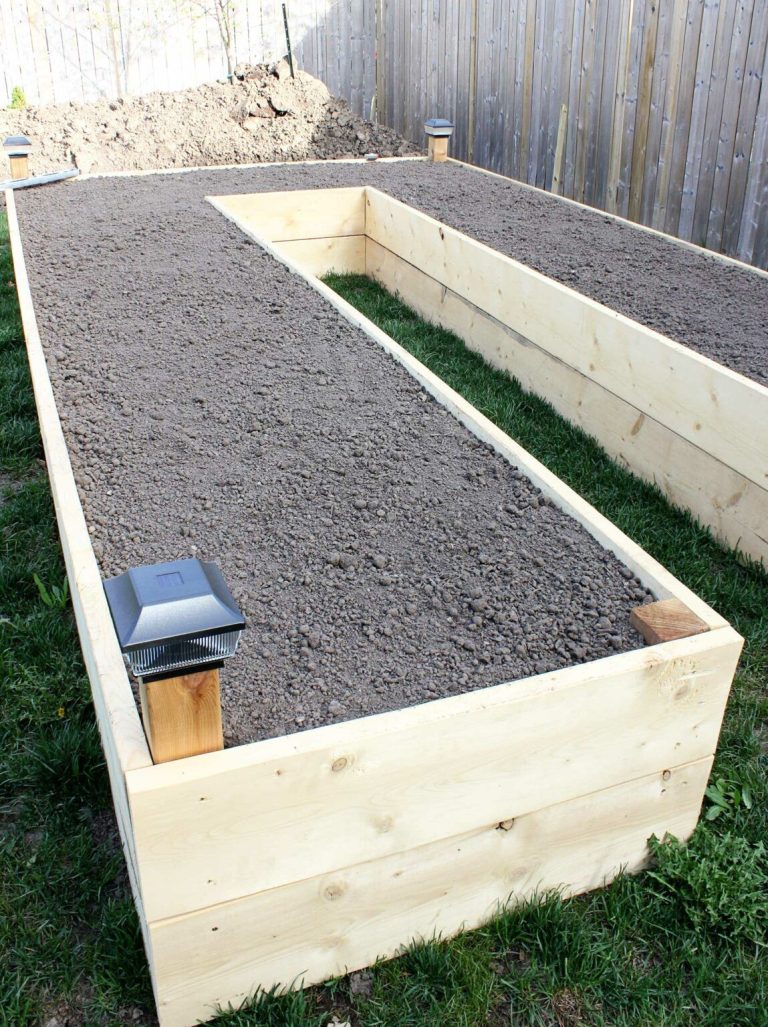
| U-shaped bed | Maximum access from inside | More complex to build |
A 4-by-8-foot bed provides 32 square feet of growing area. That can support salad greens, herbs, carrots, beets, several pepper plants, and a few tomato plants when you use intensive spacing.
Match Height to Soil and Mobility
A low bed saves money and holds less soil. A tall bed offers more root depth and easier access. In my experience, 12 inches is a useful middle ground for most gardens.
Use a deeper bed for carrots, parsnips, daikon, potatoes, and long-rooted plants. A 12-inch bed can grow carrots, but compact or short varieties such as ‘Little Finger’ and ‘Paris Market’ make the job easier.
Raised beds do not need a bottom unless you are placing them on concrete, a deck, or contaminated soil. On open ground, a bottom can trap water and limit earthworm movement.
Gather the Right Materials Before You Build
To arrange a raised garden bed well, you need more than four boards. Gather the frame material, fasteners, soil ingredients, tools, irrigation parts, and mulch before construction begins.

| Material or tool | Suggested choice | Why it matters |
|---|---|---|
| Frame boards | Cedar, redwood, or untreated pine | Resists rot without adding treatment chemicals |
| Fasteners | Exterior-rated screws, 3 inches long | Hold corners firmly through wet and dry cycles |
| Level | 2-foot carpenter’s level | Helps prevent uneven watering |
| Soil | Topsoil, compost, and aeration material | Builds a balanced root zone |
| Cardboard | Plain brown sheets | Smothers grass under an open-ground bed |
| Irrigation | Soaker hose or drip line | Sends water to the root zone |
| Mulch | Straw, shredded leaves, or leaf mold | Slows evaporation and weed growth |
Use untreated wood for food gardens when possible. Cedar and redwood last longer, but they cost more. Untreated pine may last 3–7 years, depending on rainfall and soil contact. Cedar often lasts 8–15 years, though local climate and board thickness change that range.
Avoid old railroad ties, painted boards, and wood with an unknown history. Modern pressure-treated lumber has changed over time, but reclaimed wood can contain unwanted chemicals or metal fragments.
Pick Safe Fasteners
Use galvanized or coated exterior screws. Standard drywall screws can snap or rust in outdoor conditions. For a 2-inch-thick board, 3-inch screws give good bite without passing too far through the side.
Pre-drill near board ends. This reduces splitting, especially with cedar. I use two screws per corner on 6–8-inch boards and three screws per corner on taller walls.
Decide Whether You Need Corner Supports
Long beds benefit from extra support. Add a vertical post at the middle of each long side on a 4-by-12-foot bed. Secure the boards to the post with exterior screws.
For beds over 18 inches tall, use stronger corner posts and connect opposite sides with internal braces. Wet soil is heavy. One cubic yard of damp soil can weigh well over 2,000 pounds.
Build the Frame on Level Ground
A strong frame starts with a level base. The ground does not need to be perfectly flat, but the top edges should stay level so water does not collect in one corner.

Mark the Footprint
Set stakes at the four corners. Tie string around the stakes at the planned bed height. Measure both diagonals. If the two diagonal measurements match, the rectangle is square.
Remove grass, large stones, and woody roots from inside the outline. You can leave a thin layer of soil if the ground drains well.
Level the Base
For a low bed, use a spade and rake to level the soil. Do not build a raised bed on a steep slope without terracing. A bed on a slope may erode, lean, or shed water toward one end.
On a mild slope, sink the lower side into the ground. On a steep slope, build separate smaller beds rather than one tall wall. A retaining wall may need an engineer or experienced contractor.
Suppress Grass Without Blocking Drainage
Place plain cardboard over grass if you want to avoid digging every root. Overlap sheets by 6 inches and soak them with water. Remove glossy labels and colored plastic tape.
Cardboard will break down over time and allow roots and soil organisms to move through. Do not use plastic sheeting under an open-ground bed. Plastic can stop drainage and create a stagnant root zone.
💡 Pro Tip: Put the cardboard inside the frame and extend it a few inches beyond the outer edge. Cover the exposed edge with mulch. This blocks grass from creeping into the bed during the first season.
Assemble and Inspect the Frame
Build each side on a flat surface when possible. Join the corners, set the frame in place, and check the level from both directions.
If one corner sits high, remove soil beneath it. If one corner sits low, add soil under the frame and tamp it firm. Do not rely on loose soil inside the bed to hold an uneven wall in place.
Fill the Bed With a Balanced Soil Mix
The soil mix controls drainage, root growth, water retention, and nutrient supply. Do not fill a raised bed with garden soil alone. It may compact into a dense block.
Use the Basic Three-Part Mix
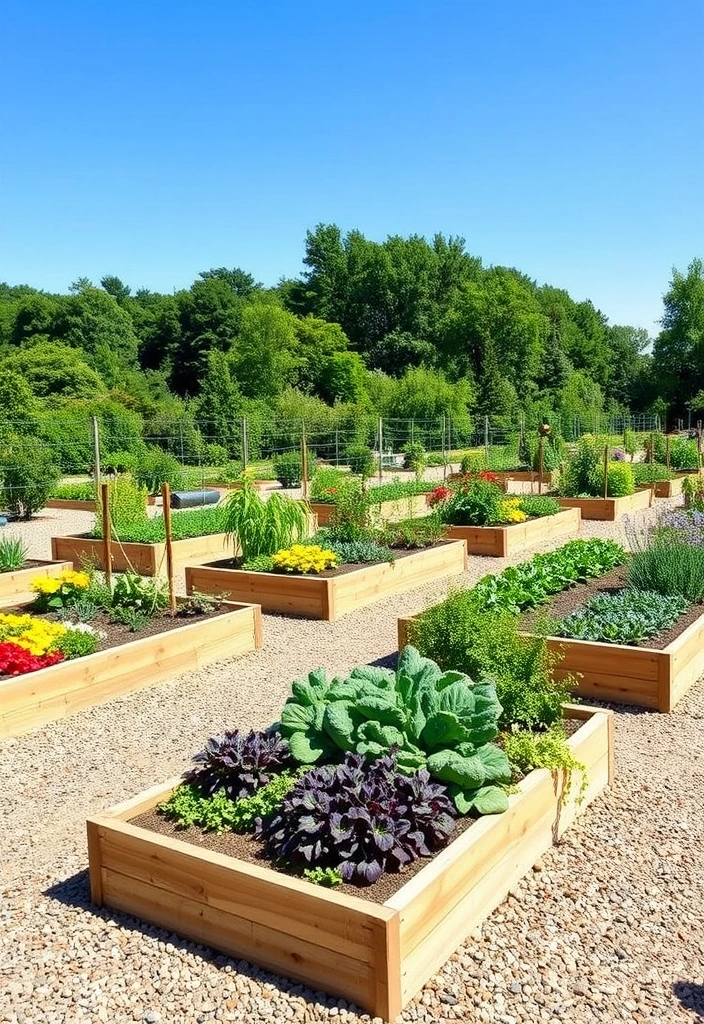
A reliable mix contains:
- 50% quality screened topsoil
- 30% finished compost
- 20% aeration material, such as pine fines or aged leaf mold
This is a starting point, not a rigid rule. Sandy native soil may need more compost. Heavy clay may need more compost and pine fines, but never add a thin layer of sand to clay. That can create a concrete-like mix.
Use finished compost that smells earthy and looks dark and crumbly. Avoid compost with a strong ammonia or sour odor. Fresh manure can burn roots and may contain weed seeds or pathogens.
Calculate Soil Volume
A bed’s soil volume is:
Length × width × depth = cubic feet
A 4-by-8-foot bed that is 1 foot deep needs 32 cubic feet of soil. That equals about 1.2 cubic yards. Buy a little extra because the mix settles after watering.
| Bed size | Soil depth | Approximate soil needed |
|---|---|---|
| 3 × 6 feet | 12 inches | 18 cubic feet |
| 4 × 8 feet | 12 inches | 32 cubic feet |
| 4 × 8 feet | 18 inches | 48 cubic feet |
| 4 × 12 feet | 12 inches | 48 cubic feet |
Bulk soil often costs less than bags, but inspect it before delivery. Ask whether it contains topsoil, compost, sand, or fill dirt. “Garden soil” can mean different things from one supplier to another.
Test pH Before Adding Fertilizer
Most vegetables grow well in soil with a pH between 6.0 and 7.0. Blueberries need much more acidic soil, usually around pH 4.5–5.5, so they should grow in a separate container or dedicated bed.
A soil test can show pH, phosphorus, potassium, calcium, and magnesium. Do not add lime just because someone recommends it. Lime raises pH, and excess lime can lock up nutrients.
Blend the Soil Evenly
Mix the ingredients on a tarp or inside the bed. Do not create a thick compost layer on top of plain soil. Roots will struggle when they cross from rich material into compact material.
Fill the bed in 3–4-inch layers. Water each layer lightly to settle air pockets. Leave about 1–2 inches below the frame top so mulch and water do not spill over the sides.
🌱 Beginner Note: Soil will settle after the first few rains. This is normal. Add compost and fresh mix before the next growing season rather than filling the bed to the rim on day one.
Arrange Crops by Height, Water, and Root Depth
Good plant arrangement prevents shade, crowding, and uneven watering. Think of the bed as a small neighborhood where every plant needs space, light, and access to water.
Put Tall Plants on the North Side
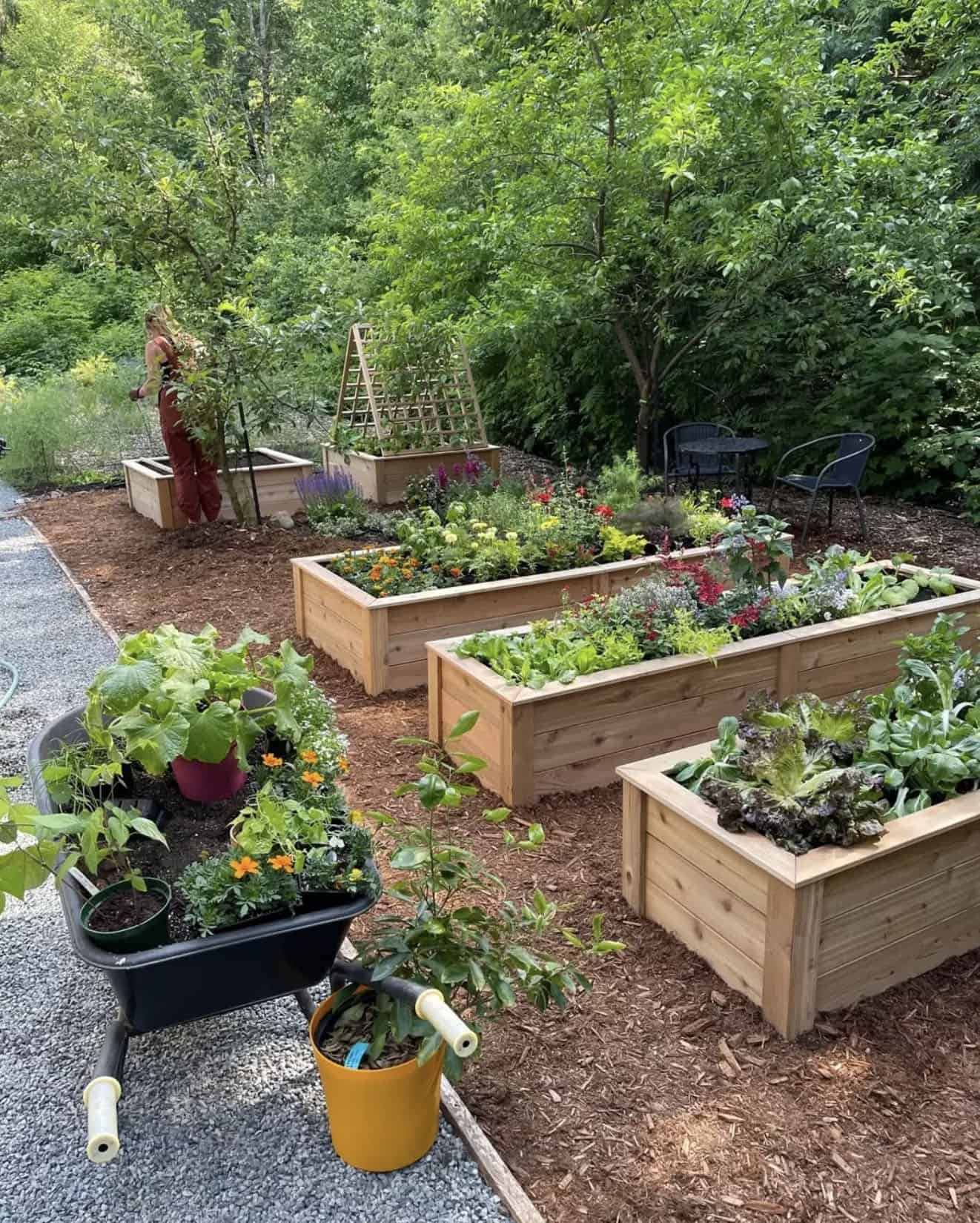
Place tomatoes, corn, trellised cucumbers, pole beans, and tall flowers on the north side of the bed. This reduces the chance that they shade shorter crops.
In the Southern Hemisphere, the same rule applies with the south side. If the bed sits beside a wall, fence, or hedge, check the shadow pattern before planting.
Group Plants With Similar Needs
Keep plants with similar water and feeding needs together. Tomatoes and cucumbers like steady moisture. Mediterranean herbs such as thyme, rosemary, oregano, and sage prefer leaner soil and better drainage.
A simple arrangement might include:
- Fruiting crops in one section
- Leafy greens in one section
- Root crops in one section
- Herbs in a drier edge section
- Flowers along the border for pollinators
Do not place mint directly in a raised bed unless you want it to spread. Grow mint in a container sunk into the bed or kept nearby.
Use Succession Planting
Succession planting means replacing a crop after harvest. Plant radishes and baby lettuce in early spring. When they finish, plant basil, beans, or a fall crop in the same space.
In USDA Zones 6–8, you may grow spinach and peas in spring, tomatoes and peppers in summer, then kale and garlic in fall. In Zones 3–5, the growing window is shorter, so use row cover and fast crops.
Follow Square-Foot Spacing Carefully
Intensive spacing can produce more food in less space, but it needs good soil and steady water. It also increases disease risk if leaves stay wet or air cannot move.
| Crop | Practical spacing in a raised bed | Support needed |
|---|---|---|
| Bush bean | 6 inches apart | No |
| Carrot | 2–3 inches apart | No |
| Lettuce | 6–8 inches apart | No |
| Pepper | 18 inches apart | Optional stake |
| Tomato | 18–24 inches apart | Cage or trellis |
| Zucchini | 24–36 inches apart | Usually no |
Treat these numbers as a starting point. Large tomato varieties such as ‘Brandywine’ need more room than compact types such as ‘Patio Choice Yellow’. Winter squash can take over a small bed unless trained over a strong trellis.
Add Flowers for Pollinators
Calendula, alyssum, borage, dill, yarrow, and native asters attract bees and beneficial insects. Let some dill and cilantro flower if you can spare the space. Their small flowers bring hoverflies and parasitic wasps that help reduce aphids and caterpillars.
Keep aggressive flowers such as mint and lemon balm in containers. Nasturtiums can trail over the edge, but they may compete with small crops for water.
Install Trellises and Irrigation Before Planting
Install permanent structures before the soil fills with roots. It is much easier to place a trellis, drip line, or plant support when the bed is empty.

Choose a Stable Trellis
A trellis for cucumbers or beans must support the weight of wet vines. Use cattle panel, welded wire, strong netting, or a wood frame fixed to the bed.
Do not lean a tall trellis against a weak raised-bed wall. Anchor it to posts set outside the bed or build it into the frame. Wind can pull a trellis loose and damage both the plants and the soil wall.
Lay Out Drip Irrigation
Drip tape or drip tubing works well for rows of vegetables. A soaker hose works well in small beds with mixed plants. Run irrigation along the soil surface under mulch.
Water slowly until moisture reaches 6–8 inches deep. A shallow daily sprinkle encourages shallow roots. One or two deep waterings each week usually builds a stronger root system, though sandy soil and hot climates may need more frequent watering.
Water early in the day. Morning watering gives leaves time to dry and helps reduce fungal disease. Avoid frequent overhead watering in the evening.
Check Water With Your Hand
Push a finger 2 inches into the soil. If it feels dry at that depth, water. For a deeper check, use a narrow trowel or moisture meter.
The surface can look dry while the root zone stays wet. This happens often under mulch. Do not water by appearance alone.
⚠️ Warning: Never assume a new drip system delivers equal water to every plant. Run it for 20 minutes, collect water from several emitters, and compare the amount. A clogged filter or low-pressure zone can leave one side of the bed dry.
Plant the Bed in Layers of Time
A raised bed can produce food from early spring through late fall when you plan around temperature, not just the calendar.

Cool-Season Crops
Plant peas, spinach, kale, radishes, carrots, onions, and lettuce when the soil can be worked. In cold zones, use frost dates as a guide. Young lettuce may tolerate a light frost, while beans and basil need warm soil.
Cover cool-season crops with floating row cover when temperatures drop. Row cover also blocks flea beetles and cabbage moths, but check plants under it regularly for heat stress.
Warm-Season Crops
Wait until the danger of frost has passed before planting tomatoes, peppers, cucumbers, squash, beans, and basil. Soil should feel warm, not cold and wet.
In Zones 7–10, warm crops may go into the bed earlier than in Zones 3–6. Harden off transplants by placing them outdoors for a few hours each day over one week. Sudden sun and wind can scorch indoor-grown plants.
Fall and Winter Use
After summer crops finish, remove diseased plants and plant fall greens. Leave healthy roots in place until they break down. Add compost and a thin mulch layer.
Garlic goes into the soil in fall in many regions. Cover it with 3–4 inches of straw after the ground cools. In mild climates, you can grow cilantro, arugula, carrots, and chard through much of winter.
| Season | Main bed tasks | Good crop choices |
|---|---|---|
| Early spring | Add compost, repair edges, sow cool crops | Peas, lettuce, radish, spinach |
| Late spring | Install supports, plant warm crops | Tomato, pepper, bean, basil |
| Summer | Mulch, water deeply, succession plant | Cucumber, carrot, bush bean |
| Fall | Remove spent plants, plant cover crops | Kale, garlic, arugula |
| Winter | Protect soil and inspect frame | Cover crops, dormant herbs |
The main seasonal goal is to keep living roots or protective mulch over the soil. Bare soil loses moisture and can crust after heavy rain.
Maintain the Bed Without Compaction
Raised beds need less digging than in-ground gardens, but they still need regular care. Avoid stepping into the soil. One footprint can compress a surprising amount of root space.

Add Compost Each Season
Add 1–2 inches of finished compost in spring or fall. Spread it over the surface and let rain and worms move it downward. Do not till deeply unless the bed has become severely compacted.
Top-dress heavy-feeding crops such as tomatoes, squash, and corn with a small amount of compost during the season. Too much nitrogen can create large leaves with few flowers.
Use Mulch Correctly
Apply 2–3 inches of straw, shredded leaves, leaf mold, or untreated grass clippings. Keep mulch 2 inches away from tomato and pepper stems to reduce rot and slug cover.
Mulch lowers evaporation, reduces weeds, and buffers soil temperature. In wet climates, use a thinner layer so the soil surface can dry between waterings.
Rotate Plant Families
Rotate crops when space allows. Avoid planting tomatoes, peppers, eggplant, or potatoes in the same section every year. These crops share diseases such as early blight and pests such as Colorado potato beetles.
In one small bed, full rotation may not be possible. At least remove plant debris, add compost, and avoid saving seed from diseased plants.
Watch for Common Problems
Raised beds reduce some problems but do not prevent all pests. Slugs may hide under mulch. Aphids gather on tender shoots. Cabbage worms chew holes in kale and broccoli. Tomato hornworms can strip a plant overnight.
Remove large pests by hand. Use row cover for cabbage family crops. Encourage birds, lacewings, lady beetles, and predatory wasps. Use organic sprays only when needed and follow the label.
| Problem | Signs | First fix |
|---|---|---|
| Soil dries too fast | Wilting at midday, cracked surface | Add compost and mulch; check irrigation |
| Soil stays wet | Yellow leaves, sour smell, slow growth | Reduce watering and improve drainage |
| Plants grow tall and weak | Long stems, few flowers | Increase light and reduce crowding |
| Leaves have holes | Chewed edges or small pits | Inspect undersides; use row cover |
| Tomato leaves spot | Brown or black lesions | Remove lower leaves and improve airflow |
| Bed wall leans | Gap at corner or bowed side | Empty part of bed and reinforce frame |
Fix the cause before adding fertilizer. A wilted plant may need water, but it may also have damaged roots from wet soil. Extra fertilizer will not solve poor drainage.
🔧 Quick Fix: If the bed settles more than 2 inches, add a mix of compost and topsoil in thin layers. If the frame has shifted, correct the wall before topping up the soil. Extra soil cannot repair a leaning corner.
Pros and Cons of Raised Garden Beds
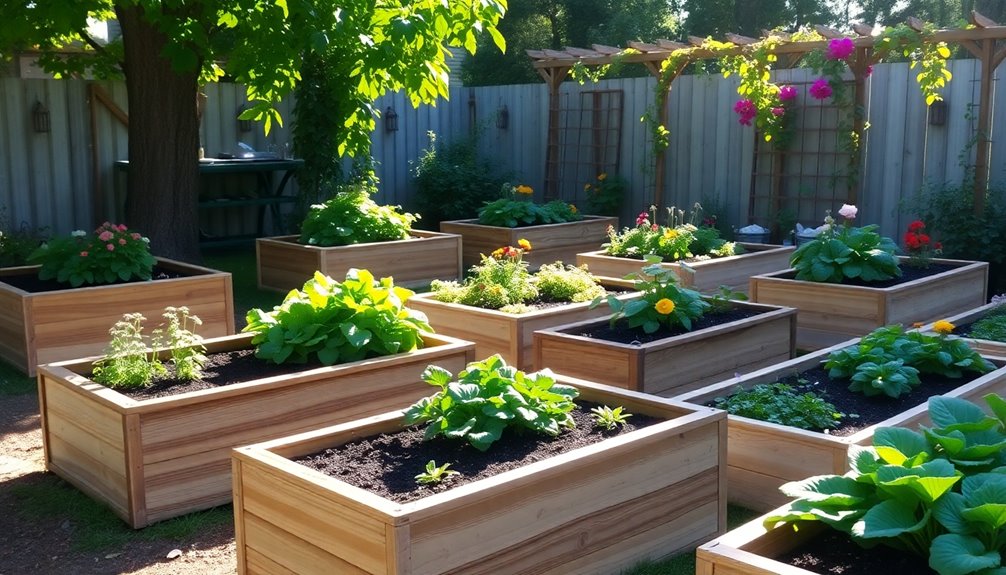
Raised beds solve real gardening problems, but they also create new duties. Review the trade-offs before building several large beds.
| Advantages | Drawbacks |
|---|---|
| Warms earlier in spring | Soil can dry faster |
| Easier access and less bending | Initial cost can be high |
| Good control over soil quality | Wood eventually rots |
| Fewer weeds from surrounding soil | Beds need regular watering |
| Works in poor native soil | Soil may freeze faster in winter |
| Clear crop spacing and paths | Cannot be moved easily when full |
Raised beds are especially useful for clay soil, compacted yards, poor drainage, and gardeners who want better access. They are less useful where native soil already drains well and materials are expensive.
Decide Between Raised Beds, Containers, and In-Ground Rows
The right method depends on your space, budget, soil, and crops. A raised bed is not the only way to grow food.

Raised Beds Versus Containers
Containers work well for patios, balconies, renters, and small herb gardens. They dry out faster than raised beds and need more frequent feeding. A 5-gallon bucket can grow one tomato plant, but it needs drainage holes and a sturdy support.
Raised beds offer more stable moisture and room for crop rotation. They also weigh too much for most balconies unless the structure has been designed for the load.
Raised Beds Versus In-Ground Gardening
In-ground rows cost less and allow roots to move into native soil. They work well in deep, fertile soil with good drainage. They can struggle in compacted clay, wet sites, or yards filled with tree roots.
A hybrid approach often works best. Use raised beds for vegetables that need rich, loose soil and grow corn, pumpkins, or cover crops in larger in-ground areas.
Raised Beds Versus Hugelkultur
Hugelkultur uses woody material under soil to create a mound or raised bed. It can reduce the amount of purchased soil, but fresh wood may tie up nitrogen and the bed can settle unevenly.
Use well-rotted logs, not fresh branches, if you try this method. Keep the top 12 inches rich and fine enough for roots and seed starting.
How Much Time and Money Should You Expect?
A simple 4-by-8-foot bed can take one day to build and fill if materials are ready. A taller bed, irrigation system, trellis, and protective fence may take a full weekend.
Current pricing ranges from roughly $100–$250 for a basic untreated or pine frame and soil mix to $400 or more for cedar, bulk compost, irrigation, and hardware. Prices vary by region and delivery fees.
| Project level | Typical time | Main cost drivers |
|---|---|---|
| Basic 6-inch bed | 3–6 hours | Boards, screws, soil |
| 12-inch vegetable bed | 1 day | Cedar, compost, topsoil |
| Tall accessible bed | 1–2 days | Extra lumber, braces, large soil volume |
| Trellised irrigation bed | 1–2 days | Drip parts, supports, fasteners |
Labor costs rise if the site needs grading, drainage work, stone removal, or a retaining wall. Build one bed first. After one season, you will know whether the height, width, soil mix, and crop layout fit your habits.
My Raised-Bed Layout After Two Seasons
In my own 4-by-8-foot bed, I put tomatoes and peppers along the north edge, trellised cucumbers at the back corner, basil and parsley near the center, and lettuce along the east side. I keep rosemary and thyme in pots beside the bed because the raised-bed mix holds more moisture than those herbs prefer.
The first season, I planted tomatoes too close at 18 inches. The plants grew well but airflow suffered during a humid July, and early blight appeared on the lower leaves. The next season, I spaced indeterminate tomatoes 24–30 inches apart, removed low leaves, and used a sturdy Florida weave support.
I also learned that black plastic mulch was too hot for lettuce in my Zone 6 summer. Shredded leaves and straw worked better. After four weeks, the mulched bed needed less water, and the soil stayed loose under the surface.
Mistakes That Make Raised Beds Harder to Use
Avoid these common errors before the first board is cut:
-
Making the bed too wide
If you must lean into the bed, you will compact the soil and avoid harvesting the center. -
Using poor fill dirt
Fill dirt may contain clay, rocks, weed roots, or construction debris. -
Skipping drainage checks
A raised frame does not fix a site that stays flooded. -
Placing tall crops on the south side
Tall plants can shade lettuce, carrots, and peppers for much of the day. -
Using fresh manure or unfinished compost
These materials can burn roots and carry weed seeds. -
Installing irrigation after planting
Digging through roots to add tubing creates needless damage. -
Leaving no room for wheelbarrows
A productive bed is still frustrating if you cannot reach it with soil or mulch. -
Planting too much at once
A small, well-maintained bed produces more than a large neglected one.
Know When to Hire a Professional
Most gardeners can build a low or medium raised bed with basic tools. Get professional help when the site has a steep slope, retaining-wall needs, buried utilities, contaminated soil, or a structure that must support a person’s weight.
Ask for help with tall accessible beds if the frame will be used as a seat or if the bed must meet a precise wheelchair height. A garden designer can also help with paths, turning space, shade patterns, and water access.
Do not build over buried electrical lines, gas lines, septic systems, or drainage pipes without checking first. Contact the local utility marking service before digging posts or irrigation trenches.
Frequently Asked Questions
Q: What is the best size for a raised garden bed?
A: A 4-by-8-foot bed is a practical general size. Keep the width to 4 feet when you can reach from both sides. Use 2 feet or less beside a wall, fence, or hedge. The ideal bed size is the one you can water, weed, and harvest without stepping into the soil.
Q: How deep should a raised bed be for vegetables?
A: Use at least 6–8 inches for lettuce, herbs, radishes, and many shallow-rooted crops. A depth of 12 inches suits most vegetables. Use 18–24 inches for long-rooted crops, poor native soil, or easier access for gardeners who cannot bend far.
Q: Should I put cardboard under a raised garden bed?
A: Yes, plain cardboard works well over grass and weeds when the bed sits on open ground. Overlap sheets, wet them, and cover them with soil. Do not use cardboard over a site that already has poor drainage, and do not use plastic as a substitute.
Q: Can I use garden soil in a raised bed?
A: You can mix a small amount of native garden soil into a raised bed, but do not fill the bed with it alone. Garden soil may compact and drain poorly. Combine quality topsoil with finished compost and an aeration material such as pine fines or leaf mold.
Q: How much compost should I add to a raised bed?
A: Add about 1–2 inches of finished compost to the surface each year. When filling a new bed, compost can make up about 25–30% of the mix. More is not always better, since excess nutrients can harm plants and pollute runoff.
Q: Should raised beds face north to south or east to west?
A: Long raised beds usually work best when they run north to south. This gives crops more even light as the sun moves across the sky. If wind, slope, fences, or existing paths matter more, use the direction that gives the best overall access and sunlight.
Q: How far apart should raised garden beds be?
A: Leave 2–3 feet between beds for walking and hand tools. Use 3–4 feet if you need a wheelbarrow, garden cart, or mobility aid. A narrow path may save space but often makes soil delivery and maintenance difficult.
Q: Do raised beds need a bottom?
A: No, not when they sit on healthy, well-drained ground. An open bottom lets water drain and allows earthworms and plant roots to move into the native soil. Add a bottom only for beds on concrete, decks, rooftops, or areas with known contamination.
Q: How long does a wooden raised garden bed last?
A: Untreated pine may last about 3–7 years, while cedar and redwood often last 8–15 years. Wet climates shorten the life of most wood. The bottom board and corners usually fail first because they stay wet and carry the greatest soil pressure.
Q: What should I plant on the north side of a raised bed?
A: Place tall crops such as tomatoes, pole beans, cucumbers, corn, trellised peas, and sunflowers on the north side. This reduces shade on shorter plants. In the Southern Hemisphere, use the south side for tall crops.
Q: How do I stop a raised bed from drying out?
A: Add finished compost, apply 2–3 inches of mulch, and use drip irrigation or a soaker hose. Check moisture 2 inches below the surface instead of watering by sight. Sandy mixes and hot climates may need shorter, more frequent watering.
Q: Can I grow fruit in a raised garden bed?
A: You can grow strawberries, dwarf blueberries, and compact raspberries in suitable beds or containers. Blueberries need acidic soil, usually pH 4.5–5.5, so they need a separate mix from most vegetables. Large fruit trees need much more root space and support.
Q: What should I do with a raised bed in winter?
A: Remove diseased plants, leave healthy roots to decompose, add compost, and cover bare soil with mulch or a cover crop. Check the frame after freeze-thaw cycles. In cold Zones 3–5, a layer of straw can protect garlic and perennial herbs.
A well-arranged raised garden bed should make each task simpler. You should be able to reach the soil, move water where it belongs, support tall plants, and walk around the frame without squeezing through tight gaps.
Start with one bed that fits your site and your daily routine. Use a 3- or 4-foot width, build on open ground when possible, fill it with a balanced mix, and give plants room to breathe. After one full season, adjust the layout based on what actually worked in your climate, soil, and schedule.
Meta description: Learn how to arrange a raised garden bed with the right size, soil mix, crop layout, paths, trellises, irrigation, spacing, maintenance, and seasonal care.