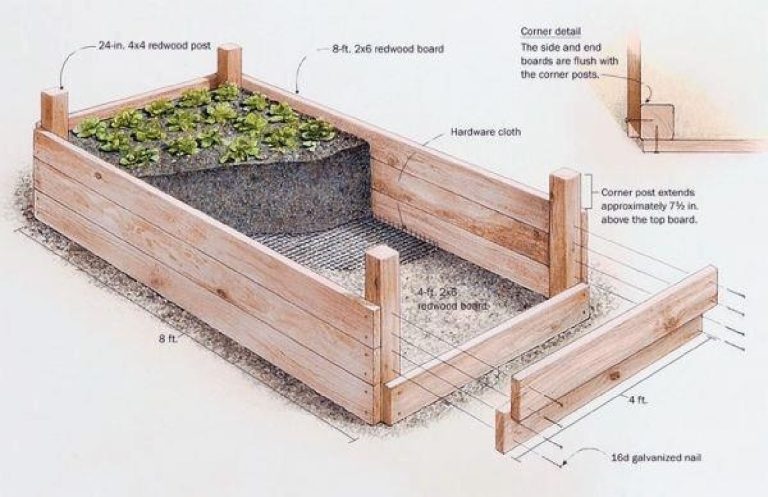
How To Build A Raised Garden Bed Frame: Easy DIY
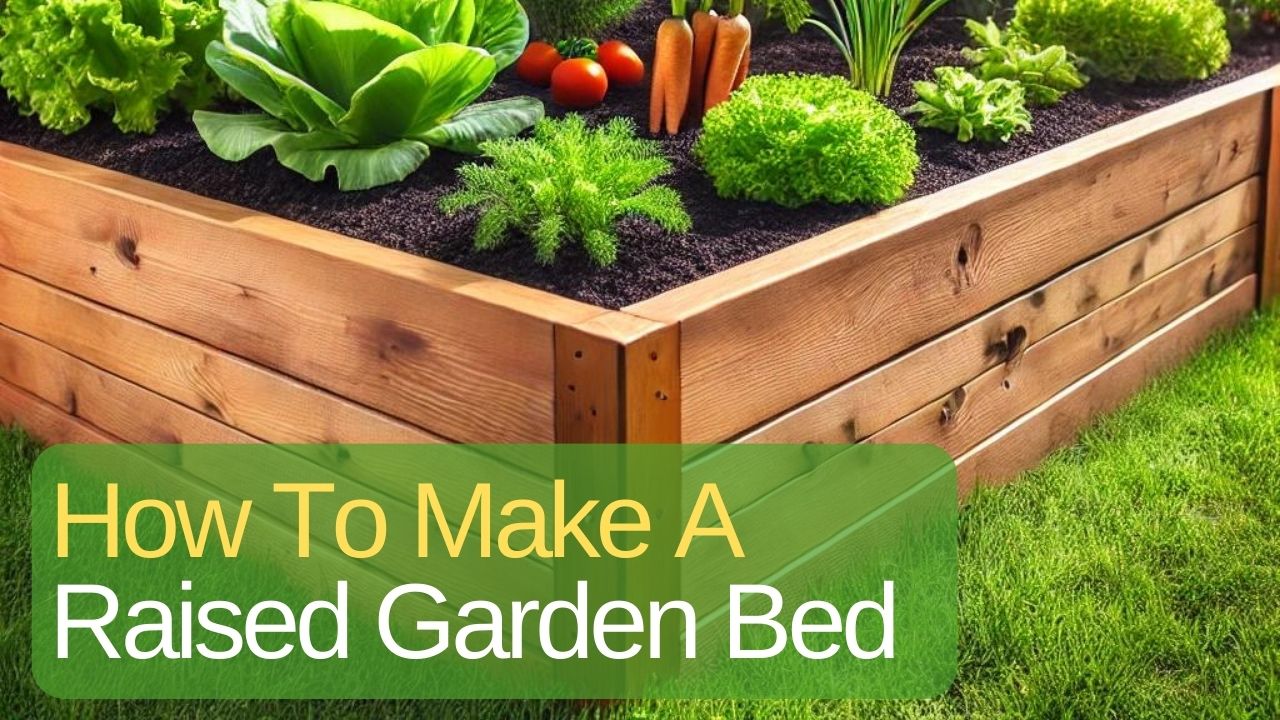
A raised garden bed frame gives you more control over soil, drainage, weeds, and plant spacing. It can turn hard clay, poor sand, or a patch of lawn into a productive garden in one weekend. A well-built frame also makes planting easier on your back and helps the soil warm sooner in spring.
I have built raised beds from cedar, pine, and recycled composite boards in gardens from USDA Zone 5 to Zone 9. The small details matter. A frame that looks square at the start can twist after one wet winter if the corners lack support. A bed that is too wide can also become hard to reach.
This guide shows how to build a raised garden bed frame that lasts, drains well, and suits the plants you want to grow. You will learn how to choose wood, pick the right size, cut and fasten the boards, prepare the site, fill the bed, and care for it over time.

Quick answer: how to build a raised garden bed frame
To build a raised garden bed frame, choose untreated rot-resistant boards, cut them to length, fasten the corners with exterior screws, and set the frame on level ground. A simple 4-by-8-foot bed, 10 to 12 inches tall, needs four boards, corner supports, a drill, screws, and rich soil. Keep the bed no wider than 4 feet so you can reach the center from both sides.
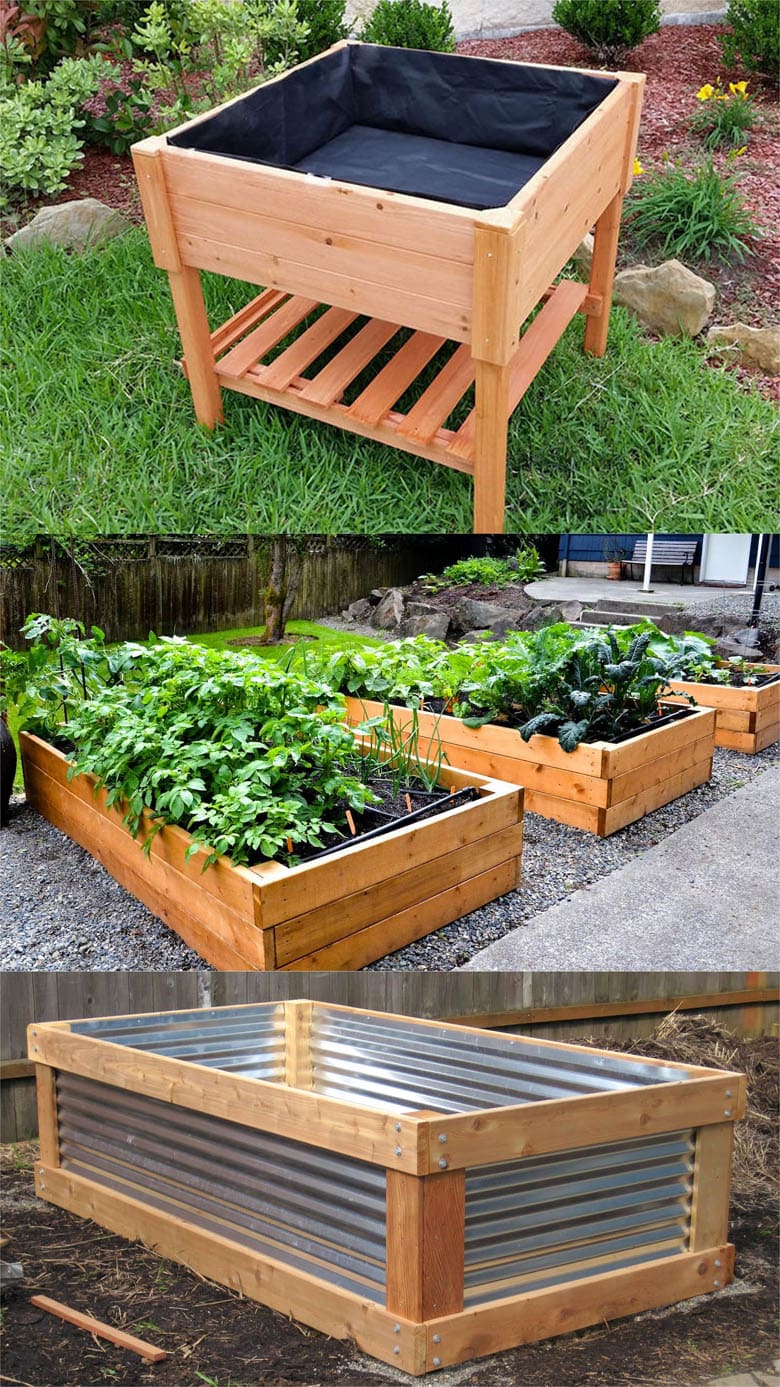
Choose the right size and location first
The best raised garden bed starts with a good site, not with a saw. Pick a spot with at least six hours of direct sun for most vegetables. Tomatoes, peppers, cucumbers, squash, beans, and basil often perform better with eight or more hours.
Avoid low places where water pools after rain. A raised bed improves drainage, but it cannot fix a site that stays flooded. Watch the area after a heavy storm before you build.
A bed should also sit near a water source. I once placed a new bed at the far end of a yard because the light was perfect. The plants grew well, but hauling a hose 100 feet became a daily chore in July.
Use a practical bed width
Keep a raised bed no more than 4 feet wide when you can reach it from both sides. A 3-foot width works well beside a wall or fence. If you can reach only one side, limit the width to about 2 feet.
The length can vary. Four, six, and eight feet are common because lumber comes in standard lengths. A 4-by-8-foot bed gives you 32 square feet of growing space without creating a large amount of waste.
Pick a useful bed height
A 10- to 12-inch frame works for lettuce, herbs, beans, strawberries, and most annual vegetables. A 16- to 24-inch bed gives deeper soil for carrots, parsnips, potatoes, and plants with spreading roots. It also reduces bending.
Very tall beds need stronger construction. A frame that is 24 inches high holds much more soil and puts more pressure on the side walls. Add internal braces or build the bed in stacked sections.
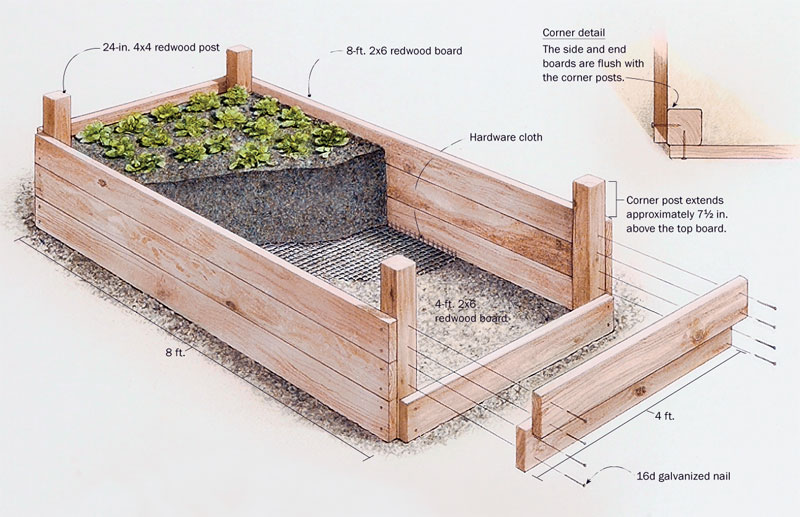
This table helps match bed size to access and crop needs.
| Bed size or height | Best use | Key limitation |
|---|---|---|
| 2 feet wide | Narrow side areas and one-sided access | Less planting space |
| 3 to 4 feet wide | Most vegetables and herbs | Needs access from both sides |
| 10 to 12 inches high | Lettuce, beans, peppers, herbs | Not deep enough for some root crops |
| 16 to 24 inches high | Root crops and easier access | Needs stronger bracing and more soil |
A 4-by-8-foot, 12-inch bed is the simplest starting point for most gardeners. Smaller beds cost less and are easier to fill, while taller beds help people who have trouble kneeling or bending.
Select safe and durable frame materials
Untreated cedar is the classic choice for a raised garden bed. Western red cedar and northern white cedar resist rot and are easy to cut. They can last around 7 to 15 years, depending on soil moisture, climate, and board thickness.
Untreated pine costs less but usually breaks down faster. In a dry climate, it may last several years. In wet areas such as the Pacific Northwest, boards may soften sooner, especially where they touch damp soil.
Redwood lasts well but often costs more. Douglas fir offers good strength, though it may need replacement sooner than cedar. Composite boards resist rot but can cost more and may need special cutting blades.
Avoid treated or questionable wood
Modern pressure-treated lumber made for residential use is widely used in outdoor construction, but some gardeners prefer untreated wood for food beds. Do not use old railroad ties, painted boards, or salvaged wood with an unknown history. Old wood may contain creosote, lead paint, or other unwanted chemicals.
If you use pressure-treated lumber, choose boards labeled for current residential outdoor use. Keep the frame in good shape, and do not burn scraps.
Choose the right board thickness
A 2-inch-thick board, sold as nominal 2-by- lumber, makes a stronger frame than a 1-inch board. Actual lumber sizes are smaller than their names. A board sold as a 2-by-12 is usually about 1 1/2 inches thick and 11 1/4 inches wide.
For a bed up to 12 inches high, 2-by- lumber works well. Thin fence boards can work for a short-term bed, but they bend and split more easily. Use thicker boards for beds taller than 12 inches.
Compare common frame materials
Material choice affects cost, life, strength, and appearance. The right option depends on your climate and budget.
| Material | Expected life in normal use | Main advantage |
|---|---|---|
| Cedar | 7–15 years | Rot resistance and easy handling |
| Redwood | 10–20 years | Long life and natural beauty |
| Untreated pine | 3–8 years | Low cost and easy availability |
| Composite boards | 15+ years | Does not rot or need much care |
| Concrete blocks | 20+ years | Strong, modular, and reusable |
Cedar gives the best balance for many home gardens. Concrete blocks are a smart alternative when wood prices are high or you want a bed that can be changed without cutting lumber.
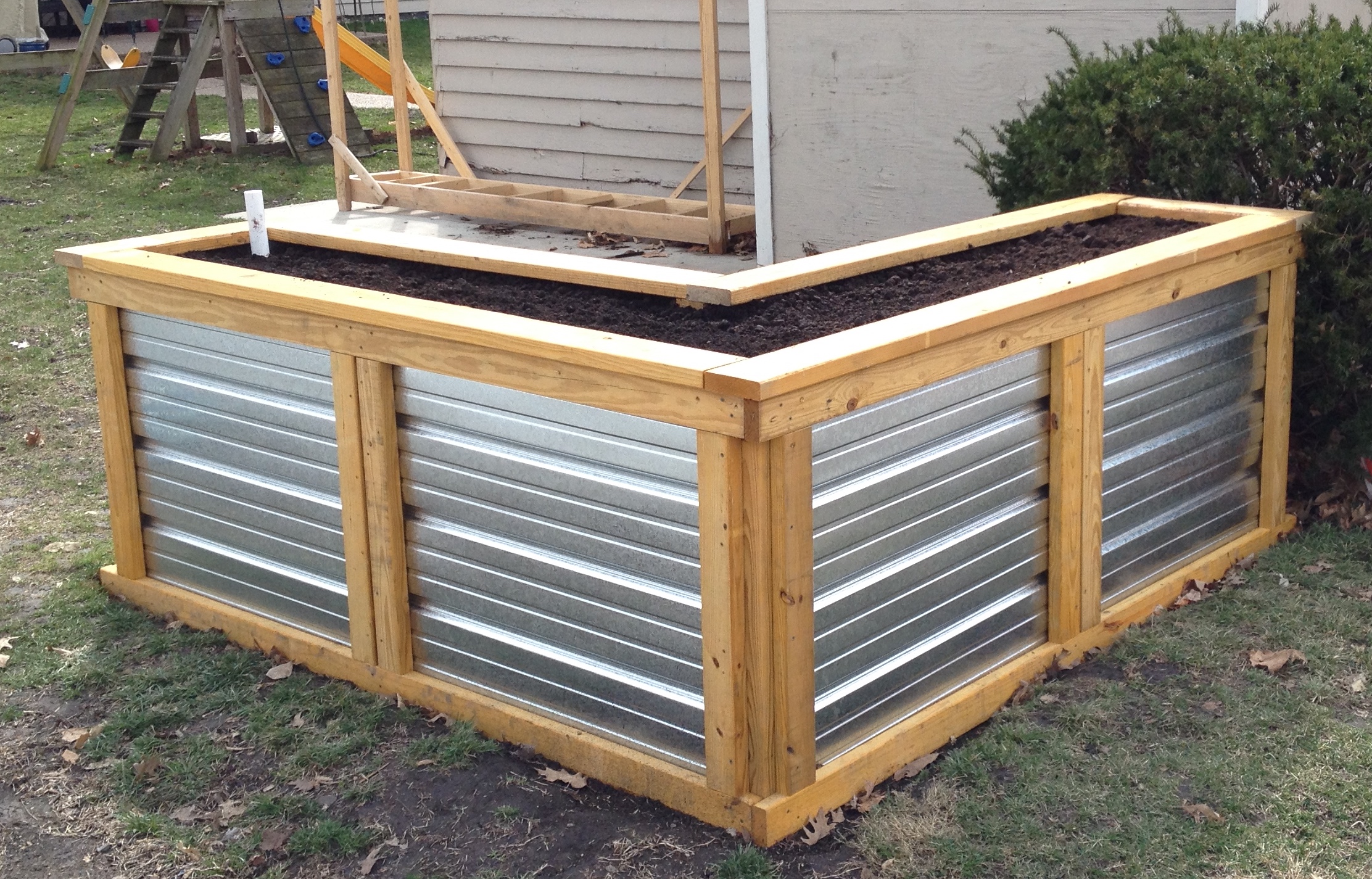
Gather tools and materials before cutting
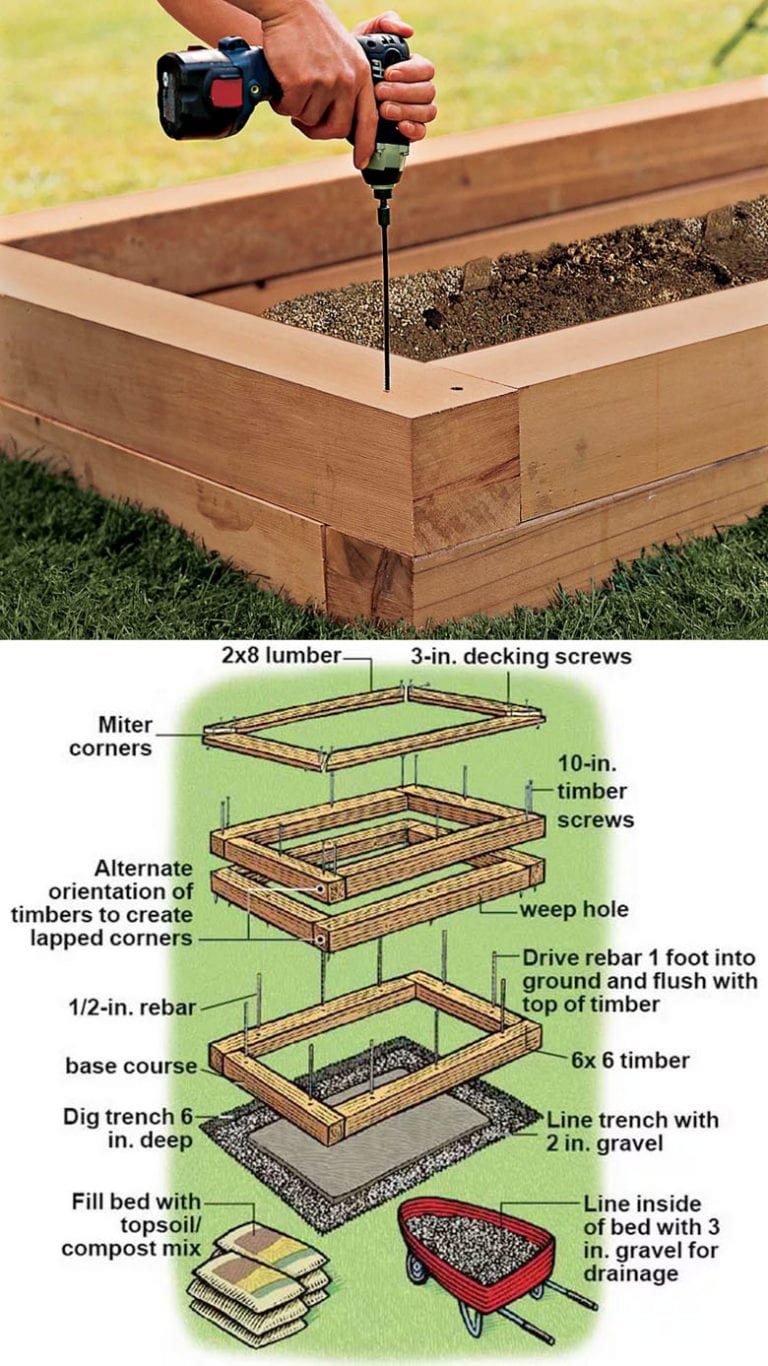
A basic raised garden bed needs few tools. A circular saw makes fast, straight cuts, but a handsaw can build one small bed. A drill with a driver bit and a pilot bit helps prevent cracked corners.
Wear safety glasses during every cut and keep loose clothing away from the saw blade. Use a stable work surface. Do not hold a board on your knee while cutting.
Materials for a 4-by-8-foot bed
The list below assumes a frame made from 2-by-12 boards. Adjust the board width if you want a shorter or taller bed.
| Item | Amount | Purpose |
|---|---|---|
| 2-by-12 boards, 8 feet long | 4 | Long and short side walls |
| Exterior wood screws, 3 to 3 1/2 inches | 16–24 | Join the corners |
| 2-by-2 or 4-by-4 corner posts | 4 pieces | Strengthen the corners |
| Weed barrier or cardboard | Optional | Cover grass beneath the bed |
| Compost and topsoil | About 32 cubic feet | Fill a 4-by-8-by-1-foot bed |
| Tape measure and square | 1 each | Accurate layout |
| Drill and bits | 1 | Pilot holes and screws |
| Level and shovel | 1 each | Prepare and level the site |
A 4-by-8-foot bed that is 12 inches tall holds about 32 cubic feet of soil before settling. That equals about 1.2 cubic yards. Buy a little extra because soil often settles by 15% to 25% after watering.
Use safe fasteners
Use exterior-rated structural screws or coated deck screws. Avoid drywall screws. They are brittle and can snap when the wood shifts.
Galvanized or coated screws resist rust better than plain steel. In coastal areas or places with frequent rain, stainless steel screws last longer but cost more.
Build the raised garden bed frame step by step
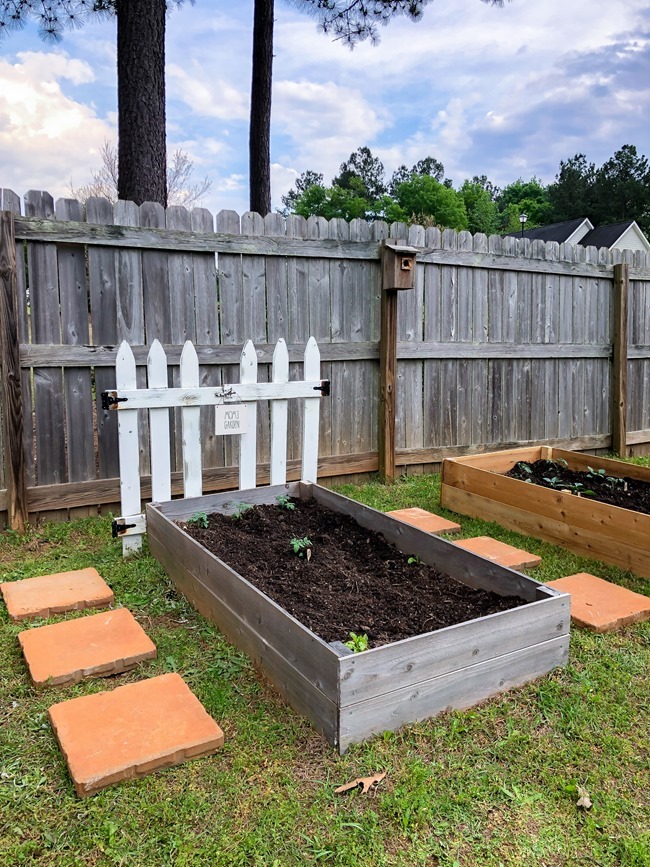
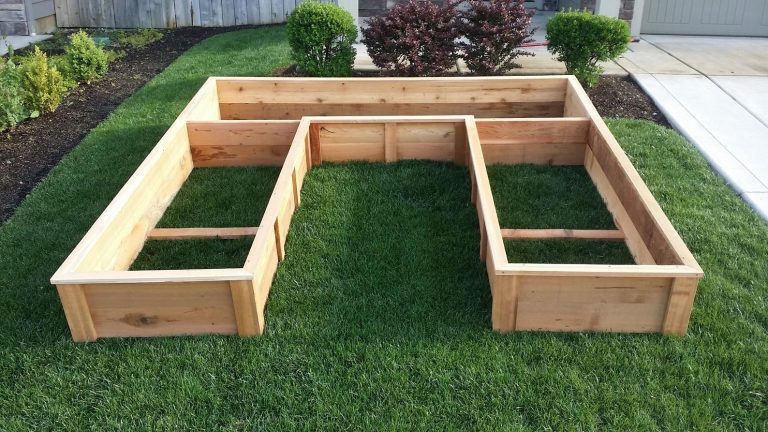
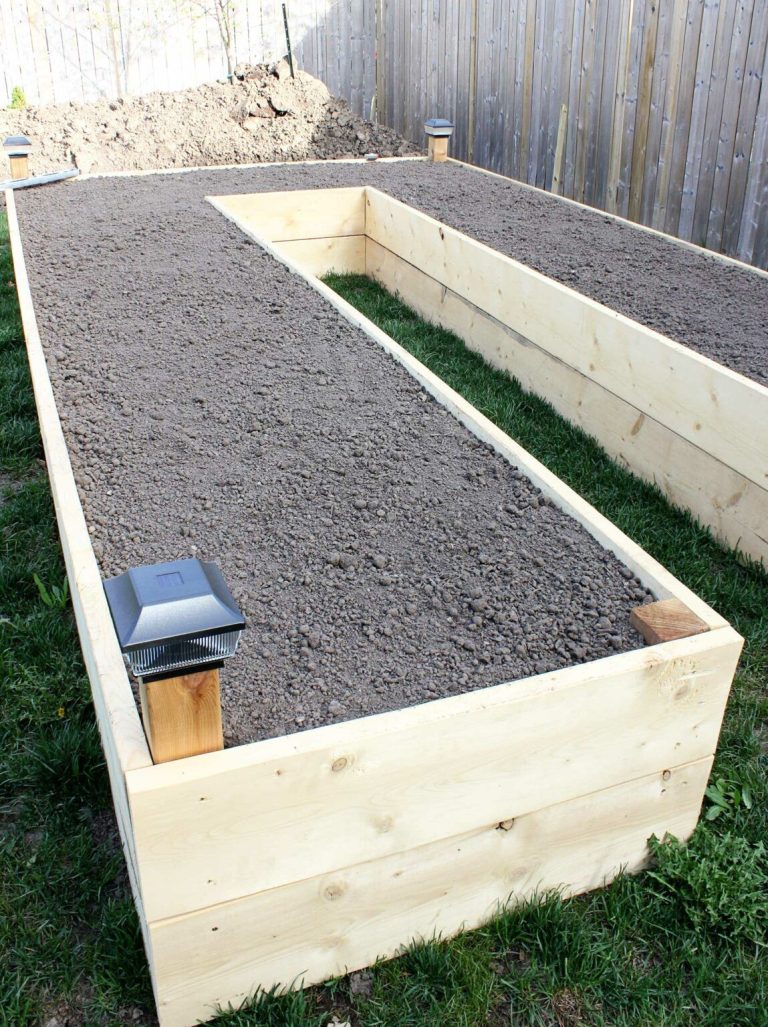
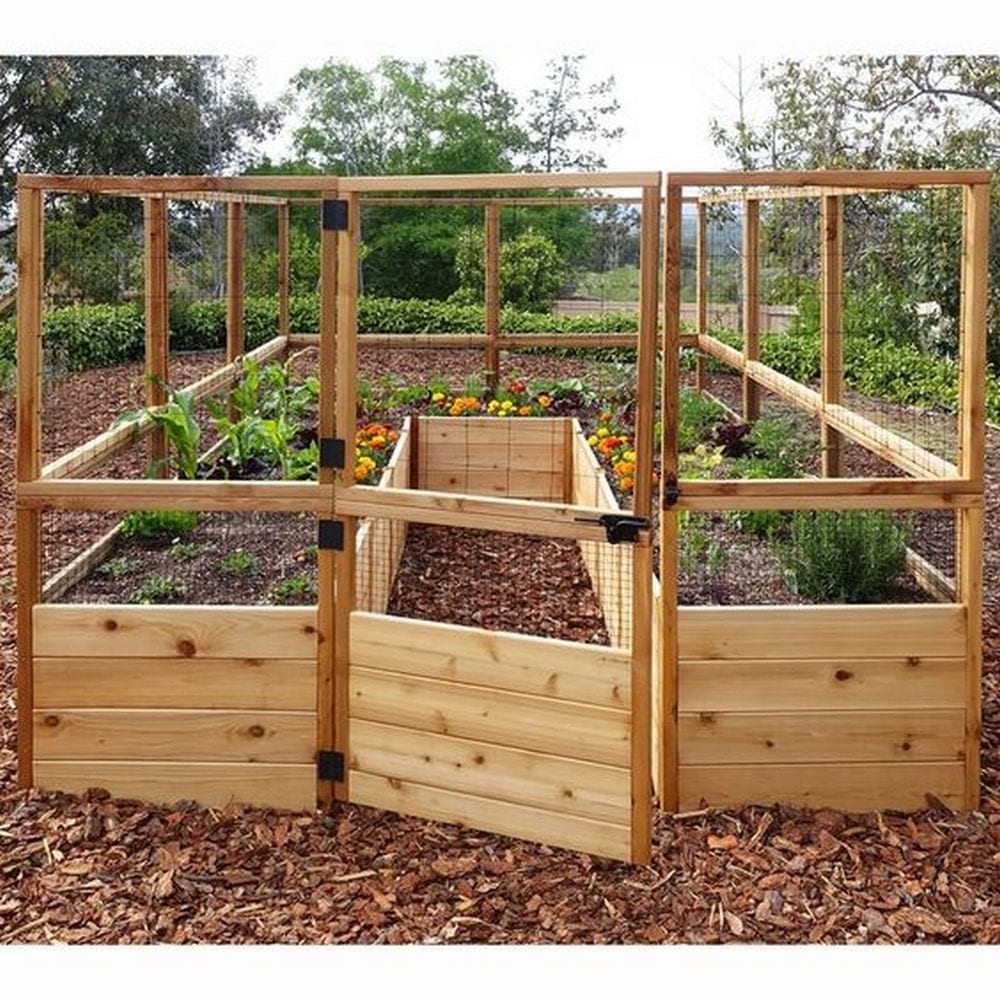
Building the frame is simple when the cuts are square and the corners are supported. Work on a flat driveway, patio, or pair of sturdy sawhorses.
1. Mark and cut the boards
For a 4-by-8-foot bed, use two 8-foot boards for the long sides. Cut two other boards to 4 feet for the end walls. Measure each board before cutting because lumber length can vary slightly.
Use a carpenter’s square to mark a straight cut line. Support the board on both sides of the cut. Let the saw blade reach full speed before it enters the wood.
If you want the outside length to measure exactly 8 feet, account for the thickness of the end boards. For a simple beginner build, using two full-length boards and two boards cut to fit between them creates a frame close to 4 by 8 feet.
2. Lay out the frame
Place the boards on their edges in the shape of a rectangle. Keep the long boards parallel. Set the short boards between them or against their ends, depending on the corner style you choose.
Use a square to check each corner. A square corner has a 90-degree angle. Small errors become more visible as you attach the second and third sides.
3. Add corner posts
Cut four corner posts about 12 to 14 inches long. Set one inside each corner. The post should reach the top edge of the frame and extend below the bottom edge.
The post gives the screws more wood to grip. It also helps keep the frame aligned during assembly. For beds taller than 12 inches, use 4-by-4 posts or add a second board layer with longer corner supports.
4. Drill pilot holes
Place two or three pilot holes through the outer board and into each corner post. A pilot hole is a small hole drilled before the screw. It reduces splitting, especially in cedar and dry pine.
Space the screws vertically rather than placing them in one tight cluster. Keep each screw at least 3/4 inch from the board edge to reduce the chance of splitting.
5. Drive the screws
Drive the screws until the heads sit flush with the wood. Do not bury them deep into the board. A deep hole can hold water and weaken the area around the fastener.
Attach one corner at a time. Check the square after each corner. If the frame shifts, loosen the screws slightly, realign the boards, and tighten them again.
6. Check the diagonals
Measure from one corner to the opposite corner. Then measure the other diagonal. If both measurements match, the frame is square.
For a 4-by-8-foot bed, the diagonals should be close to the same length. A difference of less than 1/2 inch is usually easy to correct before filling.
7. Add center bracing for long beds
An 8-foot bed often works without a center brace when built with 2-by-12 boards. Still, a brace helps prevent the long sides from bowing outward over time.
Install a cross brace from one long side to the other at the center. Use treated lumber, cedar, or a galvanized metal tie designed for outdoor use. Place the brace near the top edge or run a full-height support inside the bed.
For beds taller than 16 inches, add braces every 3 to 4 feet. Soil is heavy. Wet soil weighs much more than dry soil and can push hard against the boards.
8. Sand sharp edges
Lightly sand rough edges and corners. You do not need a smooth furniture finish, but remove splinters from places where hands, knees, or garden gloves may touch.
Round the top corners slightly if children use the garden. A small bevel also helps rainwater run off the edge.

9. Test the frame in place
Carry the frame to the garden site with two people if possible. Even a small cedar frame can feel awkward. Set it down and check the position against paths, fences, gates, and nearby plants.
Walk around the frame. Make sure you can reach every area without stepping into the soil. Leave at least 18 to 24 inches for a narrow path. A 30- to 36-inch path feels much better when you use a wheelbarrow.
10. Level the frame
Use a shovel to remove high spots. Do not try to force the frame flat by filling low spots with loose soil alone. Loose soil settles and can leave the frame twisted.
Set a level across each side and then across the corners. The frame does not need to be perfectly level for plants to grow, but a level frame looks better and holds water more evenly.

Prepare the ground under the bed
Site preparation affects drainage, weeds, and root growth. You can place a raised bed on soil, grass, gravel, or a firm patio, but each surface needs a different approach.
For a bed on grass, mow the area short and remove thick vegetation. You can lay overlapping cardboard under the frame, then cover it with soil. Use plain brown cardboard without glossy coatings, tape, or colored ink.
I have used cardboard under beds in clay soil with good results. It smothered turf during the first season, but bindweed still pushed through at the edges. A barrier helps, but it does not replace regular weeding.
Do not block drainage
Avoid plastic sheeting beneath a raised bed on soil. Plastic can trap water and create a wet root zone. Landscape fabric also has limited value under a deep soil bed because roots can grow through it and weeds can sprout in the soil above.
If you build on concrete, add a drainage layer or leave gaps below the frame when possible. A bottomless frame on a hard surface may need more careful watering because it cannot drain into the ground.
Decide whether to remove the sod
Removing sod gives you a clean start and reduces the chance of grass growing into the bed. It takes more work, but it helps in yards with aggressive turf such as Bermuda grass or quackgrass.
If you leave the sod in place, cover it with several layers of cardboard. Overlap the sheets by at least 6 inches. Wet the cardboard before adding soil so it stays in place.

Fill the frame with healthy soil
A raised bed works best with soil that holds moisture but drains excess water. Straight garden soil can become dense in a raised bed. Straight compost can shrink, dry quickly, and contain too many nutrients.
A simple mix uses about 60% quality topsoil, 30% finished compost, and 10% aeration material such as pine bark fines or coarse vermiculite. In dry climates, add more organic matter. In wet climates, use less fine compost and improve drainage.
Calculate how much soil you need
Multiply the bed length by width by soil depth. Use feet for each measurement.
For a 4-by-8-foot bed that is 1 foot deep:
4 × 8 × 1 = 32 cubic feet
Divide cubic feet by 27 to convert to cubic yards. Thirty-two cubic feet equals about 1.19 cubic yards.
For a 4-by-4-foot bed that is 10 inches deep:
4 × 4 × 0.83 = 13.3 cubic feet
Buy enough soil to fill the frame, plus 10% to allow for settling. Do not fill to the very top. Leave 1 to 2 inches so water and mulch do not wash over the sides.
Test the soil before adding fertilizer
A soil test gives more useful information than guessing. Ask for pH, phosphorus, potassium, calcium, magnesium, and organic matter. Most vegetables grow well at a pH between 6.0 and 7.0.
Do not add lime unless a soil test shows a need. Lime raises pH, and too much can lock up nutrients. Avoid high-phosphorus “bloom” fertilizers in a vegetable bed unless a test supports their use.
Add soil in layers
Put the soil into the frame in 3- to 4-inch layers. Water each layer lightly. This removes large air pockets without packing the bed as hard as a lawn.
Mix compost through the soil rather than leaving a thick compost layer on top. A thick layer can dry into a crust or repel water when it becomes very dry.
This comparison shows how common filling choices perform in a new raised bed.
| Soil mix | Strength | Common problem |
|---|---|---|
| Topsoil only | Low cost and easy to find | Can be heavy and compact |
| Compost only | Rich and light at first | Shrinks, dries, and may contain excess nutrients |
| Topsoil plus compost | Good balance for most crops | Needs careful source selection |
| Topsoil, compost, and bark fines | Good structure and drainage | Costs more and needs mixing |
For most home gardens, topsoil mixed with finished compost gives the safest starting point. Ask the supplier whether the topsoil contains weed seeds, construction fill, or herbicide-treated grass clippings.
Plant the bed for easy care
A raised bed is easier to manage when plants match the available space. Use the center for tall crops such as tomatoes, trellised cucumbers, and pole beans. Put low crops near the edge so they do not shade smaller plants.
Square-foot spacing can work well in rich soil. A tomato may need 1 to 2 square feet, while radishes can grow much closer. Always follow the mature size of the variety, not just the size of the seedling.
Good first crops
These plants adapt well to raised beds:
- Leaf lettuce and kale
- Bush beans
- Carrots and beets
- Radishes
- Basil and parsley
- Chard
- Peppers
- Determinate tomatoes
- Strawberries
- Bush cucumbers
Large vining squash can take over a small bed. Grow it at an edge and train the vines outside the frame, or use a separate planting area.
Plan sun and plant height
Place tall crops where they will not shade shorter plants. In the Northern Hemisphere, a north-side trellis often works well. This lets sunlight reach lettuce, carrots, and herbs in front.
In hot USDA Zones 8 and 9, some afternoon shade can protect lettuce and cilantro from bolting. In Zones 3 through 6, full sun helps warm the soil and lengthen the growing season.
Use mulch after planting
Add 1 to 2 inches of clean straw, shredded leaves, or leaf mold around plants. Keep mulch a few inches away from tomato stems and other plant crowns.
Mulch reduces evaporation, slows weeds, and protects soil from heavy rain. It can also shelter slugs, so check beneath it if lettuce leaves develop ragged holes.

Maintain the frame and soil each season
A raised garden bed frame needs little care, but regular checks extend its life. Inspect the corners in spring and after periods of heavy rain. Look for loose screws, bowed boards, soft wood, and soil spilling through gaps.
Water the soil deeply rather than sprinkling the surface for a few seconds. Most vegetables need about 1 inch of water per week, though sandy soil, hot wind, and large plants can raise that need.
Use drip irrigation when practical
A drip line or soaker hose delivers water close to the root zone. It also keeps leaves drier than overhead watering. Dry foliage can reduce problems with fungal diseases such as early blight and powdery mildew.
A timer helps during summer travel. Check the soil by pushing a finger 2 inches down. If it feels dry at that depth, water slowly until moisture reaches deeper into the bed.
Refresh soil without rebuilding the bed
Add 1 to 2 inches of finished compost each spring. Mix it gently into the top few inches or let worms pull it down. Avoid deep digging around established perennial herbs or berry plants.
Rotate plant families when possible. Do not grow tomatoes, peppers, eggplants, and potatoes in the same section every year. These crops belong to the nightshade family and can share diseases such as early blight and verticillium wilt.
Check the frame on a seasonal schedule
Use this simple routine to find small problems before they become expensive repairs.
| Time | Maintenance task | Why it matters |
|---|---|---|
| Early spring | Check corners, screws, and board softness | Winter moisture can loosen joints |
| Before planting | Add compost and inspect drainage | Restores soil structure |
| Midseason | Check for bowing and soil gaps | Heavy wet soil can spread walls |
| After harvest | Remove diseased plants and weeds | Reduces pests and disease carryover |
| Late fall | Clear leaves from the frame base | Limits long-term moisture contact |
Most repairs take less than an hour when you catch them early. A soft board should be replaced before it collapses and spills soil onto a path.
Fix common raised bed frame problems
Raised beds fail in a few predictable ways. The most common issues are bowed walls, loose corners, rotting boards, poor drainage, and soil that settles too low.
Bowed side walls
Bowing usually means the bed lacks a center brace or the boards are too thin for the height. Remove some soil if the wall is under severe pressure. Then add a cross brace or an inside support post.
Do not simply drive more screws into a bowed board. Screws may hold for a short time, but the soil will keep pushing outward.
Loose or split corners
Loose corners can result from short screws, missing pilot holes, or movement during freeze-thaw cycles. Remove one screw at a time and replace it with a longer exterior-rated screw.
If the wood has split badly, add a metal corner bracket on the inside. Replace the board if the split reaches most of the corner.
Rot at the bottom edge
Rot starts where wood stays wet against soil. Improve drainage around the bed and avoid piling mulch against the outside wall. If one board is soft, replace it rather than coating it with paint and hoping for another season.
A narrow gravel strip outside the frame can reduce mud splash. Leave the inside wall untreated if you prefer a natural food-growing setup.
Soil settles too far
New soil often drops after rain and watering. This is normal. Add compost and soil in small amounts until the bed sits 1 to 2 inches below the rim.
Do not top off the bed with pure compost each year. The bed may become too rich, and the soil structure can become uneven.
Water pools in the bed
Pooling can come from compacted soil, too much fine compost, or a blocked base. Check that the bed sits on soil rather than plastic. Mix in coarse organic matter and avoid working wet soil.
If the frame is on concrete, create drainage gaps or use a raised container design with a proper drain system. A sealed box without drainage can drown roots after heavy rain.

This table links visible symptoms to practical fixes.
| Problem sign | Likely cause | First fix |
|---|---|---|
| Long side bows outward | No brace or thin boards | Add a cross brace |
| Corner pulls apart | Short screws or split wood | Add a corner post and exterior screws |
| Water stays after rain | Compacted mix or plastic base | Improve drainage and loosen soil |
| Soil drops several inches | New mix settled | Add compost-rich soil gradually |
| Bottom board feels soft | Constant soil moisture | Replace the board and improve airflow |
Fix the cause before making cosmetic repairs. A fresh coat of stain will not stop a wet site from rotting the frame.
Compare a raised wood frame with alternatives
A wood frame is not the only way to create a raised growing space. The best alternative depends on your budget, mobility, climate, and the look you want.
Concrete blocks make a strong modular bed. You can change the shape, and the holes can hold herbs or flowers for pollinators. The edges can be rough, so cap them or place the blocks where they will not catch clothing.
Galvanized steel beds last a long time and resist rot. They heat faster in full sun, which can help in cool spring weather but may stress roots in very hot climates. Light-colored or insulated models stay cooler than dark metal.
Fabric grow bags cost little and have excellent drainage. They dry faster than wood beds, so they suit gardeners who can water often. They also fold for storage.
| Bed type | Best for | Main trade-off |
|---|---|---|
| Cedar wood | Natural look and simple DIY work | Eventually rots |
| Concrete block | Modular, long-term beds | Heavy and less easy to move |
| Galvanized steel | Long life and clean design | Can heat soil in hot sun |
| Fabric grow bag | Renters and small spaces | Needs frequent watering |
| Stock tank | Tall, durable container bed | Expensive and needs drainage holes |
Choose wood if you want a low-cost project that blends into a home landscape. Choose metal, block, or a stock tank when long life matters more than the initial price.
Estimate the time and cost
A basic 4-by-8-foot bed takes about two to four hours for a first-time builder. That includes measuring, cutting, assembling, leveling, and filling. The frame itself may take less than an hour once the boards are ready.
Current pricing ranges from about $60 to $180 for a simple untreated wood frame, depending on lumber type and local supply. Soil can cost as much as the frame, especially when buying bagged mix.
Reduce the project cost
Buy bulk soil if you need more than one cubic yard. Bagged soil is easier to move but often costs much more per cubic foot. Ask a local landscape supplier for a vegetable-safe topsoil and compost blend.
Use standard board lengths to reduce waste. A 4-by-8-foot design uses two full 8-foot boards for the long sides. You can build two 4-foot ends from two additional boards.
Avoid saving money on fasteners. A few extra exterior screws cost less than repairing a corner that opens after the first wet season.

Avoid these beginner mistakes
Small errors can make a raised bed harder to use. Most are easy to prevent before the first board is cut.
- Making the bed wider than 4 feet
- Building on a site with less than six hours of sun
- Using drywall screws
- Skipping corner posts
- Filling the bed with compost alone
- Placing plastic under a bed on soil
- Forgetting a path for a wheelbarrow
- Building a tall bed without braces
- Using unknown salvaged lumber
- Adding lime or fertilizer without a soil test
A common mistake I made early on was building a 5-foot-wide bed because it used the yard space well. The extra foot seemed small, but the center became hard to weed without stepping into the soil. I rebuilt the next bed at 4 feet wide, and the difference was clear.
💡 Pro Tip: Before filling the bed, place a board across the frame and kneel on it only if the frame has been designed to carry that load. Better still, keep a wide path around the bed so you never need to stand on the soil.
⚠️ Warning: Do not use old painted boards, railroad ties, utility poles, or wood with an unknown chemical history around edible crops.
🌱 Beginner Note: Start with one 4-by-4-foot bed if you are unsure. It is large enough for useful harvests but small enough to water, weed, and fill without a major expense.
Know when to hire help
Most gardeners can build a 10- to 12-inch wood frame with basic tools. You may want help for a bed taller than 24 inches, a wall-supported design, or a structure that must hold back a slope.
Contact a professional if the bed will sit beside a foundation, retain soil on a hillside, or connect to a deck or other structure. Water and soil create heavy loads. A retaining wall is not the same as a simple garden frame.
Ask for help lifting long boards, cutting thick lumber, or using a circular saw if you do not feel steady. The fastest garden project is the one completed without an injury.
FAQs about raised garden bed frames
Q: What is the best wood for a raised garden bed frame?
A: Untreated cedar is a strong choice for most gardens because it resists rot and is easy to cut. Redwood lasts well but often costs more. Untreated pine works when the budget is tight, but it usually has a shorter life, especially in wet climates.
Q: How deep should a raised garden bed be?
A: Use 10 to 12 inches for many vegetables and herbs. Choose 16 to 24 inches for easier access or deep-rooted crops such as carrots and parsnips. A taller bed needs stronger boards, corner posts, and cross braces.
Q: Should a raised bed have a bottom?
A: A bottom is not needed when the bed sits on healthy soil. An open bottom lets roots, earthworms, and excess water move into the ground. Use a bottom only for a container bed on concrete or another hard surface, and include drainage holes.
Q: Can I put a raised bed directly on grass?
A: Yes. Mow the grass short, cover it with overlapping plain cardboard, and add soil. Remove aggressive grass or weeds when possible. Check the edges during the season because runners can grow under or around the frame.
Q: How do I keep a raised garden bed from bowing?
A: Use thick boards, strong corner posts, and exterior-rated screws. Add a cross brace across the center of an 8-foot bed. Beds taller than 16 inches may need braces every 3 to 4 feet.
Q: How much soil does a 4-by-8-foot raised bed need?
A: A 4-by-8-foot bed filled to 12 inches needs 32 cubic feet, or about 1.2 cubic yards, of soil. Buy 10% to 25% extra because new soil settles after watering and rain.
Q: Can I use regular garden soil in a raised bed?
A: You can, but it may become heavy and compacted. Mix it with finished compost and, if needed, a coarse material such as pine bark fines. Avoid using soil from a site with herbicide residue, construction waste, or poor drainage.
Q: Should I seal or stain the inside of a wooden garden bed?
A: You do not need to seal the inside. A suitable exterior finish may extend the life of some woods, but use only a product labeled for the intended outdoor application. Many gardeners leave cedar untreated and replace boards when they soften.
Q: How long does a raised garden bed frame last?
A: Cedar often lasts 7 to 15 years, while untreated pine may last 3 to 8 years. Moisture, soil contact, board thickness, and local weather change those numbers. A bed in wet USDA Zone 8 may age faster than one in a dry Zone 6 garden.
Q: Can I grow tomatoes and peppers in the same raised bed?
A: Yes, but rotate that bed with crops from other plant families in later seasons. Tomatoes and peppers are both nightshades and can share soil diseases. Add compost, clean up diseased foliage, and avoid planting them in the same spot every year.
Q: Is a raised bed worth the cost?
A: It is worth the cost when your native soil drains poorly, contains construction fill, has heavy clay, or is hard to work. It may not be worthwhile if your soil is already fertile and well drained. A simple in-ground garden can produce just as well with less material.
Build small, then improve it
A raised garden bed frame does not need to be complex. Start with a square, level 4-by-4- or 4-by-8-foot frame made from sound boards. Give it good soil, reliable water, and enough sun, then watch how your garden behaves through one full season.
After four weeks, you will learn where water collects and which plants need more room. After two seasons, you will know whether the wood, path width, soil mix, and bed height suit your garden. Those observations are more useful than building the largest bed on day one.
The best frame is one you can reach, water, repair, and enjoy. Build it with strong corners, leave room for paths, and treat the soil as the living center of the garden.
Meta description: Learn how to build a raised garden bed frame with simple tools, safe wood, strong corners, soil calculations, drainage tips, braces, costs, repairs, and planting advice.